General articles are free for 24 hours after publish.
Cambodia Condemns Cluster Munitions Use, Cites Escalating Humanitarian Crisis Along Thai Border
Cambodia has condemned the use of cluster munitions along its border with Thailand, stating nearly 4,000 square kilometers are now newly contaminated. Over 20,000 residents have been displaced, exacerbating a humanitarian crisis. While not a state party to the Convention on Cluster Munitions, Cambodia firmly opposes their use.
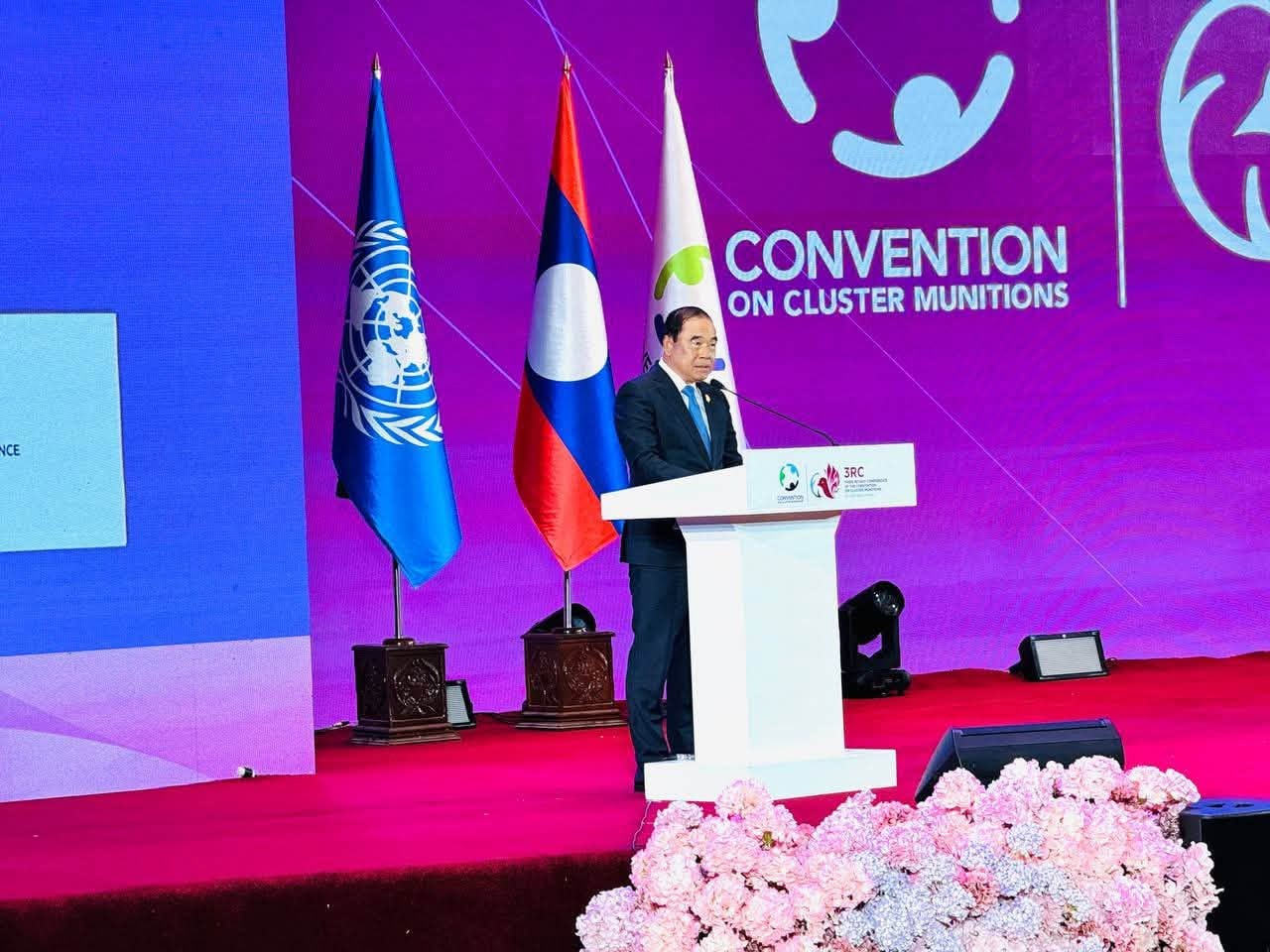
AKP Phnom Penh, September 14, 2026 -- Cambodia on Monday strongly condemned the use of cluster munitions and reaffirmed its firm opposition to the banned weapons, despite not yet being a state party to the Convention on Cluster Munitions (CCM). Speaking at the Third Review Conference of the CCM in Vientiane, Laos, H.E. Dr. Ly Thuch, Senior Minister and Head of the Cambodian delegation, stated that the Kingdom fully supports the spirit of the international treaty and has never produced or used cluster munitions. Highlighting Cambodia's extensive demining legacy, H.E. Dr. Ly Thuch, who also serves as First Vice President of Cambodian Mince Action & Victim Assistance Authority (CMAA), noted that over the past 33 years, the country has cleared more than 3,500 square kilometres of land contaminated by landmines and explosive remnants of war (ERW), destroying millions of explosive hazards. However, he warned of a severe new humanitarian challenge stemming from recent border disputes with Thailand. According to the Senior Minister, the use of cluster munitions by Thai military forces has created nearly 4,000 square kilometres of newly affected territory, with almost 3,000 square kilometres directly contaminated by cluster submunitions. The renewed contamination has exacted a heavy toll on civilians, particularly farmers, resulting in casualties and the displacement of more than 20,000 residents who remain unable to return to their homes. Reaffirming Cambodia’s commitment to global disarmament efforts, H.E. Dr. Ly Thuch expressed the Kingdom's readiness to share its expertise in mine clearance, explosive ordnance risk education, and victim assistance with the international community. By K. Rithy Reak
Original source
AKP Cambodia