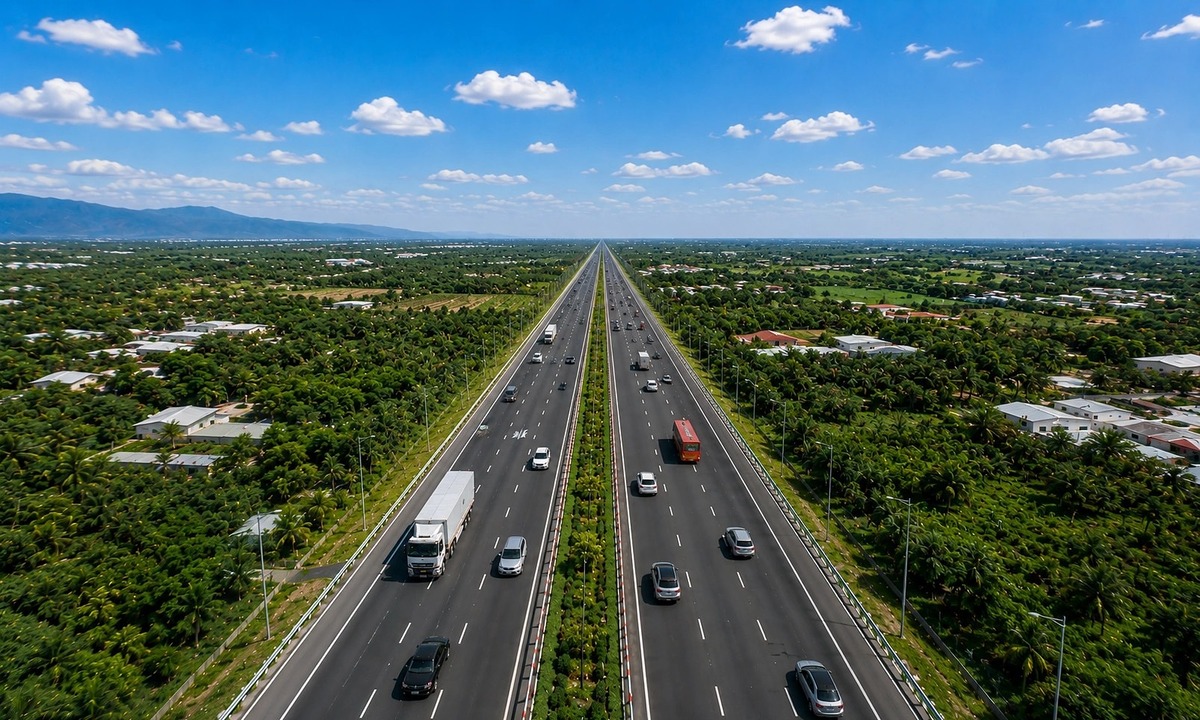
Vietnam Invests $456M in Road Network for Long Thanh Airport
Vietnam is accelerating the development of its road network around the Long Thanh International Airport, investing $456 million to improve access and logistics efficiency as the nation's largest airport prepares for its opening.
Vietnam is pouring $456 million into its road network to facilitate access to the under-construction Long Thanh International Airport, aiming to boost logistics and passenger flow as the country's largest airport gears up for its eventual opening. The investment will focus on three key provincial roads: Provincial Road 770B, Provincial Road 773, and Provincial Road 769. Collectively, these routes span approximately 111 kilometers and are designed to create a synchronized transport system. Provincial Road 769, which runs directly to the airport, will connect National Highway 1 at the Dau Giay junction with National Highway 51 at the Loc An junction. This roughly 29 km route will feature at least six lanes for cars on a wide roadbed, costing nearly $106 million. Provincial Road 770B is the largest of the three, built from scratch at a cost of over $179 million. Spanning nearly 43 km through nine communes and wards, it will accommodate six lanes for cars, two mixed-traffic lanes, and a central median, across a broad surface. This road will link eastern and northeastern Dong Nai City and industrial parks to the Bien Hoa-Vung Tau Expressway, the Cai Mep-Thi Vai port complex, and the airport. Provincial Road 773 will be widened to six or eight lanes over its 39 km length, connecting National Highway 1 to Ho Chi Minh City's Ring Road 4. This project is estimated to cost over $164 million. Long Thanh International Airport, located about 40 km east of Ho Chi Minh City, is designed to handle 25 million passengers annually in its first phase. It is intended to become the primary gateway for international flights to southern Vietnam and to relieve the chronic congestion at Tan Son Nhat International Airport in the city center. The overall project for Long Thanh Airport carries a price tag of around $12.8 billion. While it was technically opened in December 2025, commercial flights are expected to commence this year. However, all three provincial roads have faced delays for years due to land clearance and planning issues. The government has urged the airport's developers to finalize the first phase and begin operations by the end of 2026. Nguyen Tuan Anh, deputy chairman of the Dong Nai City People's Committee, stated that these roads are essential for a synchronized transport system that can efficiently handle passengers and freight once the airport is operational. Alongside expressways and Ho Chi Minh City's Ring Road 3 and Ring Road 4, these three roads will open up freight corridors, divert traffic from the existing network, and strengthen the connections between industrial zones, logistics centers, seaports, and the airport. City leaders view this infrastructure development as central to Dong Nai's strategy to attract investment in manufacturing, logistics, and higher-value services. This massive infrastructure push aligns with Vietnam's broader economic development goals under its one-party system, which prioritizes large-scale projects to foster growth and enhance connectivity, particularly in key economic zones. While Vietnam maintains significant economic ties with China, such domestic infrastructure investments are crucial for building its own economic resilience and global competitiveness.
多角的分析
ベトナム政府によるロンタン国際空港周辺道路網への巨額投資は、空港開港後の物流効率化と地域経済活性化を狙った戦略的な動きである。特に、工業団地、港湾、そして空港を結ぶことで、サプライチェーン全体のボトルネック解消が期待される。これにより、ベトナム南部経済圏の国際競争力強化と、製造業・物流業へのさらなる外資誘致に繋がるだろう。過去の事例でも、大規模インフラ投資は経済成長を牽引する重要な要素となってきた。
この投資は、ロンタン空港周辺の不動産開発や物流関連企業にとって大きな機会となる。道路網の整備は、空港へのアクセス向上を通じて、貨物輸送コストの削減やリードタイムの短縮に貢献するため、サプライチェーンの最適化を目指す企業にとって魅力的な投資環境を提供する。また、空港周辺の工業団地への進出も加速する可能性があり、長期的な視点での投資妙味があると言える。
道路網の整備は、地域住民の通勤・通学の利便性向上に直接的に寄与する。また、物流の円滑化は、地域経済の活性化を通じて雇用機会の創出や所得向上に繋がる可能性がある。一方で、大規模な土地収用や建設工事に伴う騒音・交通渋滞などの一時的な影響も懸念される。特に、県道770B号線が9つのコミューンや区を通過することから、地域住民の生活への影響は無視できない。
ロンタン空港周辺の道路整備は、地域住民の生活に大きな変化をもたらす。これまで交通の便が悪かった地域でも、空港へのアクセスが格段に向上し、通勤や移動が容易になるだろう。また、経済活動の活性化は、新たな雇用の創出や地域経済の発展に繋がり、住民の生活水準向上に貢献することが期待される。しかし、土地収用や建設工事による一時的な生活への影響も考慮する必要がある。
背景・歴史的文脈
ベトナムは、ドイモイ政策以降、市場経済化と対外開放を進め、目覚ましい経済成長を遂げてきた。特に製造業の発展は著しく、サプライチェーンの重要な一角を占めている。しかし、インフラ整備は経済成長に追いついておらず、特に交通インフラのボトルネックが指摘されてきた。ロンタン国際空港計画は、この課題を克服し、ベトナム南部を国際的な物流・貿易ハブとして確立するための国家的なプロジェクトである。一党体制下での長期的な国家計画に基づき、インフラ投資は経済成長戦略の最優先事項の一つとして位置づけられている。
原文ソース
VnExpress International