How Myanmar’s Spring Revolution is evolving toward unity – Part
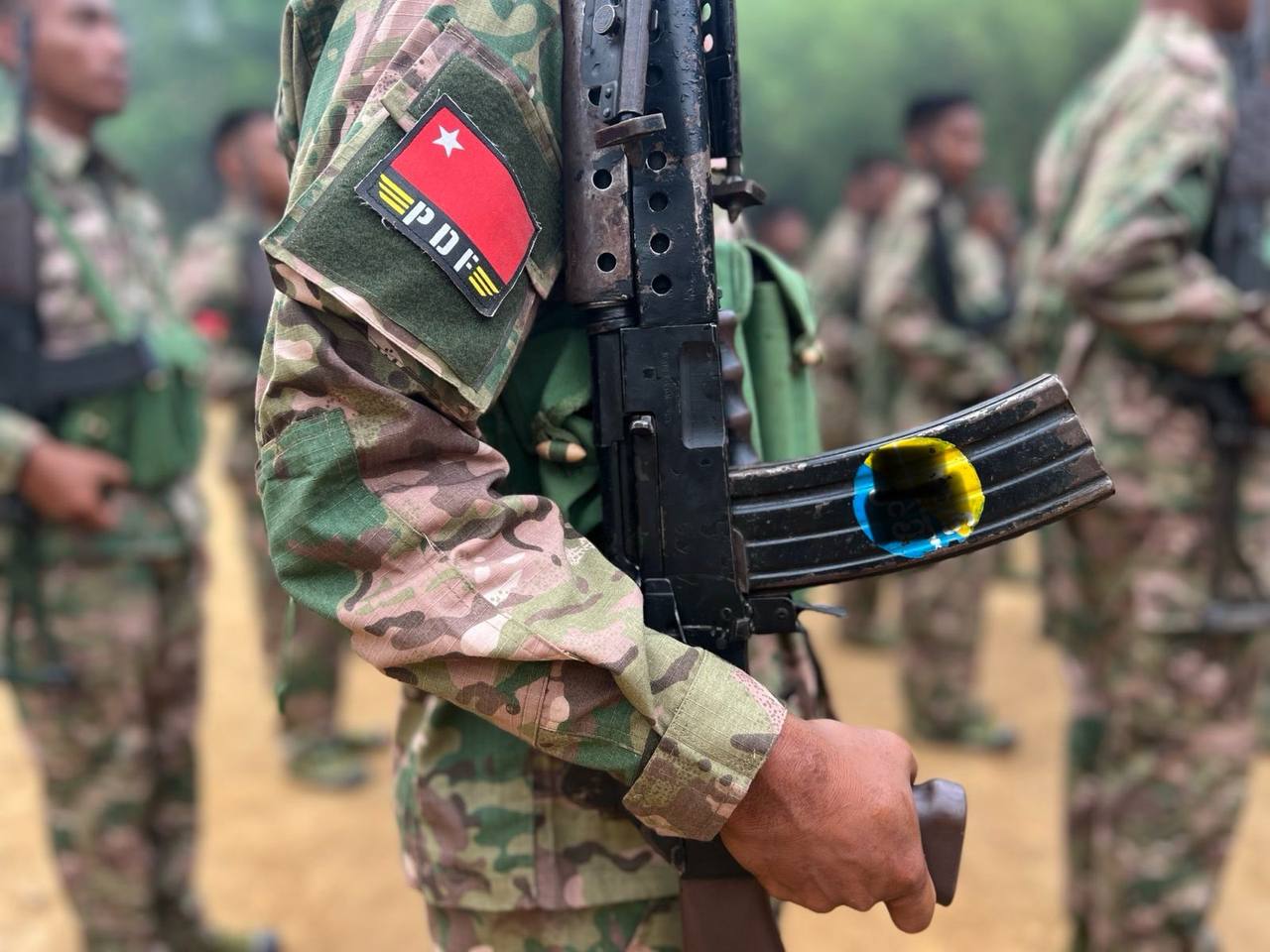
Guest contributor Salai Dokhar When people talk about the Spring Revolution, they immediately think only of the democratic movement that emerged inside Myanmar following the military coup led by Min Aung Hlaing on February 1, 2021. Based on such perceptions, they analyze whether the Spring Revolution will succeed, where it currently stands, and whether it will end well. At the same time, they base their assessments on the actions of the National Unity Government, the Committee Representing Pyidaungsu Hluttaw (CRPH), and the activities of the National Unity Consultative Council (NUCC) and major ethnic armed organizations, in order to evaluate five years of efforts toward national unity in Myanmar and their revolutionary outcomes. However, when compared to the various forms of revolutionary struggle and efforts to overthrow dictators and achieve systemic change that have occurred in Myanmar over more than 70 years, these analyses often fail to give due weight to the historical context of trust issues and stakeholder complexities. Moreover, it is surprising to observe that many do not view the current transformative changes of the Spring Revolution in a positive light. Therefore, I would like to share the following important facts with those who harbor doubts about the political developments in Myanmar. Has the Spring Revolution already fragmented due to divisions? In reality, the Spring Revolution is fundamentally a people’s revolution. It is based on non-violent mass movements, peaceful expression of demands, and actions such as the “civil disobedience movement” (also known as tax refusal), boycotts of events and ceremonies, silent strikes, and opposition to the dictatorship. It also includes financial support from revolutionary civilians to the armed resistance, in which they participate as an integral part. Along with the momentum of these movements, the decision to take up armed resistance began in May, 2021 with actions the battle famously known as the “Kalay Fortress” and April 2021, the Mindat armed resistance. However, the actual implementation of armed struggle—beginning with military training provided by ethnic armed organizations—took time. Each training course lasted at least three to six months, so the armed resistance that emerged during this period, up until early 2023, remained at the level of guerrilla warfare. Actually, major offensives only began in earnest once the forces of the Spring Revolution had gained sufficient combat experience. These include offensives led by the Three Brotherhood Alliance, the Kachin Independence Army (KIA) in Kachin State, the Karen National Liberation Army (KNLA) in Karen State, the two factions of the Chin resistance in Chin State, the Karenni resistance forces in Karenni State, as well as the Arakan Army (AA) in Rakhine State, Magway, Ayeyarwady and Bago regions. However, the suffering inflicted on civilians during these offensives is extremely heartbreaking. As a result, some heavily criticize the negative impacts of this armed revolution. Additionally, from a purely military perspective, the “win some, lose some” nature of the fighting—particularly the loss of some captured territories—has drawn significant criticism. Yet, throughout history, the military that has relinquished the most territory is still viewed by critics as a force capable of regaining victory, while the resistance’s temporary loss of some seized areas is not seen as a sign of potential strength. This selective viewpoint clearly reflects bias. Many who are unfamiliar with the situation assume there are only dozens of armed groups involved in the Spring Revolution. In truth, there are thousands. This is because the decision to take up arms was not driven by the call of any single individual or organization. Rather, when people realized that the dictatorship could only be overthrown through armed resistance, communities across the country—villages under the banner of “village security,” towns under “town security,” and districts under “district security”—spontaneously gathered whatever weapons they could find and rose up against the military regime. As soon as this kind of movement began, in some small towns with only a police station, liberation was achieved without even firing a single shot—such as in towns like Hnaring and Surkhua in Chin State. The reason these armed resistance forces have not yet fully consolidated is not due to any inherent failure. Unlike the systematic organization of established ethnic armed groups such as the AA and the KNLA, these forces emerged organically—from villages, wards, townships, and districts. As a result, it is difficult to determine the exact number of armed groups currently operating in Myanmar in the beginning, though many are now gradually coming together under the broader umbrella of the Spring Revolution. This phenomenon is similar to how communities protected themselves during the COVID-19 pandemic, relying on nearby resources and mutual self-defense. Most resistance groups operate in a decentralized manner, loosely guided by the NUG and some ethnic armed groups—much like how governments issued general guidelines during the pandemic while citizens cooperated based on shared awareness. The difference now is that, over time, the influence of Mao Zedong’s saying—”Political power grows out of the barrel of a gun”—has made it necessary to consolidate these previously unorganized forces. Therefore, the Spring Revolution is not actually fragmented; rather, it is in the process of consolidating scattered forces, and this consolidation has not yet been fully achieved. Because all groups share the same goal and the same enemy, we are now witnessing the growing capacity to unite these diverse forces despite differing political views. Salai Dokhar is an international advocate for Myanmar’s pro-democracy movement, a peace advocate for resistance groups, a leading figure in the India for Myanmar movement, and a young politician from Chin State, Myanmar. DVB publishes a diversity of opinions that does not reflect DVB editorial policy. We’d like to hear what you think about this or any of our stories: [email protected] The post How Myanmar’s Spring Revolution is evolving toward unity – Part 1 appeared first on DVB.
This article requires PRO
This article is outside the free access window or is a special report. PRO unlocks it and the full archive.
Related articles
- Illegal buildings used for online scam and gambling in Shwe Kokko area continue to be demolished
It has been learned that the demolition of illegal buildings remaining to be demolished among those used for online scam and gambling businesses in the Shwe Kokko area began as a second phase today (October 6). The natio
- Prize money fraud using fake ticket at POWER lottery shop in Pyin Oo Lwin city
It has been learned from the POWER lottery shop that an incident of fraudulently claiming prize money using a fake 50 million kyat lottery ticket occurred at the POWER lottery shop in Pyin Oo Lwin city. It was learned th
- Army attacks IDP camps in Ponnagyun using cluster bombs, drops 18 bombs on Taungkok
It is known that the interim government army has been continuously carrying out airstrikes from the air using jet fighters, cluster bombs, and 300-pound bombs on IDP camps and former military bases where battles have occ
- Nigeria military plane crashes with 32 on board
A military aircraft carrying 25 passengers and 7 crew members crashed in southern Nigeria, resulting in the deaths of all 32 people on board. Regarding this incident, Nigerian President Bola Tinubu has expressed his cond