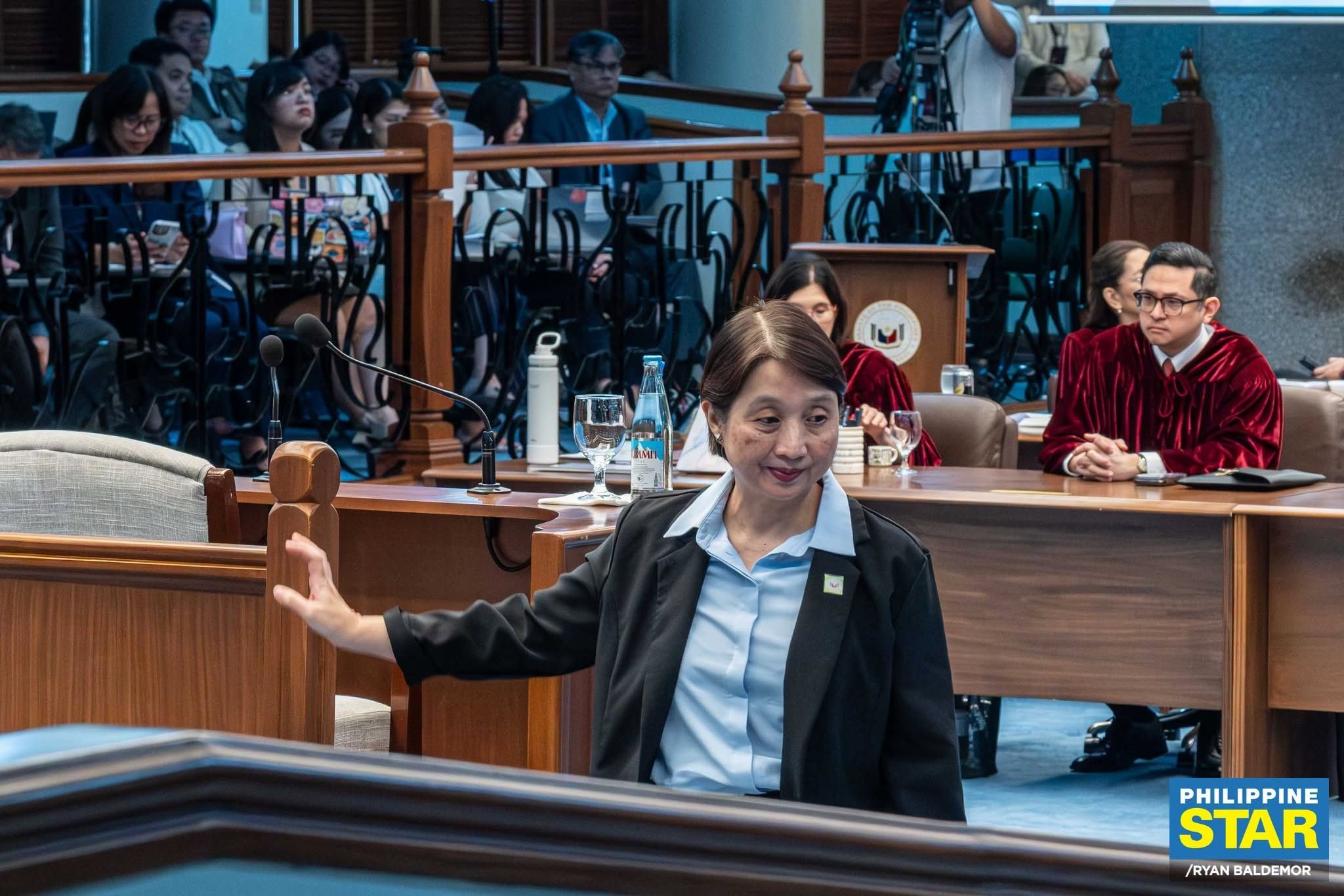
Sara Duterte trial recap, July 29: 'Unusual' transactions, defense waives cross
Politics
2026年7月29日
5
Philstar Nation

General articles are free for 24 hours after publish.

Sara Duterte trial recap, July 29: 'Unusual' transactions, defense waives cross

Share
AI Summary

During the impeachment trial of Philippine Vice President Sara Duterte, bank officials testified regarding confidential fund withdrawals, describing large cash transactions as 'unusual.' However, they also affirmed no technical irregularities were found.

MANILA, Philippines — The impeachment court began hearing evidence on the confidential funds charge against Vice President Sara Duterte on Wednesday, July 29, in which two bank managers described Duterte's office's cash withdrawals as 'unusual' in size and form. Day 10 saw a slow start to one of the most anticipated phases of the trial, as the prosecution led by Rep. Joel Chua (Manila, 3rd District) presented their first evidence for Article I through two retired Land Bank of the Philippines branch managers: Both witnesses said the withdrawals were some of the largest cash transactions they had encountered in their three decades each with the bank. But, under questioning by senators, both former bank managers also affirmed they saw nothing technically suspicious in the transactions by the OVP and DepEd, and that the checks were supported by an advice and properly funded. Under the Anti-Money Laundering Act, a "suspicious transaction" carries a strict formal definition and does not depend on the amount involved. A transaction is usually reported as suspicious when it has specific red flags such as the absence of a legal purpose, an unverified client identity, or a clear deviation from the entity's financial capacity. The prosecution's direct examination for both former bank managers dealt mostly with the authenticity of checks and their role in each bank branch. It was during the senator-judges' interpellation that Constantino and Camposano confirmed they saw the transactions as out of the ordinary for, both in how large the amounts were, and the fact that they were withdrawn as physical cash. Constantino, speaking based on her 32 years with Land Bank, said the P125-million encashments were the first of that size she had ever seen. "First time po," she told Sen. Risa Hontiveros when asked if she had ever encountered such an amount. The largest cash withdrawal she had handled before was around P500,000, according to her testimony. It was not just the size however but also the form, Constantino said: "Kaya naging unusual pa sa akin kasi cash po siyang kinukuha. Sa other [agencies] naman po... yung disbursement po nila, by checks po, hindi po cash." (It was even more unusual to me because it was taken in cash. With others, their disbursements are by check, not cash.) Each OVP encashment was more than six times her Shaw Boulevard branch's average daily transactions of about P20 million, so the OVP's cash division had to call a day or two ahead for the branch to source the cash. Constantino said the money was released in the branch's backroom in 125 packs of P1 million each, loaded into three to four gym bags that the OVP personnel carried out themselves. Government agencies, Constantino said, normally disburse by check or online and not cash. Asked by Hontiveros if such an amount in cash could be called "once in a lifetime," she conceded that it could. Camposano said the same of DepEd, which she said only saw withdrawals that large during the three encashments in question under Duterte's term as secretary. "Unusual siya sa Department of Education dahil during my time, yun lang po yung malaking withdrawal ni Department of Education," she said. (It was unusual for the Department of Education because during my time, those were its only large withdrawals.) The department's routine cash encashments were payroll-related, or around P100,000 a month for overtime pay of contractual workers Sen. Joel Villanueva had her confirm that her use of "unusual" matched the Bangko Sentral's definition of transactions inconsistent with the account's usual behavior. Both witnesses were careful, however, when senators pressed on whether the transactions were flagged to the Anti-Money Laundering Council. Camposano and Constantino both repeatedly cited the AMLA's prohibition on bank officers disclosing whether reports were filed. The most Constantino would offer was that Land Bank is "compliant" with its reporting obligations for covered and suspicious transactions. Meanwhile, Camposano would only explain that transactions above P500,000 are reported to the AMLC automatically by the bank's system. At one point, Sen. Ping Lacson flagged what he saw as a hole in both camps' witness lists: no one "competent" to testify on how intelligence and confidential funds are actually handled. The term competent in legal parlance refers to whether the court can consider a witness able to provide legally admissible testimony under the rules of evidence. It is not the usual use of the word to subjectively describe skill or ability. Lacson said the pattern of the OVP's withdrawals struck him as odd, given it happened roughly every quarter, with the first taking place just before Christmas. Lacson explained that in his experience, such secret funds are drawn only for actual intelligence operations and not on a regular schedule. "Ang alam ko pagka may pangangailangan dahil mayroon intelligence gathering operation, may confidential activities, saka pa lang mangangailangan ng pera," Lacson said. (What I know is that money is needed only when there is an intelligence gathering operation or confidential activities.) "Nagtataka lang ako bakit masyadong regular (I'm wondering why it's too regular)," Lacson added. Without an expert witness, Lacson said, senator-judges would have no basis to judge whether the quarterly withdrawals were regular or irregular. The Commission on Audit, he added, is not a competent witness on the handling of such funds. Lacson's manifestation somewhat drew a sneak peek from both camps. Prosecutor Rep. Joel Chua said the prosecution has a reserved witness in its pretrial brief, possibly a retired intelligence officer. Defense counsel Michael Poa said his side has its own reserved witness and will present "when we feel necessary." For the first time in the trial, the defense declined to cross-examine a witness, waiving its questioning of Constantino entirely after stipulating to the checks' authenticity at the outset of her testimony. The defense took only a brief cross of Camposano, using it to clarify one point: that DepEd's "special disbursing officer" Edward Fajarda exited through the fire door because the Land Bank branch sits attached to the DepEd compound. Poa stipulated early to the authenticity of all seven checks presented by the prosecution. This spared the court hours of hearing hyperspecific testimony on the attributes of the documents, which was seen during the grave threats phase of the trial. The trial resumes Monday, August 3, at 10 a.m., when the prosecution shifts from how the cash was withdrawn to how it was used, liquidated and accounted for. Escudero approved the issuance of subpoenas to Commission on Audit auditors Roderick Wamil and Xylene Mae Del Campo, who are set to testify August 3 and 4. They will be followed by House records official Marivic Para on August 5.

0

Original source

Philstar Nation

原文を読む