General articles are free for 24 hours after publish.
Merauke Food Project: Learning from Past Lessons for Future Success
A new study highlights the history of large-scale food projects in Merauke and the challenges concerning indigenous rights and local community relations. Approaches to increase community acceptance are being explored, drawing lessons from the past MIFEE project.
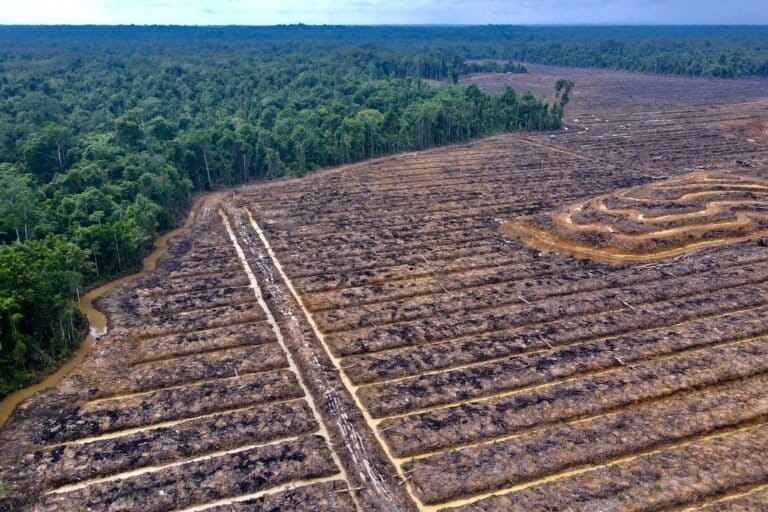
The Indonesian government continues to harbor ambitions for large-scale food projects in Merauke. These initiatives range from the Merauke Integrated Food and Energy Estate (MIFEE) during President Susilo Bambang Yudhoyono's (SBY) era to the current food estate program under Prabowo Subianto. Amidst these grand ambitions to create new, large-scale rice fields in Merauke, questions linger about the actual success of these projects. "What makes this project different, and why should the public accept this program?" asked Fredian Tonny Nasdian during his dissertation defense at the Auditorium of Andi Hakim Nasoetion, Bogor Agricultural University (IPB), Dramaga. In his research, Ferdian not only examined the success of government food projects but also questioned how food development proceeds when it intersects with indigenous communities, customary land rights (hak ulayat), and the diversity of local communities in South Papua. One of the questions Ferdian sought to answer was: why is a program accepted in one village but rejected in another, even when the government's programs or policies are the same? For years, Papua, especially Merauke, has served as a laboratory for various large-scale food projects. The MIFEE project remains strongly etched in public memory as a symbol of controversial food investment that disregarded indigenous community rights, altered landscapes, and opened avenues for corporate expansion. This experience has shaped the perception that every new rice field development project is a continuation of the old approach. Therefore, Fredian felt it necessary to place the people's rice field creation project in a different context. He did not start from the assumption that all government policies are identical. Instead, he delved deeper into the implementation at the community level and the community's responses to government policies, seeking to understand the nuances of acceptance and rejection. This article was originally published on Mongabay Indonesia
Original source
Mongabay Indonesia