General articles are free for 24 hours after publish.
Hanoi's Urbanization and Internationalization: The Evolution of Place Names and the Role of Vietnamese
Hanoi's rapid urbanization and internationalization are leading to an increase in English and other foreign language names for new real estate developments. This reflects changes in the city's landscape and linguistic environment, raising questions about maintaining the Vietnamese language's identity.
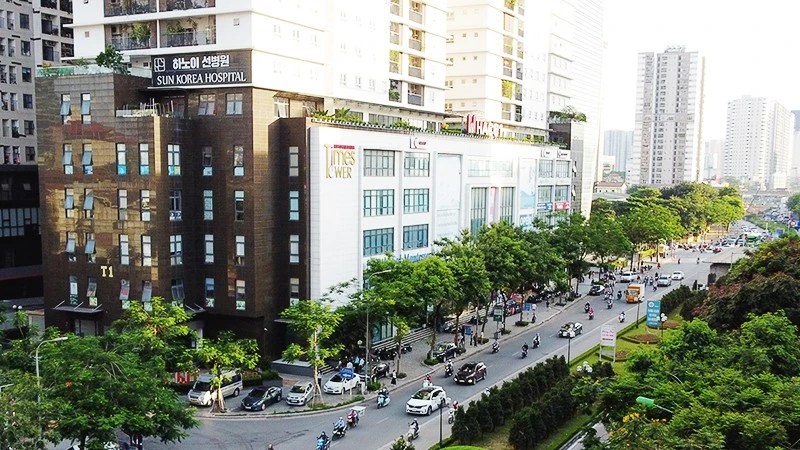
Hanoi, Vietnam's capital, is undergoing a significant transformation in its urban landscape and linguistic environment due to rapid urbanization and internationalization. A recent report highlights a growing trend of English and other foreign language names being adopted for new urban spaces and real estate projects. Historically, Hanoi's place names were rooted in Vietnamese tradition and local geography, such as "Giảng Võ" and "Linh Đàm." However, contemporary developments are increasingly featuring names like "Royal City," "Times City," and "The Matrix One." The use of terms such as "City," "Tower," "Plaza," "Garden," "Residence," and "Complex" aims not only to denote the type of structure but also to evoke associations with modern urban living and an international lifestyle. This phenomenon suggests that the real estate market is seeking to align with global imagery and values, and that the city is positioning itself within a broader international context. In some instances, names of former factories or enterprises are being carried over, such as "Thống Nhất Complex," preserving historical traces. However, the proliferation of foreign language names poses new challenges regarding the preservation of Vietnamese linguistic identity. Some Hanoi residents express difficulty in pronouncing or locating places with foreign names. For example, one resident mentioned needing to rely on pre-saved addresses for ride-hailing services because they cannot accurately read out building names. Another student noted that while they can understand English names, they still need to consult maps or nearby landmarks to determine the exact location of new developments. Experts emphasize that place names transcend mere commercial labels to become elements that shape social space. As the city evolves and new names emerge, it is crucial to ensure that Vietnamese maintains its central role in public communication. There is a need to build a new naming system that aligns with global trends while retaining a unique identity, with input from cultural researchers and linguists, and preserving historically valuable names. Hanoi authorities are tasked with developing policies and legal frameworks to guide language use in public spaces. This aims to ensure Vietnamese retains its status as the national language while facilitating the appropriate use of foreign languages in line with internationalization needs. This represents a significant challenge in urban language management. Source: Nhan Dan
Original source
Nhan Dan