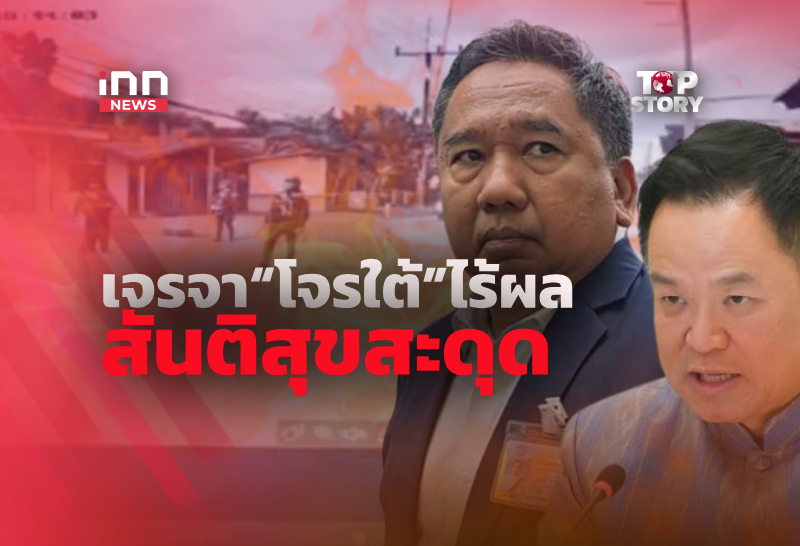
Southern Thailand Peace Talks Stall Amid Renewed Violence, 7 Negotiators Changed in 13 Years
Security
2026年7月29日
5
INN News
Relations
🇹🇭Thailand🇲🇾Malaysia

General articles are free for 24 hours after publish.

Southern Thailand Peace Talks Stall Amid Renewed Violence, 7 Negotiators Changed in 13 Years

Share
AI Summary

Peace talks in Thailand's southern border provinces have temporarily stalled due to a resurgence of violence. Despite seven changes in negotiation leaders over 13 years, violent incidents persist, making the path to peace challenging. The change in Malaysia's facilitator also adds to the uncertainty.

The issue of unrest in Thailand's southern border provinces remains a significant national security challenge that every Thai government has faced. Despite numerous government changes and continuous adjustments to strategies alongside peace talks, violent incidents persist, indicating a long road ahead to achieving peace. Over the past 13 years, since Thailand officially opened formal talks in 2013, there have been seven changes in the heads of the peace negotiation teams. It began with the government of Yingluck Shinawatra, which appointed Lieutenant General Paradorn Pattanathabutr, former Secretary-General of the National Security Council, as the head of the peace talks. Later, the government of General Prayut Chan-o-cha renamed it the "Peace Negotiation Team for the Southern Border Provinces" and appointed General Aksara Kerdphol as the head of talks with the Mara Patani group. Subsequently, the role was passed to General Udomchai Thammasarorach, who was then succeeded by General Wallop Raksanor, credited with initiating direct talks with the BRN group. In the current administration led by Prime Minister Srettha Thavisin, Mr. Chatchai Bangchud, Secretary-General of the National Security Council, was appointed as the head of the negotiation team, marking the first civilian to hold this position. However, despite changes in personnel and strategy, the situation on the ground remains fragile. Incidents such as bombings of government facilities, ambushes, and shootings of officials continue to occur. Notably, the recent incident involving shooting and pipe bomb attacks on the Bukoh Sami checkpoint in Narathiwat province, a security outpost, resulted in the deaths of five rangers while peace talks were ongoing. Mr. Chatchai admitted that both sides had scheduled further discussions for September. However, the recent violence in Narathiwat has led to a temporary halt in the talks. While the atmosphere for dialogue had previously been improving, he questioned why such violent acts were committed at a time when communication channels were being opened, stating that he has yet to receive an answer from the other side. Another significant factor is the role of Malaysia as the facilitator. The current change in the Malaysian liaison officer has created a vacuum, and Thailand awaits clarity from Malaysia on how they will proceed. While many anticipate that intensified security measures might affect the negotiation atmosphere, Mr. Chatchai asserted that this is not an obstacle, as different agencies have distinct roles. The military carries out its security missions, while the negotiation team pursues a peaceful approach, emphasizing that both must move in the same direction. Regarding the intelligence surrounding the recent events, Mr. Chatchai believes there are many aspects to investigate but cautioned against premature conclusions or speculation. He reiterated that resolving the southern border issue through dialogue is a long-term process, not a quick fix. Over the past 13 years, Thailand has seen seven negotiation leaders, changes in strategy, and various negotiation formats. However, the challenge of building trust among all parties and ensuring that talks progress alongside a reduction in violence remains. The ultimate goal is to achieve tangible results from the negotiations and end the decade-long cycle of violence.

0

Original source

INN News

原文を読む