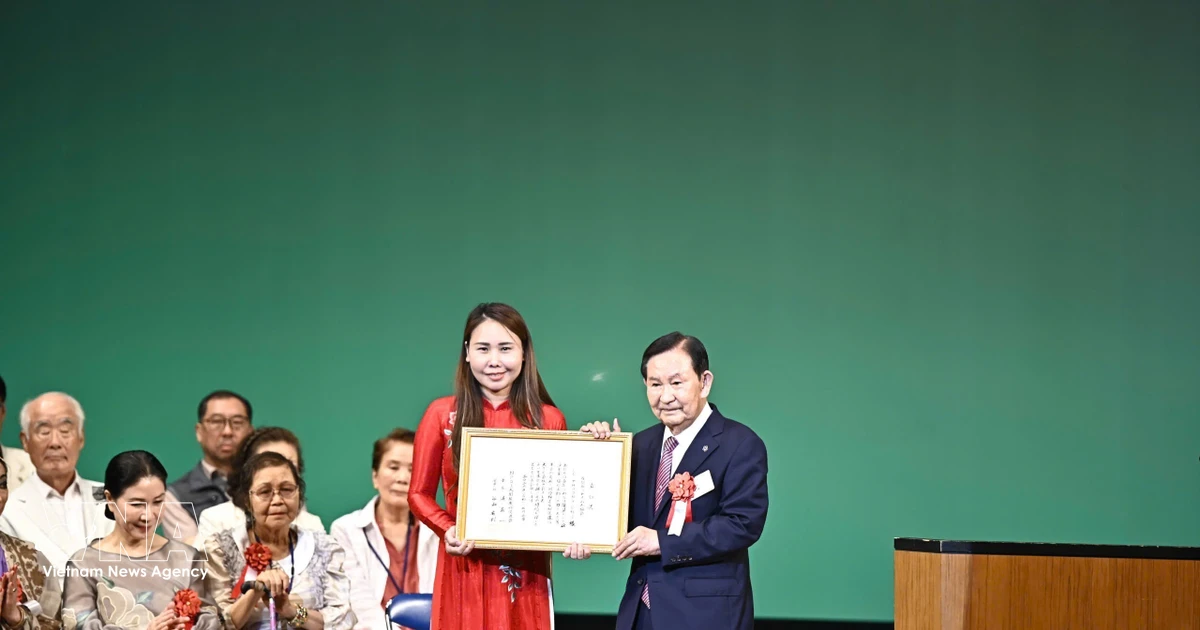
Vietnam Enhances International Cooperation and Addresses Domestic Challenges
Vietnam is strengthening cooperation with Japan in education and finance, while domestically addressing multifaceted issues concerning citizens' lives, including the collection of remains of fallen soldiers, disaster response, and social infrastructure development. The country also continues its contributions to the international community, enhancing its presence.
Vietnam is deepening its educational cooperation with Japan, with Aoyama School of Japanese authorizing the Vietnam-Japan Cultural Exchange Center (VJCE) as its representative in Vietnam. VJCE will coordinate educational cooperation activities, connect partners, develop training programs, and promote educational exchange projects between the two countries. This initiative is seen as part of Vietnam's efforts to enhance human capital development and international partnerships under its one-party system. In the economic sphere, Governor Maeda Tadashi of the Japan Bank for International Cooperation (JBIC) met with Prime Minister Le Minh Hung, pledging continued support for Vietnam's strategic development goals. This support is expected to bolster Vietnam's pursuit of high economic growth and industrial restructuring. Prime Minister Le Tien Chau also highly valued the decades-long contributions of Special Advisor Takebe to the Japan-Vietnam Parliamentary Friendship Alliance in promoting friendship and cooperation, particularly in people-to-people exchanges, local-level cooperation, education, and human resource development, with the Vietnam-Japan University (VJU) project highlighted as a flagship initiative. Domestically, the Party and State are placing significant emphasis on the search and recovery of remains of fallen soldiers in Ho Chi Minh City, demonstrating the highest sense of responsibility and gratitude towards martyrs and their families. This reflects a long-standing tradition in Vietnamese society that values patriotism and respect for sacrifice as a foundation for national unity and stability. In disaster response, Vietnamese rescue teams have demonstrated strict discipline, a strong sense of responsibility, and unwavering focus while carrying out international humanitarian missions in Venezuela. This commitment underscores Vietnam's role as a provider of humanitarian aid on the global stage, aligning with its domestic focus on enhancing disaster response capabilities in recent years. The team has recovered 45 bodies to date, with their efficient search operations enhanced by the combined use of map coordinates, on-site surveys, witness accounts, and ground-penetrating radar. Social infrastructure development is also progressing. Ho Chi Minh City is expanding its public transport system to ease traffic congestion, reduce emissions, and lessen environmental pressures. This initiative aims to address the challenges of urbanization and population growth, while also supporting low-income residents by lowering living costs and improving access to employment opportunities. Measures are also being implemented to strengthen fiscal discipline, including exit tax collection for individuals with overdue tax liabilities and those settling abroad. Regarding maritime safety, authorities are instructed to track and inform vessels, guide ships away from dangerous zones, and ensure safe anchorage. Localities are empowered to ban sea operations when necessary, prepare search-and-rescue forces, and ensure the safety of tourism activities, aquaculture, and offshore infrastructure. This demonstrates Vietnam's strong commitment to safeguarding its sovereignty and economic activities, particularly in the context of the South China Sea. The quality of the workforce is also improving, with the proportion of workers holding formal qualifications or certificates rising to 29.7% in the first half of 2024, an increase of 0.8 percentage points year-on-year. This reflects Vietnam's focus on developing a skilled labor force to support its industrial upgrading. Vietnam is actively addressing a wide range of domestic issues, including the collection of remains of fallen soldiers, disaster response, social infrastructure development, fiscal discipline, and improving workforce quality, while simultaneously strengthening its cooperation with Japan in education and finance. These efforts are crucial for Vietnam's stable development and its role as a responsible nation in the international community. Copyright, VietnamPlus, Vietnam News Agency (VNA)
多角的分析
ベトナム経済は、輸出依存度が高く、国際市場の変動に影響を受けやすい構造を持つ。日本からのJBICによる継続的な支援は、インフラ開発や製造業への投資を促進し、経済成長の持続性を高める上で重要である。しかし、国内のインフレ圧力や、グローバルサプライチェーンの再編といった外部要因への対応が、今後の経済安定化の鍵となる。特に、教育分野での日本との連携強化は、高付加価値産業への移行に必要な人材育成に繋がる可能性があり、長期的な競争力強化に貢献すると考えられる。
ベトナムへの投資家は、安定した政治体制と成長する国内市場という二面性から、引き続き関心を持つだろう。日本からのJBICによるインフラ投資支援は、製造業や物流分野への投資を後押しする。ただし、国際的な地政学的リスクや、ベトナム国内の規制・法制度の変更リスクには注意が必要である。特に、近年増加している外国からの投資案件における、契約履行や知的財産権保護に関する事例は、投資判断において慎重なデューデリジェンスを要求する。
ベトナム社会は、伝統的な価値観と急速な近代化の狭間で揺れ動いている。戦没者遺骨の収集や、災害対応における国際貢献は、国民の愛国心や連帯感を醸成する上で重要である。一方で、ホーチミン市における公共交通機関の拡充は、都市部住民の生活の質向上に直結する課題であり、交通渋滞や環境問題といった、急速な都市化に伴う摩擦の解消が求められている。また、労働者の資格向上は、国内の所得格差是正や、より質の高い雇用機会の創出に繋がるかどうかが注目される。
ベトナム市民、特に都市部住民は、交通渋滞の緩和や生活コストの低減といった、公共交通機関の拡充による恩恵を期待している。また、戦没者遺骨の収集は、家族の絆や国家への忠誠心を再確認する機会となるだろう。一方で、国際社会への貢献活動は、国家の威信を高める一方で、国内のインフラ整備や福祉向上へのリソース配分とのバランスが、市民生活に間接的な影響を与える可能性がある。労働者の資格向上は、より良い職を得る機会に繋がることを期待している。
背景・歴史的文脈
ベトナムと日本の関係は、第二次世界大戦後の復興期から始まり、経済支援、貿易、投資、人的交流といった多岐にわたる分野で発展してきた。特に、ベトナム戦争後の経済困難期において、日本からのODA(政府開発援助)は、ベトナムのインフラ整備と経済再建に大きく貢献した。1990年代以降、両国関係は戦略的パートナーシップへと深化し、経済協力は製造業、インフラ、教育、農業など広範に及んでいる。ベトナムの社会主義一党体制下での経済発展と、日本との安定した外交関係は、東南アジア地域におけるパワーバランスと経済統合において重要な要素となっている。
原文ソース
VietnamPlus English