General articles are free for 24 hours after publish.
TRB Mulls Extending NLEX Toll Holiday Amid Flood Gridlock
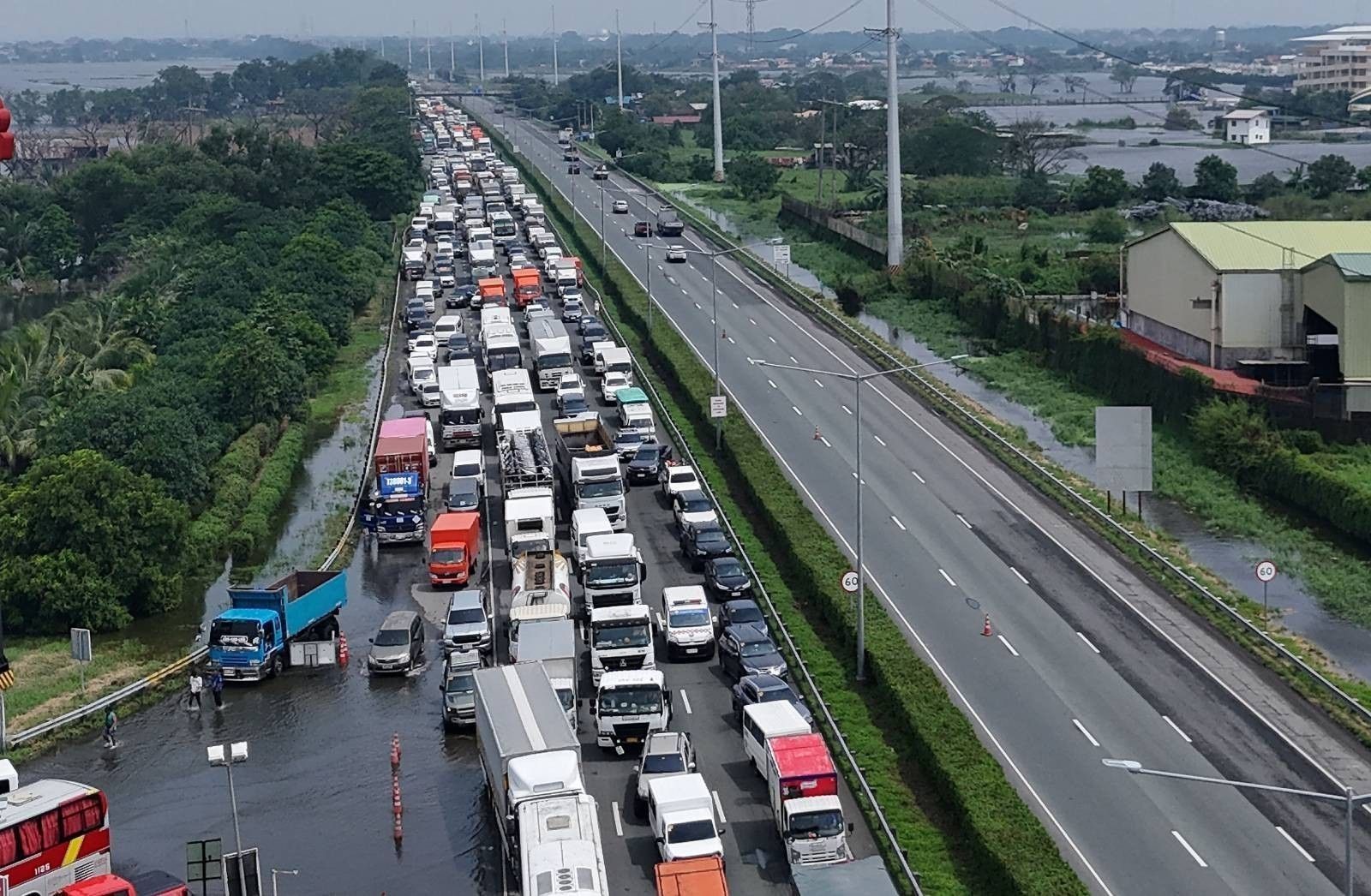
The Toll Regulatory Board (TRB) in the Philippines is considering extending the toll-free period for the North Luzon Expressway (NLEX) following massive flood-induced gridlocks. NLEX Corp.'s liability is also under evaluation.
MANILA, Philippines — The Toll Regulatory Board (TRB) is open to studying proposals for extended toll-free travel along the North Luzon Expressway as regulatory authorities evaluate public petitions regarding the liability of NLEX Corp., the operator of the tollway, for massive flood-induced gridlocks. “We will study it. And we will come out with the findings of the study,” TRB executive director Jose Arturo Tugade said in response to queries during a field inspection yesterday of the San Simon section of NLEX. Leading the inspection were Public Works Secretary Vince Dizon and NLEX Corp. president Luis Reñon. While the TRB has not formally received yet proposal for a “toll holiday,” Reñon said “we are ready to respond once we are summoned by the TRB.” Dizon noted that administrative remedies and toll adjustments must go hand-in-hand with long-term civil engineering fixes, pointing out that past measures like raising road pavements by 0.7 meters proved inadequate against heavy monsoon rainfall seen last week. “Remember, this was not the first time that this happened. In 2023, worse flooding happened. During that time, the tollway was shut for more than a week,” Dizon said. “Raising the elevation of the highway alone is not enough if floodwaters remain trapped in the basin,” he said, reiterating that the government and tollway operators are now focusing on constructing land-based detention basins and deploying high-volume pumps to prevent future highway standstills. “President Marcos made it clear that the 2023 gridlock where NLEX came to a complete standstill for over a week must never happen again,” the Department of Public Works and Highways chief said. “Our priority is to drain the highway, keep lanes open, and prepare for incoming weather disturbances.” Dizon explained that floodwaters from the overflowing Tulaok and Pampanga Rivers became trapped along the low-lying expressway basin that has no natural drainage outlets. The DPWH, with help from former public works secretary Rogelio Singson and Japanese technical experts, initiated a three-step solution, the first of which is constructing physical barriers along the Tulaok River and breached banks of the Pampanga River to cut off incoming flood flow. Second, NLEX Corp. is deepening highway drainage trenches while the government negotiates with private landowners for open lots to convert into temporary catchment basins. The third measure involves the use of high-volume pumps to transfer trapped water from highway channels into main waterways.
Original source
Philstar Nation