General articles are free for 24 hours after publish.
UNICEF Executive Board Approves New Country Programme for Lao PDR (2027-2031)
The UNICEF Executive Board approved a new Country Programme Document for Lao PDR for 2027-2031. This program aligns with Laos' development plans and aims to strengthen support for vulnerable children.
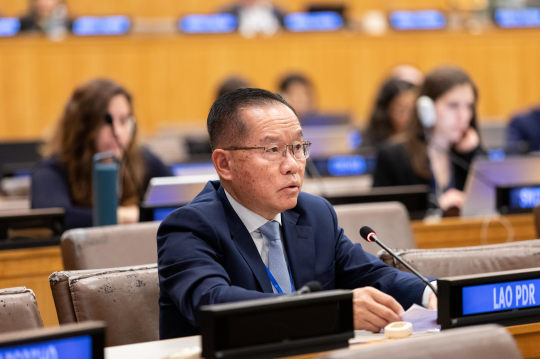
The UNICEF Executive Board approved a new five-year Country Programme Document (CPD) for Lao PDR at its Second Regular Session, held from September 1-4, 2026, in New York. This marks the next phase of UNICEF's 53-year partnership with the Government of Lao PDR, aligning with the country's 10th Five-Year National Socio-Economic Development Plan (2026–2030) and the UN Sustainable Development Cooperation Framework (2027–2031). Ambassador Thongphane Savanphet, Permanent Representative of Lao PDR to the United Nations, highly valued the long-standing partnership, emphasizing that the new country programme was the outcome of an inclusive and consultative process. The programme focuses on four key priorities: the first 1,000 days of life; learning and skills; the empowerment of adolescents; and access to safe water and a clean environment. Mr. Bilal Aurang Zeb Durrani, UNICEF Country Representative in the Lao PDR, stated, "A country programme is a set of promises made to children. The programme is designed to lighten the load on the children who are furthest behind, and to give every child in the Lao PDR — wherever they are born — a strong start. None of that happens without the government's own investment, and without partners willing to work side by side to reach the most vulnerable." The new CPD has an indicative budget of $79.475 million for the five-year period, with $8.635 million from UNICEF's regular resources and $70.84 million to be mobilized from other donor resources. It is organized around four components: First 1,000 Days (maternal, newborn and child health, nutrition, early childhood development); Learning and Skills (education, foundational literacy and numeracy); Adolescent Empowerment and Inclusion (protection, social protection, skills for work and life); and Safe and Clean Environment for Children (climate resilience, WASH, disaster risk reduction). The programme takes a life-course approach, prioritizing children and adolescents in remote and rural areas, non-Lao-Tai ethno-linguistic communities, girls at risk of child marriage, and children with disabilities. By 2031, the goal is for more children — especially the most vulnerable — to have equitable access to coordinated health, nutrition, education, protection and child-safe environmental services. This programme comes as Lao PDR completes its graduation from Least Developed Country (LDC) status this year. UNICEF notes that this transition will require sustained domestic investment in health, education, and social protection as the economy grows. In the context of Laos' single-party system, international organizations' support for national plans plays a crucial role in advancing social development, though its implementation heavily relies on domestic economic conditions and fiscal capacity. Laos also traditionally maintains strong ties with Vietnam and China, with economic cooperation with these nations being a significant factor in its domestic development. Information Source: KPL Laos News
Original source
KPL Laos News