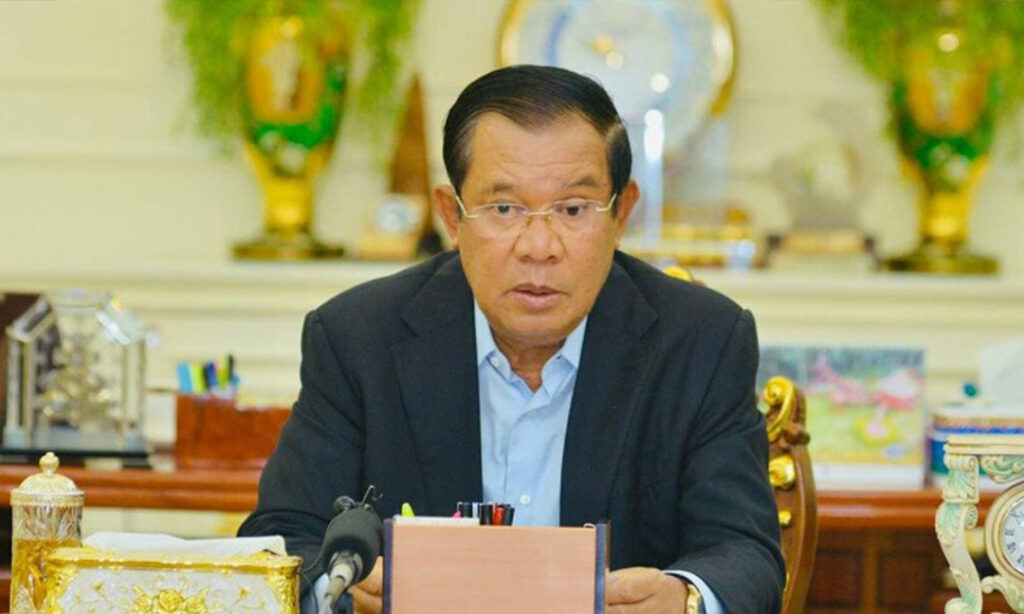
PM Hun Sen Shares Thai Expert's Analysis on Cambodia-Thailand Border Dispute
Prime Minister Hun Sen shared an analytical article by a Thai international relations and security expert discussing the 1962 International Court of Justice ruling on Preah Vihear Temple. The Prime Minister emphasized that this ruling should form the basis for resolving border disputes between the two countries.
Prime Minister Hun Sen of Cambodia has shared an analytical article written by Thai international relations and security expert Surachart Bamrungsuk. The article, titled "An Old Story That Is Not Old: What the International Court of Justice Ruling Determined," focuses on the 1962 International Court of Justice (ICJ) ruling concerning Preah Vihear Temple. Prime Minister Hun Sen stated that he shared an unofficial translation of this article to enhance understanding for the people of both Cambodia and Thailand. The article highlights that the 1962 ruling stipulated that "one of the most important objectives when two countries delineate their borders with each other is to achieve security, certainty, and clarity." It argues that this objective cannot be achieved if the delineated border line remains subject to constant debate or demands for alteration. The article points out that the core of the border dispute between Thailand and Cambodia lies in the Preah Vihear Temple issue. The two countries have previously brought cases concerning the temple before the International Court of Justice twice: in 1962 and again in 2013. While Thailand has accepted the outcomes of both rulings, the article warns that Thailand must strictly avoid creating conditions that would force a return to the ICJ for a third time. Specifically, the 1962 ruling contains crucial points directly relevant to resolving the current border disputes between Thailand and Cambodia. Although the issue may have become an "old story" for contemporary politicians due to the passage of time, the article argues that ignoring this ruling in the context of current border conflicts would not be conducive to deeper understanding. The article emphasizes that the 1962 ruling clearly indicates that treaties and accompanying maps serve as the decisive factors in demarcating the border between Siam/Thailand and its neighboring states, which are inheritors of colonial rights. Furthermore, this ruling has the potential to influence not only the current Thai-Cambodian border dispute but also future border disputes between other states. The ICJ stated that if a delineated border line can be challenged or demands for alteration can be made at any time simply by referencing inaccuracies in the original treaty, such protests would continue endlessly, and agreements would never be permanently reached. This would lead to a lack of reality and long-term stability in the border line, posing serious risks. The Court made it clear that the international community does not wish to see border disputes drag on indefinitely. Therefore, even if current state leaders believe the original documents have flaws, they cannot be used as an excuse to revoke them, especially if they were jointly ratified by representatives of both states in the past. Otherwise, the border line would be constantly changed, leading to perpetual territorial disputes in border areas. This crisis could escalate into an unavoidable war between neighboring states, the article warns. The article concludes that the purpose of the Court's ruling is to prevent border areas from falling into a state of war and to prevent the border line from becoming a condition that leads to endless conflict. Agreements on border lines are intended to reduce and eliminate all tensions and achieve territorial stability based on certainty and clarity. Source: Kampuchea Thmey Local
多角的分析
この記事は直接的な経済的影響には触れていないが、国境紛争の長期化は、両国間の貿易や投資、観光といった経済活動に間接的な悪影響を与える可能性がある。特に、国境地域のインフラ開発や経済協力プロジェクトは、不確実性の増大により停滞するリスクがある。国際司法裁判所の判決を遵守し、国境の安定を確保することは、経済的な予測可能性を高める上で不可欠である。
投資家にとって、国境紛争は常にリスク要因となる。特に、紛争が長期化したり、再燃したりする可能性は、カンボジアおよびタイへの直接投資やポートフォリオ投資において、リスクプレミアムの上昇を招く。今回の分析記事は、過去の国際司法裁判所の判決を遵守することの重要性を強調しており、これは投資家が重視する法的安定性や予測可能性の観点から、ポジティブなシグナルと捉えられる可能性がある。
国境紛争は、国境地域に住む住民の生活に直接的な影響を与える。土地の所有権、移動の自由、そして安全保障に関する不安は、住民の生活基盤を揺るがす可能性がある。1962年の判決が、国境の「確実性」と「明確さ」を目的としていたという点は、住民が安定した生活を送るための法的根拠となりうる。しかし、この判決の重要性が忘れられ、現代の政治的駆け引きで無視されるようになれば、国境地域住民の不安は増大するだろう。
フン・セン首相がこの分析記事を共有したことは、カンボジア国民に対して、国境問題に関する歴史的背景と国際法上の根拠を改めて理解させる意図があると考えられる。特に、タイとの関係における歴史的な経緯を踏まえ、将来的な紛争の回避と安定した国境の維持が、国民生活の安定に不可欠であることを示唆している。国民は、政府のこうした情報発信を通じて、対外関係における自国の立場や、歴史的判決の重要性について認識を深める機会を得る。
背景・歴史的文脈
カンボジアとタイの国境紛争、特にプレアビヒア寺院を巡る問題は、両国の複雑な歴史的関係に根差している。1907年の仏領インドシナとシャム(タイ)間の条約および地図が、両国の国境線の基礎となったが、その解釈を巡って長年対立が生じてきた。1962年の国際司法裁判所(ICJ)判決は、プレアビヒア寺院の領有権をカンボジアに認めたが、周辺地域の国境線画定については曖昧さが残った。2008年にプレアビヒア寺院が世界遺産に登録されたことで、両国間の緊張が再燃し、2011年には国境付近で武力衝突が発生。2013年には、タイがICJに国境確定を求めて提訴したが、この提訴自体が新たな論争を呼んだ。今回のフン・セン首相による分析記事の共有は、1962年の判決の重要性を再確認し、タイに対して国際法遵守を促すことで、将来的な紛争の再発を防ぐ狙いがあると見られる。
原文ソース
Kampuchea Thmey Local