General articles are free for 24 hours after publish.
P6.2 Billion Aid for Farmers Amid El Niño Expected Soon
The Department of Agriculture (DA) announced the imminent release of a P6.2 billion Special Allotment Release Order (SARO) to fund fuel and fertilizer assistance for farmers affected by El Niño, focusing on drought mitigation and alternative livelihood support.
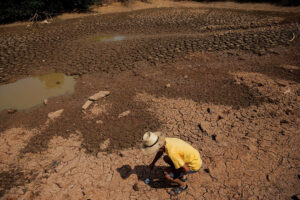
The Department of Agriculture (DA) expects the imminent release of a P6.2-billion Special Allotment Release Order (SARO) that will fund fuel and fertilizer assistance to farmers during the El Niño episode. Arnel V. De Mesa, DA spokesman and agriculture assistant secretary for special concerns and official development assistance, told reporters that the P6.2 billion will be sourced from the Unified Package for Livelihoods, Industry, Food, and Transport program. Mr. De Mesa said the DA is still determining how much fertilizer it can procure due to the high price of the commodity. Mr. De Mesa added that the DA is requesting an additional P10 billion for its 2027 budget to support El Niño-related cash assistance, similar to the Presidential Assistance for Farmers and Fisherfolk program. He said the DA has put in an additional P5-billion request for solar irrigation projects, after the 2027 National Expenditure Program allotted the department less than P500 million. Mr. De Mesa said that rainfall brought on by recent tropical cyclones and the enhanced southwest monsoon (habagat) has led to a recovery in the water levels of key dams. “If there’s one thing that’s good about the recent typhoons Luis, Maymay, Neneng, and now Pilandok, and the rains caused by habagat, it’s the (rising dam water levels),” Mr. De Mesa told reporters. Mr. De Mesa said that the DA aims to maximize the yields in areas that are not affected by El Niño by providing fertilizer support to these areas. He added that fertilizer will be supplied to affected areas if they are irrigable. “Based on the lessons on the previous El Niño, in areas that will be affected, we won’t force the farmers to plant rice there because it will just die. We will give them alternative livelihoods, other crops or livestock,” Mr. De Mesa said. Mr. De Mesa noted that the DA expects the impact of El Niño on overall food supply to be at its height in the first half of next year.
Original source
BusinessWorld Economy