General articles are free for 24 hours after publish.
Vietnam Restructures Shipbuilding Industry to Boost National Maritime Power
Vietnam is restructuring its shipbuilding industry to enhance national maritime capabilities. The focus is on revitalizing SBIC (Shipbuilding Industry Corporation), aiming to preserve state assets and maintain crucial industrial capacity. Experts suggest prioritizing domestic production of steel and basic materials, and prioritizing domestic orders for defense and public service vessels.
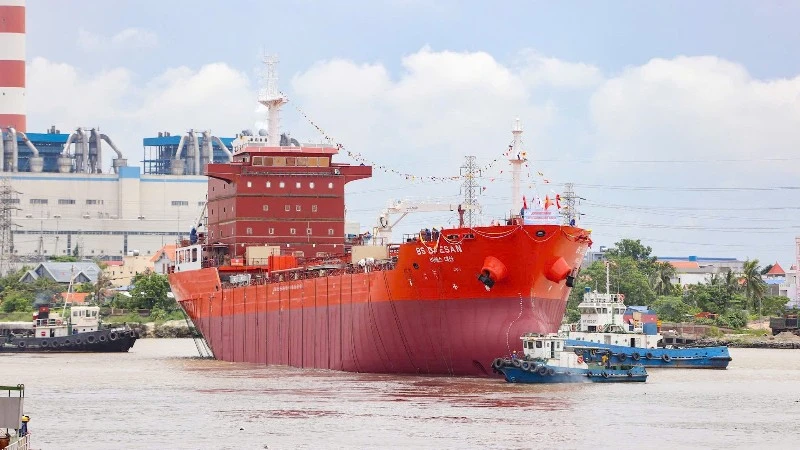
Vietnam is undertaking a significant restructuring of its shipbuilding industry as part of a broader national strategy to develop its maritime economy. The country currently has nearly 90 shipbuilding enterprises and over 400 inland waterway vessel construction facilities, with a total designed capacity of approximately 3.5 million DWT per year. Despite being in bankruptcy proceedings, shipyards under the Vietnam Shipbuilding Industry Corporation (SBIC) have secured orders that will ensure employment for their workers until the end of 2028. During a meeting on the development of the national maritime industry, General Secretary and President To Lam instructed the Government to research and propose solutions for SBIC's recovery and development. The directive emphasized preserving state assets and maintaining industrial capabilities that are difficult to recreate. In an interview with Nhan Dan, Associate Professor, Dr. Nguyen Ngoc Son, a full-time member of the National Assembly's Committee on Science, Technology, and Environment, explained why the shipbuilding sector is considered a "strategic mission," despite its relatively small contribution to GDP. He noted that even shipbuilding powerhouses like China, Japan, and the US prioritize this sector not for its direct GDP contribution, but to avoid the severe national impact of losing such industrial capacity. Vietnam, with its coastline of nearly 3,300 km and its location on vital maritime routes, relies on sea transport for about 80% of its import-export cargo. Dr. Son argued that without domestic capacity for building, repairing, and modifying vessels, the country cannot achieve self-sufficiency in its maritime economy, regardless of how modern its ports and logistics are. Dr. Son identified the processing of SBIC as a "bottleneck" because the corporation accounts for approximately 35% of Vietnam's total shipbuilding capacity. The prolonged resolution process has hindered reinvestment and development, significantly impacting the national shipbuilding capacity and deterring clients. He highlighted that SBIC's facilities, even under bankruptcy procedures, are fully booked until 2028 and are expected to launch over 60 ships this year, valued between $1 billion and $1.3 billion. This indicates that the assets being processed are not "dead capacity" but are operational and have a market, albeit burdened by old debts from the Vinashin era. The prolonged restructuring has led to a decline in skilled personnel, a loss that is difficult to recover. The new Law on Recovery and Bankruptcy, effective March 1, 2026, prioritizes the restoration of business operations over liquidation. Dr. Son proposed that SBIC's viable member units should apply for recovery procedures and immediately utilize the legal provisions for tax, credit, and land support. He also stressed the importance of policies to "retain people," particularly skilled workers, as their departure represents an irreplaceable loss. Regarding the increase of localization in the shipbuilding industry, Dr. Son suggested starting with "shipbuilding steel and basic materials" rather than high-tech equipment. Currently, the localization rate is only 20-30%, with 70-80% of components and equipment being imported. By gradually achieving self-sufficiency in shipbuilding steel plates and basic materials, which constitute 20-30% of a ship's value, Vietnam can significantly boost its shipbuilding industry's localization rate. On the proposal to prioritize domestic demand for the national fleet for domestic enterprises, Dr. Son advised caution to avoid conflicts with international commitments. He recommended a three-pronged approach: prioritizing orders for national defense, security, and public utility tasks; addressing packages below certain thresholds and entities outside commitment scopes; and using demand-side tools like credit incentives for shipowners choosing domestic construction, rather than discriminatory bidding practices. He noted a real market for fleet renewal, estimated at 4-5 million DWT by 2030, which could be secured by domestic or foreign shipyards. Source: Nhan Dan
Original source
Nhan Dan