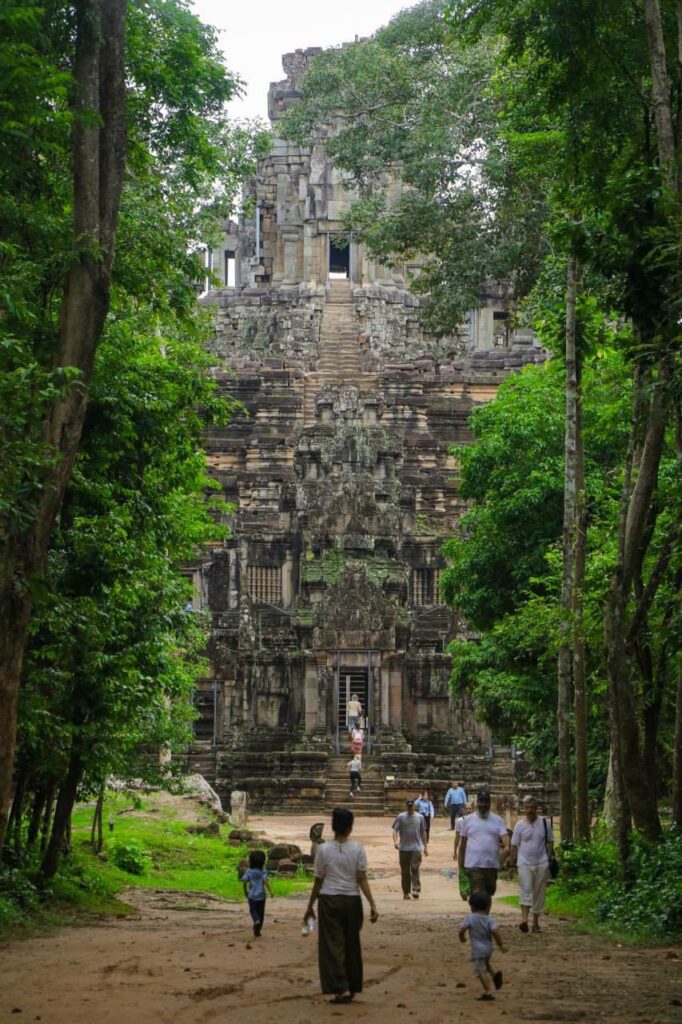
Ta Keo Temple: An Unfinished Masterpiece in Angkor, Cambodia
Ta Keo Temple, located within the Angkor Archaeological Park, stands as a monumental unfinished stone edifice, prompting exploration into its historical context and architectural peculiarities. Reasons for its incomplete construction include ill omens, the hardness of the stone, and political instability, leaving many mysteries unsolved.
Ta Keo Temple, situated within the UNESCO World Heritage site of the Angkor Archaeological Park in Cambodia, is renowned for its grand stone architecture but remains an unfinished edifice, posing numerous mysteries. Designed as a "mountain temple," it features a five-tiered structure built from massive sandstone, symbolizing Mount Meru, the center of the universe. What sets it apart is the notable absence of intricate carvings found in many other temples, a feature that captivates researchers and tourists alike. Historical records based on inscriptions indicate that Ta Keo Temple was originally named "Hemaśṛṅgagiri," meaning "mountain with a golden peak." Construction began in the late 10th century during the reign of King Jayavarman V (968-1001 AD), during a transitional period between the Banteay Srei and Kleang architectural styles. It was intended to be dedicated to the Hindu god Shiva. Following King Jayavarman V's death, construction was continued by his successors, King Jayaviravarman and King Suryavarman I. However, despite spanning three reigns, this monumental construction was never fully completed to this day. Geographically, Ta Keo Temple is located east of Angkor Thom, near the Victory Gate, and faces west of the East Baray. Its mountain temple design is characterized by five towers clustered on the highest tier (the fifth tier), all built on a single platform. This arrangement symbolizes the five peaks of Mount Meru, representing the cosmological center of the universe. Several theories have been proposed for its incomplete construction. The main ones include: 1. Ill Omen (Lightning Strike): Inscriptions provide evidence of a lightning strike hitting the temple during construction. In ancient beliefs, such an event was considered an ill omen or a sign of divine displeasure, leading to the suspension or reduction of construction activities. 2. Hardness of the Stone: The temple is constructed using a very hard, grayish-green sandstone, distinct from the sandstone used in other temples. The physical hardness of this material may have posed significant challenges for sculptors attempting to create fine, detailed carvings. 3. Crisis and Dynastic Change: Warfare and political instability at the end of Jayavarman V's reign, leading up to the accession of Suryavarman I, could have resulted in a shortage of labor and resources, causing the interruption of this massive architectural project (for further details, refer to George Coedès' "The Indianized States of Southeast Asia," Pierre Dupont's "La dislocation du Sud-Est asiatique au XIe siècle," and Claude Jacques & Michael Freeman's "Ancient Angkor"). In terms of heritage value and preservation, Ta Keo Temple, despite its unfinished carvings, stands as a remarkable testament to the engineering technology, patience, and skill of the Khmer ancestors in precisely arranging tens of thousands of massive stones to ensure structural stability and strength. Furthermore, it serves as a crucial "manual" for archaeologists, architects, and engineers studying the construction structure and phases of ancient temples, from the placement of bare stones to the preparation of surfaces for carving. The APSARA National Authority and the Chinese State Administration of Cultural Heritage (CSA) are collaborating on the restoration and conservation of Ta Keo Temple to ensure its structural integrity and facilitate easy access for tourists to ascend and capture the picturesque views from the summit of this sacred mountain temple. Source: Kampuchea Thmey Local
多角的分析
タ・ケウ寺院の未完成の理由は、建設当時の経済的余裕の欠如や、資源・労働力の配分問題を示唆している。特に、11世紀初頭のカンボジア(クメール帝国)は、周辺地域との紛争や国内の権力闘争が頻発していた時期であり、大規模な建築プロジェクトに継続的な資金と人材を投入することが困難であったと考えられる。これは、当時の帝国が軍事や政治的安定を優先せざるを得なかった経済的制約の表れと言える。
タ・ケウ寺院の事例は、古代のインフラ投資におけるリスク管理の重要性を示唆している。未完成のまま残された建造物は、計画段階での予見可能性の限界や、予期せぬ事態(政治的混乱、自然災害など)への対応能力の不足が、投資(この場合は王室による巨額の建築投資)のROI(投資収益率)を著しく低下させる可能性を示している。現代の投資家にとっても、プロジェクトの長期的な持続可能性とリスク分散の重要性を再認識させる教訓となる。
タ・ケウ寺院の未完成は、古代クメール社会における信仰と現実の間の乖離を示している。神聖な建造物として建設が開始されたものの、落雷という「神の意思」とされる出来事や、石材の加工の難しさ、そして政治的混乱といった世俗的な問題が、その完成を阻んだ。これは、当時の人々が自然現象や超常的な力と、日常的な生活や政治的課題にどのように向き合っていたかを示唆しており、信仰が常に現実の制約と隣り合わせであったことを物語っている。
タ・ケウ寺院の未完成は、現代のカンボジア市民にとっても、過去の祖先の偉業と、それに伴う困難を象徴する存在となっている。多くの市民は、この未完の寺院に、その技術力と忍耐力への誇りを感じると同時に、なぜ完成しなかったのかという疑問を抱いている。これは、古代の栄光と、それに影を落とした歴史的要因への関心を呼び起こし、自国の歴史に対する深い理解と探求心を育むきっかけとなっている。
背景・歴史的文脈
タ・ケウ寺院は、10世紀末から11世紀初頭にかけて、クメール帝国(アンコール朝)の最盛期に建設が開始された。この時代は、ジェヤヴァルマン5世、ジェヤヴィラヴァルマン、スールヤヴァルマン1世といった強力な王たちが統治し、アンコール・ワットやアンコール・トムといった巨大な建造物が次々と建設された時期と重なる。しかし、タ・ケウ寺院が未完成に終わった背景には、当時の政治的混乱、特に王位継承を巡る争いや、周辺地域との紛争が影響したと考えられている。また、寺院に使用された硬い砂岩の加工の難しさや、建設中に発生したとされる落雷といった出来事が、完成を妨げた要因として挙げられている。これらの要因が複合的に作用し、壮大な計画が中断されたと見られている。
原文ソース
Kampuchea Thmey Local