General articles are free for 24 hours after publish.
AI Tackles Philippine Foreclosure Law, Revolutionizing Legal Practice
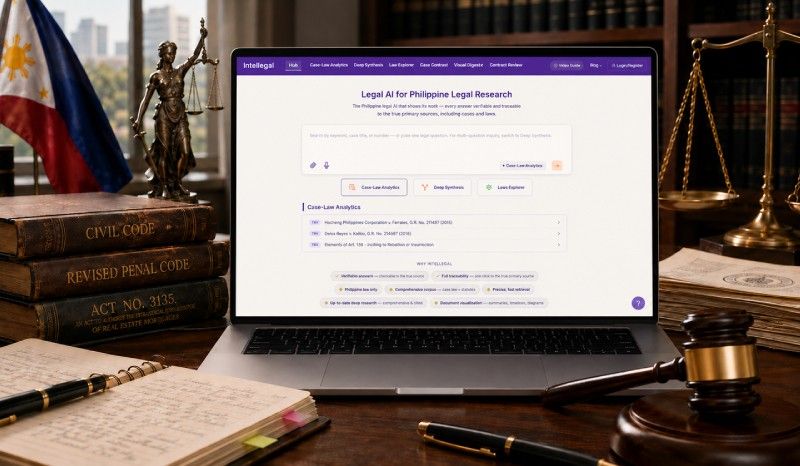
In the Philippines, the AI legal research tool Intellegal is analyzing complex property foreclosure disputes. Lawyers can now quickly and accurately grasp past precedents and laws using AI, streamlining litigation strategy development.
In the Philippines, property foreclosure disputes, often complicated by a complex legal framework and decades of Supreme Court rulings, have long been a challenge for lawyers. However, the introduction of AI technology is beginning to change this landscape. The core issue arises when a foreclosure sale purchaser claims ownership, but another person is already residing in the property and asserts their own rights. For Philippine lawyers, resolving such matters requires not just understanding a single provision but comprehensively grasping statutes enacted as early as 1924, subsequent amendments, procedural rules, and decades of Supreme Court decisions. AI legal research tools like Intellegal have been developed to analyze these intricate situations. Their ability to identify the requirements for a writ of possession after an extrajudicial foreclosure and to determine when a third party already in possession can resist it is being put to the test. Intellegal has compiled and organized statutes, procedural authorities, court issuances, and 110 Supreme Court decisions issued between 1941 and 2023. Crucially, it organizes this information around the facts that alter the legal outcome. While general-purpose AI tools like ChatGPT offer broad utility, they carry a risk of producing incorrect information. Enterprise platforms like Harvey are designed for large law firms. Intellegal differentiates itself by specializing in Philippine law, leveraging a dedicated legal corpus, and ensuring its underlying authorities are verifiable. This approach helps mitigate risks such as legal disadvantages arising from fabricated citations and upholds a lawyer's professional responsibilities. Intellegal accurately distinguishes the requirements for issuing a writ of possession during the redemption period versus after ownership has been consolidated. Notably, if a third party claims a right independent of the foreclosure debtor, the court may need to receive evidence, and the purchaser might have to file a separate ordinary action to recover possession. The AI can analyze not just the occupant's objection but the origin of their claimed right, differentiating between claims derived from the mortgagor and those arising independently. Furthermore, Intellegal's 'Visual Digest' feature visualizes the structure of lengthy Supreme Court decisions, enabling lawyers to quickly grasp case overviews, arguments, legal concepts, and party relationships. The 'Citation Map' feature displays the connections between precedents and their relationship with statutes in a network format, expanding research scope. The 'Deep Synthesis' function breaks down complex legal issues into focused sub-questions and generates IRAC-structured reports (Issue, Rule, Application, Conclusion). The adoption of these AI tools empowers Philippine lawyers to efficiently and accurately extract necessary knowledge from vast amounts of information, enabling more strategic litigation. This holds the potential to enhance the quality and accessibility of legal services in the Philippines. Source: Philstar Business
Original source
Philstar Business