General articles are free for 24 hours after publish.
US Eyes Gwadar Port: A Geopolitical Gambit?
Gwadar Port in southwestern Pakistan is attracting US attention amid escalating tensions in the Middle East. The port's strategic location and its role in China's Belt and Road Initiative make it a potential site for US-China geopolitical maneuvering, analysts suggest.
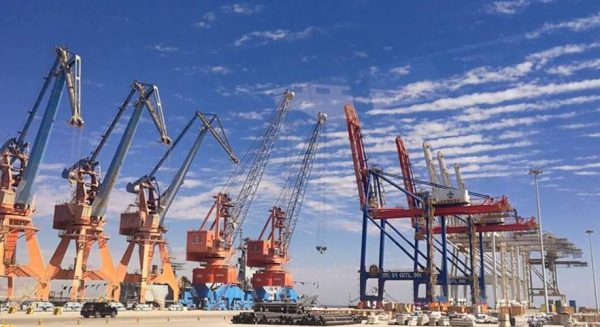
Gwadar Port in Pakistan’s Balochistan province is increasingly drawing the attention of the United States. Situated strategically just outside the Strait of Hormuz and across the Arabian Peninsula, the port has historically been recognized for its importance in security, trade, and geopolitics. The recent Iran-US conflict has severely impacted regional security, leading to increased maritime trade disruptions and geopolitical challenges. Amidst this, Gwadar Port has seen a surge in business and has become a focal point of interest for countries both near and far. Notably, since the Israel-US attacks on Iran commenced, the United States has heightened its interest in Gwadar. The US recognized Gwadar's importance long before China's investment in the port and the China-Pakistan Economic Corridor (CPEC) began. As early as 1954, the US Geological Survey identified Gwadar as a suitable location for port development. At that time, though undeveloped and small, Gwadar was already an active seaport along the Arabian Sea and part of the region's maritime trade networks. It was transferred from Omani to Pakistani control in 1958. The United States has long considered the maritime routes in the Gulf and surrounding waters among the most strategically important globally, particularly due to their role in energy supplies and shipping. Consequently, the US has maintained a presence in the waters near the Strait of Hormuz and the Arabian Peninsula since the 1940s. As China's regional interests grew, Gwadar Port's significance further amplified. Years of Chinese investment in Gwadar, CPEC development, its maritime ambitions for Gwadar, and Pakistan's close ties with both Iran and China have added new layers to Gwadar's importance in US eyes. A report from the US Naval War College has also identified Gwadar Port as a potential candidate for expanded Chinese naval operations. Meanwhile, Pakistan, seeking to balance its relations with China and the US, offered the Pasni Port, located about 100 kilometers from Gwadar, to the US in September 2025. Reports suggest that the US, aiming to expand its maritime influence and counter concerns over China's growing control of global port infrastructure, seeks to weaken Chinese influence by bringing strategically important ports like Gwadar under Western influence. Although the report mentioned 23 such ports, it did not identify all of them. The Sino-US relationship is also evolving. While relations appear to be stabilizing, even improving, with Chinese President Xi Jinping's visit to the US and his meeting with US President Donald Trump holding out the possibility of cooperation, this diplomatic engagement does not eliminate competition between the two major powers. For Washington, China's long-term and uninterrupted interest and investment in Gwadar Port and CPEC is a concern, particularly due to fears that China plans to develop strategic and military interests in the region. It has frequently accused China of attempting to use foreign ports owned by Chinese companies, such as Gwadar, to project naval power. As for China, although it has not yet benefited economically from Gwadar Port, it is unwilling to let go of it. This is because Gwadar Port and CPEC alleviate China's "Malacca Dilemma." While it is clear that Gwadar's geographic and geopolitical value far exceeds its economic benefits, it remains uncertain whether Washington will translate its interest in Gwadar and the surrounding region into a policy to establish a presence there. The acceptance of Pakistan's proposal for the development of Pasni Port has not been publicly disclosed. Source: The Diplomat Indonesia
Original source
The Diplomat Indonesia