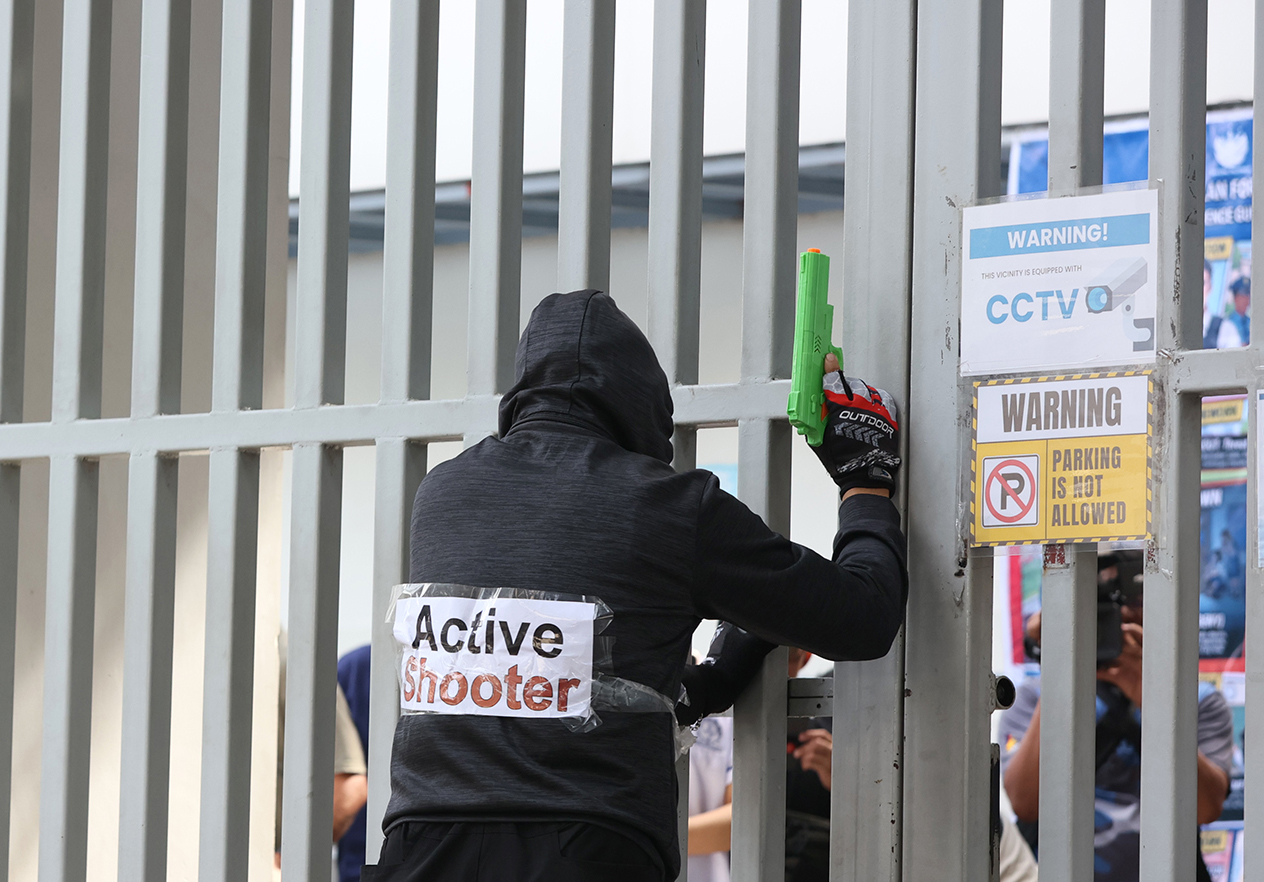
DepEd pilots ‘active shooter’ drill in Manila campus
Health
2026年7月16日
5
Inquirer NewsInfo

DepEd pilots ‘active shooter’ drill in Manila campus

AI サマリー

The Department of Education (DepEd) has conducted its first 'active shooter' drill in a public school, prompted by a recent shooting incident in Tacloban. The initiative adopts the 'Run, Hide, Fight' protocol, commonly used in the United States.

THIS IS NOT YOUR USUAL DRILL Aside from holding the usual earthquake drills on campus, public schools nationwide are now expected to prepare students, teachers and other personnel for “active shooter’’ scenarios, like in the simulation held for the first time by the Department of Education on Wednesday at Manila Science High School. —Photo by Niño Jesus Orbeta MANILA, Philippines — The recent spate of campus violence has led to a new kind of activity in public schools. The Department of Education (DepEd) on Wednesday conducted for the first time a drill simulating an “active shooter” scenario within school premises. The initiative was deemed necessary by DepEd particularly after the June 22 shooting incident at a Tacloban City high school that involved two teenage gunmen and left three students dead and 20 others injured. The first National Safe Schools Summit and Safety Drill was held at Manila Science High School (MSHS), where students, teachers, and local authorities performed lockout, lockdown, and evacuation procedures. READ: School shooting kills 3 students in Tacloban The activity at MSHS included a mock attacker wielding a plastic pistol and breaking into the compound, and a team of real police officers responding. A total of 1,770 students from Grades 7 to 12 participated in the simulation, which was closely patterned after the “Run, Hide, Fight” protocol followed in the United States. Intended to increase one’s chances of survival, the protocol is an internationally recognized approach widely adopted by the Federal Bureau of Investigation and the Department of Homeland Security in the US. “This fight is not DepEd’s fight alone; it is a challenge we must face together, especially given the complexities we have seen in recent weeks,” Education Secretary Sonny Angara said in a statement. READ: New threat shuts Tacloban school hit by mass shooting “We rely on the active support of our parents, families, communities, local governments, and our partners across all levels of government to ensure our schools remain safe havens,” Angara said. Rather than adopting a “one-size-fits-all” approach, public schools across the country are advised to draw up response plans unique to their community or campus setting. During Wednesday’s drills, for example, it was demonstrated that going into lockdown mode was the advisable course of action if a mass evacuation was not immediately possible. The students and teachers secured their classrooms by locking and barricading entry points, switching off the lights, putting their electronic devices on silent mode, and remaining out of sight until the threat was “neutralized.” Each campus is also expected to have a designated “reunification area” where the students and teachers can gather—to have everyone accounted for—once the grounds and buildings have been declared safe. “Our focus is on proactive prevention and readiness, because adhering to safety protocols is a vital step in saving lives,” Angara said. Sessions on contingency planning, psychological first aid, learner rights protection, and cybersafety were also conducted. There were also discussions on applying the Adopt-a-School Program or tapping the Special Education Fund to improve security systems on campus with the purchase of more cameras and other equipment. “It’s important that we (teachers) first know what needs to be done. From there, we can teach the children what they should do because we will serve as the example,” said Mary Jill Marzan, a teacher of MSHS, as quoted in a DepEd social media post. “Before they can calm down, we must first stay calm ourselves. We also need to be the first to be on alert,” Marzan added. The summit gathered stakeholders from government, local government units, civil society, and the private sector to align campus safety strategies, enhance interagency coordination, and test active threat protocols under a “whole-of-community” approach. “We can no longer allow security threats to place the lives of our learners in harm’s way,” Angara said. “It is important that we are prepared to face any threat. No family should ever have to grieve again because of a tragedy in school.” /cb

多角的分析

経済的影響

フィリピン経済において、学校の安全対策への投資は、教育インフラの改善や関連機器の購入といった直接的な経済効果をもたらす。また、保護者の安心感向上は、労働生産性や消費活動に間接的なプラス影響を与える可能性がある。しかし、こうした安全対策への継続的な投資は、教育予算の圧迫要因ともなり得るため、財政的な持続可能性が課題となる。

投資家心理

学校での安全対策強化は、教育関連のセキュリティシステムや技術を提供する企業にとって新たなビジネスチャンスとなる。投資家としては、こうした安全対策関連のサプライヤーや、学校インフラの近代化に関わる企業に注目が集まる可能性がある。ただし、治安悪化懸念が投資環境全体に与える影響は、慎重な分析が必要となる。

社会的影響

タクロバンでの銃撃事件は、フィリピン国内の公立学校における安全への懸念を浮き彫りにした。今回の「アクティブシューター」訓練導入は、生徒や教職員の心理的負担を増大させる可能性も指摘されている。一方で、地域社会や保護者との連携を強化し、学校を「安全な避難所」とするための包括的なアプローチは、コミュニティの連帯感を高める契機ともなりうる。特に、地方都市の学校では、リソースの制約から訓練の実施や安全対策の向上に格差が生じる可能性も懸念される。

市民の声

今回の訓練は、生徒や教職員、そして保護者にとって、学校での安全に対する意識を高める機会となる。しかし、訓練そのものが生徒に恐怖心を与えたり、過剰な警戒心を植え付けたりする可能性も否定できない。特に、地方の学校では、都市部と同等の訓練や設備が整わない場合、安全格差が生じる懸念がある。保護者としては、子供たちが安心して学校に通える環境が整備されることを強く望んでいる。

背景・歴史的文脈

フィリピンでは、過去にも学校での暴力事件が発生しており、特に2016年にはダバオ市で爆弾テロ未遂事件、2017年にはタクロバン市で高校生による銃撃事件が発生している。これらの事件は、公立学校における安全対策の不備を浮き彫りにし、政府に対策強化を求める声が高まるきっかけとなった。米国で普及している「Run, Hide, Fight」プロトコルは、こうした国際的な安全対策のトレンドを反映したものである。

原文ソース

Inquirer NewsInfo

原文を読む