General articles are free for 24 hours after publish.
Philippine Law Schools Proposed to Strengthen Human Rights Education
The University of the Philippines Institute of Human Rights (UP IHR) proposes a 12-unit Human Rights Law track in Juris Doctor programs to cultivate lawyers equipped for human rights advocacy. The initiative aims to address fragmentation in current legal education and promote social justice.
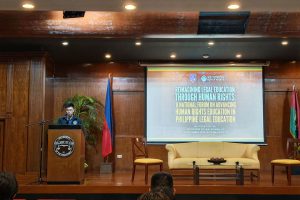
A new initiative is underway in the Philippines to strengthen the country's legal education and produce lawyers better equipped to advocate for human rights. The University of the Philippines Institute of Human Rights (UP IHR) is proposing the introduction of a 12-unit Human Rights Law track within the Juris Doctor program. This proposal aims to address the uneven and fragmented treatment of human rights in Philippine legal education. James Gregory A. Villasis, University Researcher at UP IHR and Head of the Human Rights and Peace Education Program, highlights that human rights discussions are often embedded within subjects like Constitutional Law and compete with other bar exam-focused courses. Consequently, students tend to perceive human rights as a collection of fragmented principles rather than a coherent field of law. The eight-month study, titled "Institutionalizing Human Rights, the Treatment of Inequality on Policy, Freedom, and Reform, and the Development of a Specialized Jurisdiction," examined how human rights education could be systematically integrated into the JD curriculum while meeting academic, professional, and regulatory standards. It adopts the framework of the 2011 United Nations Declaration on Human Rights Education and Training, emphasizing learning about, through, and for human rights. Previous studies indicated a significant gap, with a 2002–2006 baseline study finding that only 23% of 90 surveyed law schools offered a human rights course. While human rights law was recognized as a separate subject under LEB Memorandum No. 1, Series of 2011, subsequent mapping studies in 2013 and 2019 continued to identify issues such as fragmented integration across the curriculum, reliance on traditional Socratic and case methods, limited faculty specialization, and inadequate teaching methods and materials. Notably, under LEB Memorandum No. 24, Series of 2021, human rights were removed as a standalone required course and integrated into Constitutional Law as an alternative course coverage alongside the Bill of Rights. According to Mr. Villasis, this integration, while not inherently problematic, can lead to reduced depth, limited coverage, and a lack of coherence when human rights topics compete with other constitutional law subjects. A 2022 UP IHR baseline study further revealed gaps in human rights coverage, including limited discussion of economic, social, and cultural rights, and insufficient offerings focused on vulnerable sectors. The proposed Human Rights Law track would comprise five courses totaling 12 units. These include: 1. Foundational Human Rights Law and Social Justice Lawyering (4 units): Covers the history and principles of human rights, international instruments, the Philippine framework, and introduces community legal empowerment, policy advocacy, and ethical lawyering. 2. Special Topics in International Human Rights Law (2 units): Addresses refugee law, international humanitarian law, and international criminal law. 3. Contemporary and Emerging Human Rights Issues (units unspecified): Focuses on issues involving business, technology, artificial intelligence, climate change, and transitional justice. 4. Human Rights of Vulnerable Groups and Disadvantaged Persons (units unspecified): Examines the rights of marginalized groups such as LGBTQIA+ individuals, indigenous peoples, and persons deprived of liberty, addressing structural inequality and access to justice. 5. Human Rights Research and Seminar (2 units): A capstone course requiring independent research and presentation. The track is designed to equip students with substantive knowledge, practical skills, and a professional identity grounded in ethical practice and social justice. Representative Renee Louise M. Co of the Kabataan Party-list emphasizes that lawyers are expected to serve the people, recognize rights violations, and identify remedies for victims. This initiative represents a crucial step for the Philippine legal community in developing more proficient professionals capable of addressing the increasingly complex human rights issues both domestically and internationally. Source: BusinessWorld Nation
Original source
BusinessWorld Nation