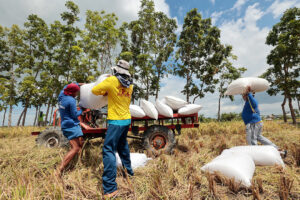
Palay Farmgate Price Surges 28.2% Year-on-Year in June
The farmgate price of dry palay (unmilled rice) in the Philippines rose by 28.2% year-on-year to P21.78 per kilogram in June, according to the Philippine Statistics Authority (PSA). However, prices saw a 0.7% decrease compared to May.
This article requires PRO
This article is outside the free access window or is a special report. PRO unlocks it and the full archive.
Related articles
- Ombudsman Challenges Customs to Share Data, Citing Potential Delays
The Philippine Ombudsman has urged the Bureau of Customs (BOC) to commit to data sharing with the anti-graft body, suggesting that delays might be used to stall complaints. The BOC stated it would cooperate with "lawful" requests.
- BSP Piso Caravan Offers Currency Exchange in Ilocos Sur
The Bangko Sentral ng Pilipinas (BSP) held its "Piso Caravan" in San Ildefonso, Ilocos Sur, allowing residents to exchange unfit or mutilated currency for new banknotes or e-money, aiming to maintain the integrity of the nation's currency circulation.
- DHL Philippines on Track for 100% Electric Fleet by 2030
DHL Express Philippines is maintaining its target to fully electrify its vehicle fleet by 2030. Currently, EVs constitute 40% of its fleet, with plans to replace older vehicles. Rising oil prices due to the Middle East situation are accelerating the shift to EVs.
- DA Pushes for Extended Toll Fee Waiver for Produce Haulers
The Philippine Department of Agriculture (DA) is negotiating with toll road operators to extend a toll fee waiver for trucks hauling agricultural goods until the end of the year. The move aims to mitigate rising fuel costs and reduce transportation expenses for farmers.