Cambodia's Healthcare, EV, Energy, and FMCG Sectors Face Growth Opportunities and Challenges
Health
2026年7月15日
5
Cambodia Investment Review
Relations
🇰🇭Cambodia🇨🇳China🌐United Nations / ASEAN

Cambodia's Healthcare, EV, Energy, and FMCG Sectors Face Growth Opportunities and Challenges

AI サマリー

Cambodian industry leaders convened to discuss market trends and outlook for the latter half of 2026. The healthcare sector sees rising demand from urbanization and income growth, while the EV sector hinges on ecosystem development. Energy markets face geopolitical risks, and the FMCG sector must adapt to changing consumer behavior.

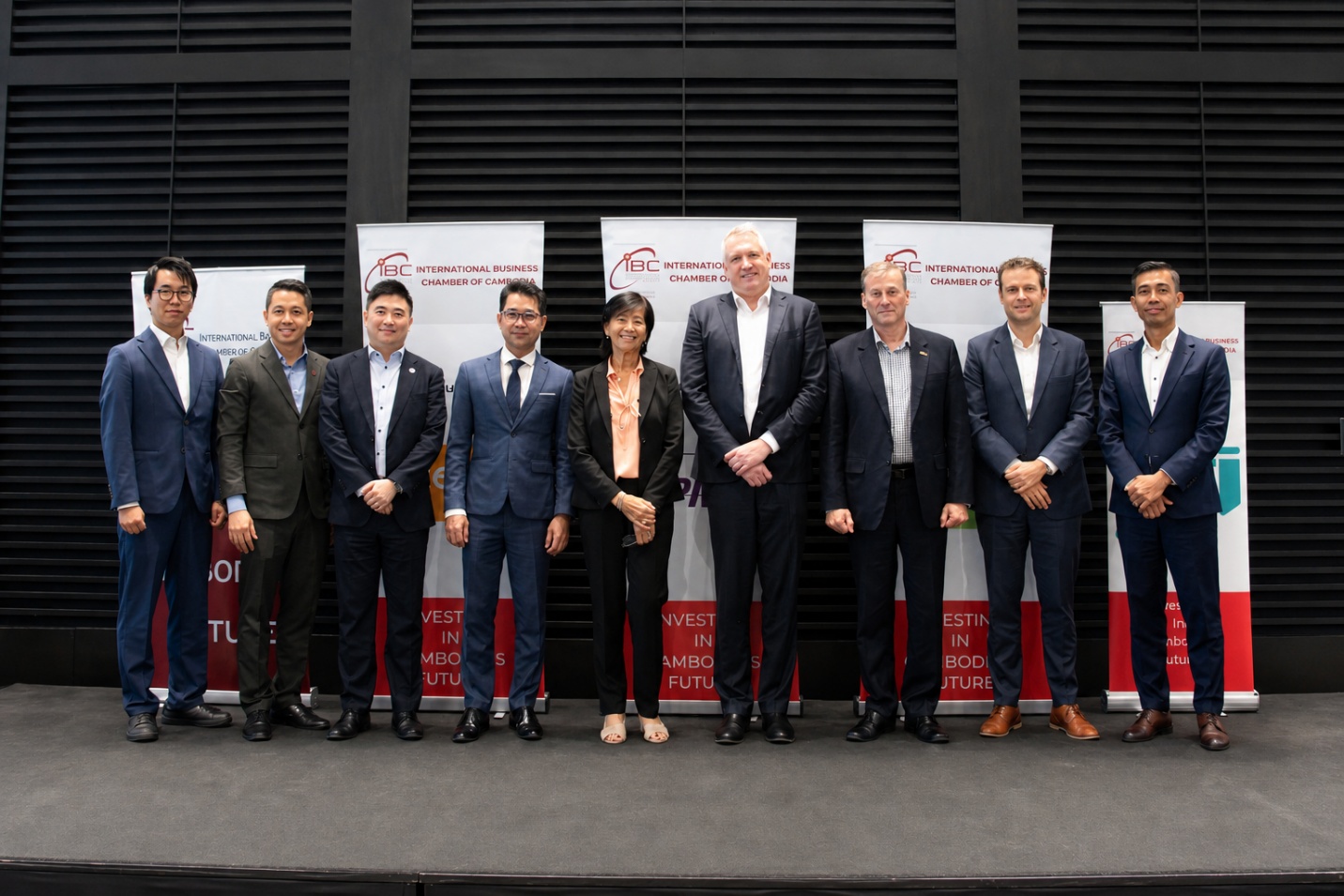
Cambodia’s business leaders gathered at Rosewood Phnom Penh on July 1 for the International Business Chamber (IBC) 6-Month Industry Review & Outlook for 2026, where leading executives from across the Kingdom’s major industries shared their assessment of current market conditions and the opportunities and risks expected during the second half of the year. In Part 2 we cover the perspectives from Mona Tep, CEO & Managing Director of Monaparady (Pharmacie de la Gare) and Advance European Medicare Center; Kunpei Kawamoto, Senior Manager of Group Corporate Strategy at MVL Foundation and Strategy Lead for ONiON Mobility; Yuan Liu, Managing Director & Country Chair of TotalEnergies Marketing Cambodia; and Maarten Van Leeuwen, Country Director of Danone Cambodia & Myanmar. Covering the healthcare, automotive, energy and FMCG sectors, the speakers highlighted how changing consumer behaviour, evolving technologies, geopolitical uncertainty and regulatory reforms are reshaping Cambodia’s business landscape. Cambodia’s healthcare sector is entering a period of sustained expansion driven by urbanisation, rising incomes and growing demand for specialised medical services, according to Mona Tep, CEO & Managing Director of Monaparady (Pharmacie de la Gare) and Advance European Medicare Center. Mona said healthcare demand continues to outpace supply, particularly for higher-quality diagnostic, laboratory and specialist services. While National Social Security Fund (NSSF) coverage has expanded significantly, access to quality healthcare remains uneven between urban and rural areas, leaving substantial opportunities for further investment. “Healthcare demand is continuing to grow, but patients are also expecting higher standards of quality, safety and specialised care.” She noted that Cambodia is also experiencing a steady rise in non-communicable diseases—including diabetes, cardiovascular disease and cancer—which is increasing pressure on both public and private healthcare providers. Looking ahead, Mona expects investment to accelerate in preventive healthcare, chronic disease management, telemedicine and digital health solutions, while partnerships between private providers and the NSSF are likely to expand access to healthcare services, leaning towards the model of Public-Private Partnership – PPP. “Quality, compliance and accreditation will increasingly become the factors that differentiate healthcare providers as competition grows.” She added that workforce development, specialist training and technology adoption will remain critical priorities as Cambodia seeks to strengthen its healthcare ecosystem over the coming years. Cambodia’s electric vehicle transition is entering a new phase, where success will depend less on vehicle sales and more on developing integrated mobility ecosystems, according to Kunpei Kawamoto, Senior Manager of Group Corporate Strategy at MVL Foundation and Strategy Lead for ONiON Mobility. Kawamoto noted that while Cambodia has approximately eight million registered vehicles, most are motorcycles, with electric passenger vehicles currently leading adoption while electric two-wheelers and three-wheelers remain underdeveloped despite representing the country’s largest daily transport segment. “The question is no longer whether electric vehicles can sell. The question is which business models can scale sustainably.” He argued that Cambodia’s biggest opportunity lies in accelerating electric mobility for daily commuting, tuk-tuks, delivery services, ride-hailing and last-mile logistics, where lower operating costs could create compelling commercial advantages. However, he stressed that widespread adoption will require affordable products, reliable charging infrastructure, customer confidence and practical ownership models rather than simply importing more electric vehicles. “Growth is shifting from selling vehicles to building complete mobility solutions.” Kawamoto said this is the direction MVL Group is working to advance through its broader mobility ecosystem, bringing together group companies such as ONiON Mobility and TADA with other partner companies. Kawamoto said cross-sector collaboration between automotive companies, financial institutions, energy providers, logistics firms and technology platforms will become increasingly important as Cambodia develops its electric mobility ecosystem. Global geopolitical tensions continue to influence Cambodia’s energy market despite fuel prices easing from recent highs, according to Yuan Liu, Managing Director & Country Chair of TotalEnergies Marketing Cambodia. Liu explained that retail fuel prices have largely returned to pre-conflict levels following government tax relief measures. Nevertheless, businesses should not assume price stability will continue indefinitely as international geopolitical developments continue to influence global energy markets. “Fuel prices have moderated, but volatility remains one of the biggest risks businesses should continue preparing for.” He encouraged companies to improve energy efficiency and secure long-term supply arrangements where possible, noting that predictable procurement strategies could reduce exposure to future market fluctuations. Liu also highlighted the growing interest in alternative energy solutions, including electric vehicles, although he suggested conventional fuels will remain an important part of Cambodia’s energy mix for the foreseeable future. “Businesses should focus on improving efficiency while maintaining secure and reliable fuel supply strategies.” Looking ahead, he expects moderate supply risks to remain alongside continued price uncertainty, encouraging companies to strengthen their energy planning rather than reacting only when disruptions occur. Cambodia’s consumer goods industry is becoming increasingly competitive as businesses respond to changing purchasing behaviour, affordability pressures and ongoing regional trade disruptions, according to Maarten Van Leeuwen, Country Director of Danone Cambodia & Myanmar. Van Leeuwen said the recent Cambodia–Thailand border dispute had temporarily disrupted FMCG market dynamics by influencing consumer sentiment, supply chains and purchasing decisions, while increasing logistics costs and operational complexity for many businesses. “Cambodia remains a growth market, but growth is becoming more selective and consumers are making more deliberate purchasing decisions.” Rather than relying solely on premium products or volume growth, he believes successful companies will increasingly adopt a two-speed strategy—offering strong value propositions while continuing to innovate within premium market segments. He also emphasised the importance of local market understanding, arguing that companies need to build brands around Khmer consumer preferences rather than relying exclusively on global strategies. “Winning companies will combine strong local relevance, value for money and disciplined execution.”

多角的分析

経済的影響

カンボジア経済は、これらの主要セクターの成長ポテンシャルに支えられている。医療分野では、所得向上と都市化が専門サービスへの需要を押し上げ、民間投資の機会を創出している。EV分野では、インフラ整備とビジネスモデルの進化が、新たなモビリティエコシステム構築を通じて経済成長を促進する可能性がある。エネルギー分野では、国際的な価格変動リスクを管理しつつ、国内のエネルギー安全保障と効率化が課題となる。消費財分野では、国内需要の多様化と地域経済との連携が、持続的な成長の鍵となる。これらセクターの発展は、雇用創興、技術移転、およびサプライチェーンの強化に貢献すると考えられる。

投資家心理

投資家にとって、カンボジアのこれらのセクターは、高い成長ポテンシャルと同時に、特有のリスクも内包している。医療分野では、質の高いサービスへの需要増は魅力だが、規制環境の整備や人材育成が投資の成否を分ける。EV分野では、初期投資の大きさ、充電インフラの普及度、そして持続可能なビジネスモデルの確立が重要となる。エネルギー分野では、地政学リスクによる価格変動への対応策が不可欠であり、長期的な供給契約やエネルギー効率化への投資がリスク軽減につながる。消費財分野では、変化する消費者行動への迅速な適応と、地域市場への深い理解が競争優位性を確立する上で重要となる。全体として、中長期的視点とリスク管理能力が求められる。

社会的影響

医療分野の発展は、地方部における医療アクセス格差の是正が重要な社会課題である。質の高い医療サービスへのアクセスが都市部に集中する現状は、国民全体の健康増進という観点から改善が求められる。EV分野では、普及が進むにつれて、特に二輪・三輪EVの利用者の生活コスト削減に貢献する可能性があるが、充電インフラの整備が都市部以外でも進むかどうかが、地域間のデジタルデバイドならぬ「モビリティデバイド」を生む可能性も否定できない。エネルギー分野では、燃料価格の変動が低所得者層の家計に直接的な影響を与えるため、安定供給と価格抑制策が社会的な安定に寄与する。消費財分野では、多様化する消費者ニーズに応える製品開発が、国民生活の質の向上に繋がる一方、地域経済の活性化にも貢献する。

市民の声

カンボジア市民、特に都市部では、より質の高い医療サービスへのアクセス向上を期待している。地方部では、依然として医療格差が課題となっている。EVの普及は、特にオートバイ利用者の移動コスト削減に繋がる可能性があるが、充電インフラの整備状況が利用者の利便性を左右する。エネルギー価格の変動は、家計に直接的な影響を与えるため、安定した価格での燃料供給が求められている。消費財分野では、手頃な価格で質の高い製品へのアクセスが、生活水準の向上に繋がる。変化する市場は、消費者に多様な選択肢を提供する一方で、購買決定における慎重さも要求している。

背景・歴史的文脈

カンボジアは、長年の紛争を経て、経済復興と近代化を最優先課題としてきた。特に2000年代以降、外資導入とインフラ開発に注力し、ASEAN地域における経済成長のプレイヤーとして注目を集めている。中国との関係強化は、インフラ投資や経済協力の面で顕著であり、経済発展の重要な推進力となっている。一方で、国内産業の育成、医療・教育といった社会インフラの整備、そして地域間の格差是正は、持続的な発展に向けた課題として残されている。本記事で取り上げられた各セクターの動向は、こうしたカンボジアの発展戦略と、国際情勢の影響を反映したものである。

原文ソース

Cambodia Investment Review

原文を読む