General articles are free for 24 hours after publish.
Indonesia Presents Emission Reduction Targets at UN, Minister Highlights Methane and Climate Financing
Indonesia presented its climate change control agendas at the UN Climate Summit, including methane emission reduction and renewable energy development. However, the nation stressed the crucial need for financial support to achieve these goals.
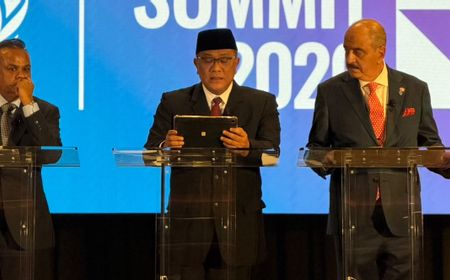
Indonesia has brought a number of agendas for climate change control to the UN forum, ranging from methane emission reduction, solar energy development, to coastal area protection. However, the implementation of these programs also requires financing support, especially to face the increasingly greater impacts of climate change. The Minister of Environment (LH) and Head of the Environment Control Agency (BPLH) Moh. Jumhur Hidayat conveyed this at the 2026 Climate Summit at the UN Headquarters, New York, on Wednesday, September 23. The majority said Indonesia continued to direct climate policy towards a net zero emissions target by 2060 or sooner. However, according to him, efforts to reduce emissions must go hand in hand with economic growth, energy resilience, and poverty alleviation. "The Paris Agreement is our compass. However, as the space to keep the temperature rise to 1.5 degrees Celsius is getting narrower, our task is to bridge the global commitment to tangible results," Jumhur said in a written statement received in Jakarta on Thursday, September 24. One of Indonesia's concerns is the reduction of methane emissions. This greenhouse gas accounted for 18.12 percent of Indonesia's total emissions in 2022. The government encourages improvements in waste and wastewater management, the use of technology, and the strengthening of the capacity of local governments. These steps are aimed at reducing emissions while improving air quality, health, and public services. In the energy and industry sector, Indonesia explained the development of large-scale solar energy, the application of B50 biodiesel fuel, electric vehicles, as well as carbon capture and storage technology. Jumhur emphasized that the transition to a low-carbon economy must also take into account energy affordability, employment opportunities, and benefits for the community. "The success of the transition is not only measured by technology or investment value, but also by energy affordability, decent work, local added value, protection of vulnerable groups, and tangible environmental benefits," he said. The issue of financing is also a concern for Indonesia. The government has requested affordable funding support to implement the national emission reduction target and adaptation plan. Indonesia also emphasizes the importance of grants and very low-interest financing for the development of early warning systems, ecosystem protection, and strengthening the capacity of local governments. As an archipelago country, Indonesia faces the threat of rising sea levels. The government has presented a plan to develop a Giant Sea Wall on the north coast of Java, accompanied by the protection and restoration of mangroves and coastal ecosystems. Ahead of the United Nations Climate Change Conference or COP31 in Antalya, Turkey, Indonesia encourages increased international funding support, including for countries and communities that suffer losses due to extreme weather. "Indonesia is ready to deepen partnerships that turn climate ambitions into real development opportunities and resilience for all," said Jumhur.
Original source
VOI English