General articles are free for 24 hours after publish.
Vietnam to Implement Speeding Fines with Phased Approach
Vietnam's government has decided to implement fines for violating safe following distances on highways in a phased approach, contingent upon infrastructure development, clear regulations, and comprehensive driver guidance. The aim is to balance safety with traffic flow.
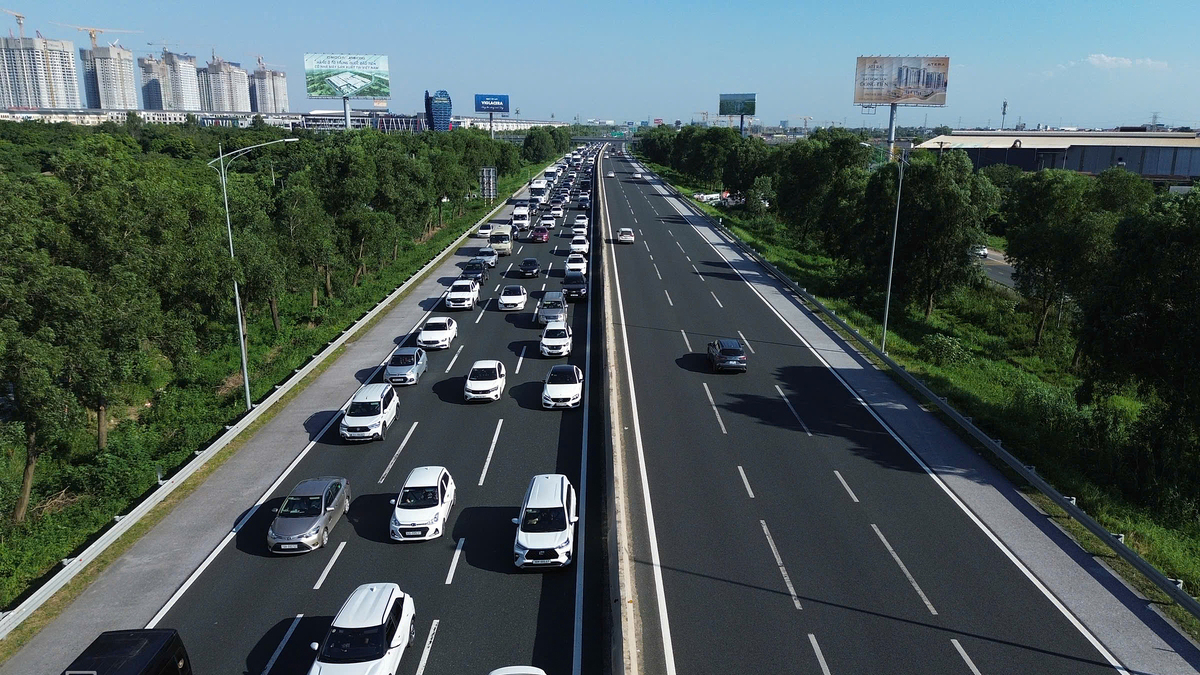
Vietnam's government has decided to implement fines for violating safe following distances on highways in a phased approach, contingent upon infrastructure development, clear regulations, and comprehensive driver guidance. The aim is to balance safety with traffic flow. The Government Office announced on September 14 the conclusions of a meeting chaired by Standing Deputy Prime Minister Pham Gia Tuc to review regulations on safe distances between road vehicles. The Deputy Prime Minister assigned the Ministry of Public Security to incorporate situations of maintaining safe distances on expressways into the training and examination program for driver's licenses. Fines must be applied in a phased manner, combined with publicity and guidance for drivers, and only implemented when conditions regarding infrastructure, equipment, standards, and regulations are fully met. The fining process must not cause traffic congestion or conflict, especially during holidays and Tet when vehicle density increases. According to government leaders, maintaining safe distances on roads, especially expressways, is consistent with the 1968 Vienna Convention on Road Traffic, to which Vietnam is a member, as well as the Road Law, the Law on Road Traffic Order and Safety, and related guiding documents. However, its application on expressways has been limited by legal frameworks, policy communication, and implementation organization. The timing of implementation has also not been convenient for road users. The Deputy Prime Minister assigned the Ministry of Construction to promptly amend related technical standards and regulations, including Circular 38/2024. Safe distances should be regulated in accordance with speed, traffic density, road conditions, terrain, and weather. In the immediate term, the Ministry of Construction will coordinate with the Ministry of Public Security to install signs on expressway sections where maintaining safe distances is enforced, helping drivers recognize and comply. Two weeks prior, following media reports on the fining of vehicles for not maintaining safe distances on expressways, the Deputy Prime Minister requested relevant agencies to assess the fines and the feasibility of the regulations. According to Circular 38/2024, when the road is dry, flat, visibility is ensured, and there are no specific distance signs, vehicles traveling at 60 km/h must maintain a minimum distance of 35 meters from the vehicle ahead. The minimum distance corresponding to speeds from over 60 to 80 km/h is 55 meters; over 80 to 100 km/h is 70 meters; and over 100 to 120 km/h is 100 meters. When driving below 60 km/h, drivers must actively maintain a distance appropriate to the traffic density and situation. In case of rain, fog, slippery roads, steep slopes, or limited visibility, the distance must be greater than that applied under normal conditions or comply with signage. Determining violations must be based on the driver's ability to proactively maintain distance. In cases where another vehicle unexpectedly changes lanes or cuts into the space ahead, the following vehicle should not be automatically considered in violation. Since August 27, the Road Traffic Police Department has been inspecting the maintenance of safe distances on the Phap Van - Cau Gie - Cao Bo - Mai Son - National Highway 45 - Nghi Son route. To date, over 20 cases have been processed, mainly involving passenger buses driving too close to the vehicle ahead. Source: VnExpress
Original source
VnExpress