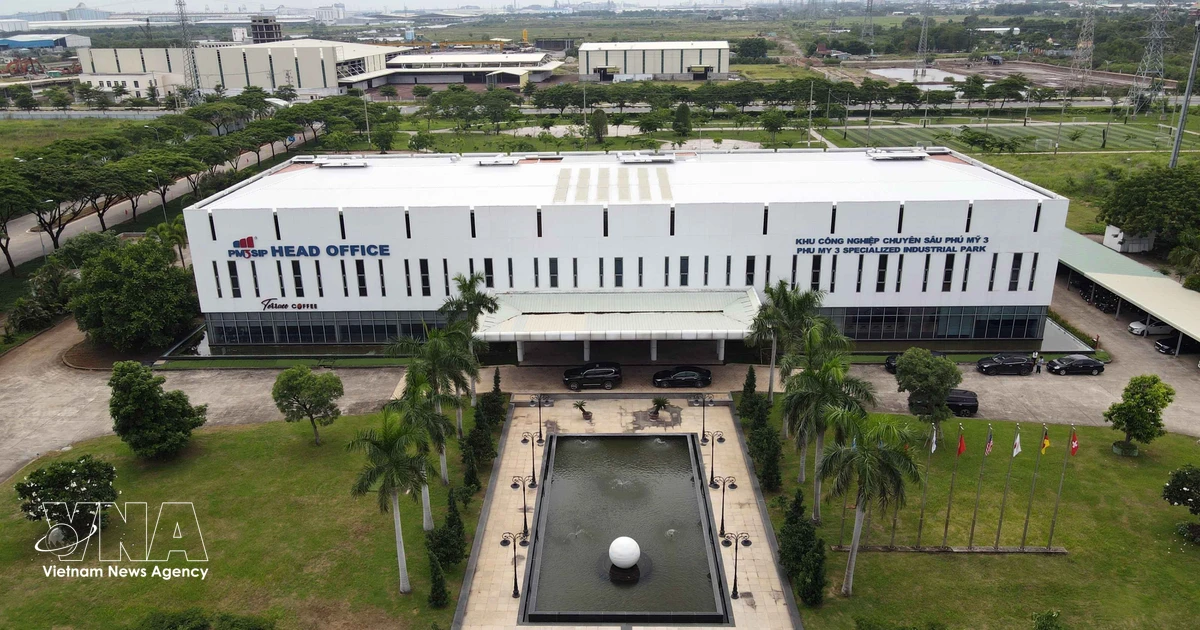
Ho Chi Minh City to Develop Phu My 3 as First Eco-Industrial Park
Ho Chi Minh City plans to increase urban green coverage to over 1 sq.m per person by 2030 and step up greenhouse gas reduction initiatives towards its 2050 Net Zero target. A key part of this strategy is the development of Phu My 3 as the city's first eco-industrial park, signaling Vietnam's commitment to international environmental standards and sustainable economic growth.
This article requires PRO
This article is outside the free access window or is a special report. PRO unlocks it and the full archive.
Related articles
- Five Vietnamese Businesswomen Named Among Asia's Most Powerful
Five Vietnamese businesswomen have been recognized in Fortune's '100 Most Powerful Women in Asia' list. Pham Thu Huong, Vice Chairwoman of Vingroup, secured the highest position for Vietnam at 37th.
- World Bank Raises Viet Nam's GDP Growth Forecast to 7.4% Amid AI Boom
The World Bank has raised Viet Nam's GDP growth forecast for 2024 to 7.4%, driven by increased demand for AI-related products. While this is among the highest in the East Asia and Pacific region, the report highlights risks associated with the economy's high dependence on AI-related exports and global demand fluctuations.
- Vietnam Welcomes Over 17.7 Million International Visitors in Nine Months
Vietnam has welcomed over 17.7 million international visitors from January to September this year. This figure marks a significant recovery for the tourism sector and is expected to boost economic growth.
- PNJ Stock Plummets, Loses Over VND21 Trillion in Market Cap, Falls Out of Top 100 Largest Firms
Vietnam's leading jewelry and precious metals company, PNJ, has seen its stock price plummet, losing over VND21 trillion (approximately $860 million USD) in market capitalization within three months and falling out of the top 100 largest listed companies. This decline is attributed to allegations of wrongdoing involving its subsidiary P-Lab and a significant downward revision of its business outlook.