General articles are free for 24 hours after publish.
Thai Economy Team Discusses Response to Soaring Oil Prices, Cabinet Meeting Next Week to Decide on Living Cost and Agricultural Support
Thailand's Deputy Prime Minister and Minister of Commerce has met with the economic team to discuss measures against rising oil prices. A cabinet meeting next week is expected to decide on support policies for living costs and agricultural products. Thailand's inflation rate remains low compared to other ASEAN nations.
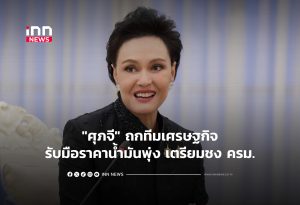
Supachai Jiamruammit, Deputy Prime Minister and Minister of Commerce, stated that the government is giving significant attention to the rising oil price situation. On Monday, a meeting was held with Deputy Prime Minister and Minister of Finance Ekkanit Nitithanprapas, Deputy Prime Minister Pakorn Nilaphan, Minister of Energy Ekanat Phromphan, and Minister of Industry Varawut Silpa-archa to discuss measures for managing energy prices and the cost of living for the public. Supachai anticipates that clear measures for managing energy prices, the cost of living, and agricultural product prices will be proposed at the cabinet meeting next week. Consideration will be given to allocating funds from various sources, including the central budget, loans, or the oil fund, to maximize benefits for farmers and the public. Furthermore, Supachai commented on the ongoing international conflict, noting that the war situation is more prolonged and intense than initially assessed, making it difficult to predict its end due to additional disruptions in maritime transport routes. Despite these challenges, Supachai expressed confidence that Thailand's inflation rate for the year will remain within the 3% target. For the past 7-8 months, the average inflation rate has been below 2%. Although there might be a slight increase towards the end of the year, reaching over 2% due to energy prices, Thailand's inflation remains low when compared to neighboring ASEAN countries like Singapore, which has seen inflation surge above 6%. Regarding energy and oil prices, Supachai stated that Thailand's oil prices are not high compared to neighboring countries, as the government continues to subsidize through the oil fund. Comparing diesel prices on September 12, Singapore was around 106 baht per liter, while Thailand was approximately 39-40 baht per liter. Thailand's prices are higher only than Brunei and Vietnam. In response to public queries about the Ministry of Commerce's role in controlling oil prices, the Minister of Commerce reiterated that the ministry does not have the authority to set oil prices. The power to determine prices and management policies rests with the Energy Policy Administration Committee (EPAC). While oil is a controlled product, the Ministry of Commerce's role is to oversee sales according to announced prices, ensure clear price displays, and inspect fuel dispensers for standardization. The ministry cannot intervene or reduce prices at the source due to specific laws governing the sector. Information Source: INN News
Original source
INN News