General articles are free for 24 hours after publish.
Europe-Vietnam Documentary Film Festival Opens, Fostering Cultural Exchange
The 16th Europe-Vietnam Documentary Film Festival has opened in Hanoi, showcasing a curated selection of European and Vietnamese films. The festival aims to foster mutual understanding and cultural cooperation through its unique pairing of films, highlighting themes of education and societal issues.
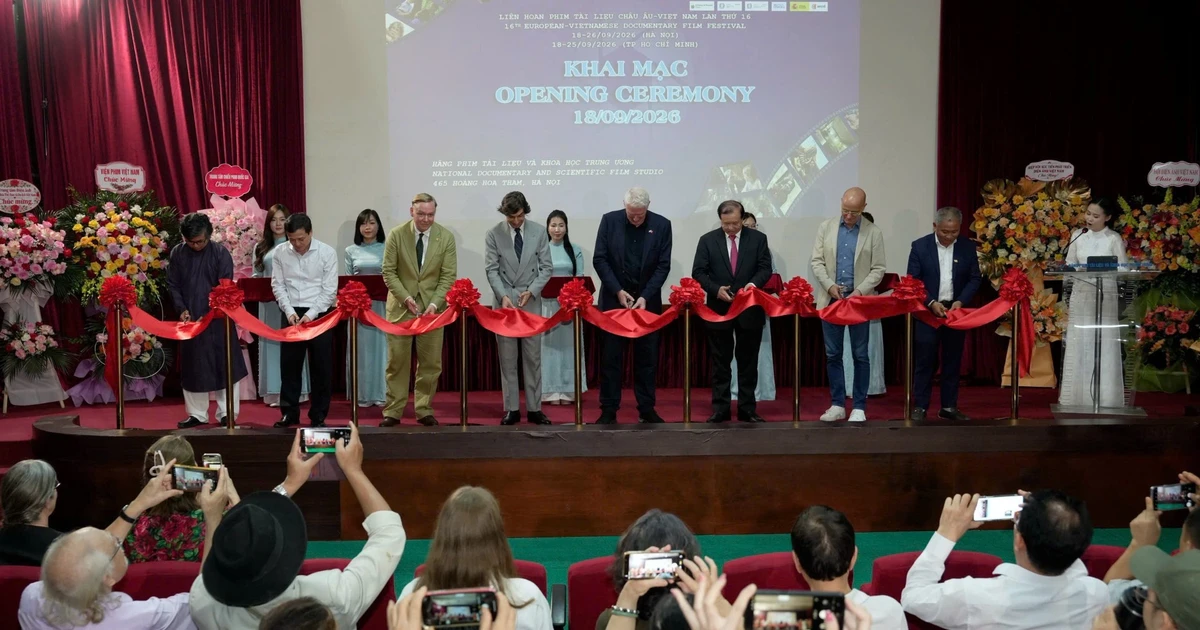
The 16th Europe-Vietnam Documentary Film Festival commenced on the evening of September 18th at the Central Documentary and Scientific Film Studio in Hanoi. This festival, kicking off a series of screenings in Hanoi and Ho Chi Minh City, aims to foster mutual understanding and cultural cooperation between Europe and Vietnam. Attendees at the opening ceremony included representatives from the Central Propaganda Department, the Ministry of Culture, Sports and Tourism, the Vietnam Cinema Department, the European Union National Institutes for Culture (EUNIC) in Vietnam, the British Council, embassies of participating countries, and figures from the film industry. Artist of Merit Trinh Quang Tung, Deputy General Director in charge of the Central Documentary and Scientific Film Studio, stated that the Europe-Vietnam Documentary Film Festival is an annual cinematic event organized in coordination with EUNIC to select and introduce European works. "Through this event, we have the opportunity to learn, explore, and understand each other's cultures, people, lives, environmental issues, and sustainable development in each nation. Documentary films will be a cultural bridge to bring us closer, thereby promoting cooperation in culture and advancing multifaceted relations between European countries and Vietnam," Tung emphasized. A unique aspect of the festival is its organization of paired screenings, featuring one Vietnamese film alongside a European film. This arrangement allows stories told in different cultural spaces to engage in dialogue on the same screen. Mr. James Shipton, Vice President of EUNIC Vietnam and Country Director of the British Council Vietnam, noted that this format has been a characteristic of the festival for 16 years. "For sixteen years, this film festival has offered a unique experience: the opportunity to sit together in an auditorium and see the world through the lens of others. Documentary films require a different reception from audiences than fiction films. They begin with real things: lives, places, and moments witnessed and carefully brought before us by filmmakers," Shipton remarked. This year's film selection takes audiences through stories connected to memory, tradition, and the transformations of life. The characters depicted include artists, activists, preservers of cultural values, and individuals navigating a changing society. The choice of works also indicates the capacity of documentary films to open dialogues that transcend geographical boundaries. Each film originates from a specific story, yet the issues raised can generate interest among audiences from different cultures. Ta Quang Dong, Deputy Minister of Culture, Sports and Tourism, affirmed that Vietnam has become a convergence point for many international film festivals in recent years, creating a diverse and connected cinematic space. The Europe-Vietnam Documentary Film Festival, through its 16 editions, has gradually asserted its position in Vietnamese cinema, contributing to bringing Vietnamese and European documentary works closer to the public while expanding opportunities for exchange and cooperation among filmmakers. He highly appreciated the coordination of the Central Documentary and Scientific Film Studio, EUNIC members, and relevant organizations in organizing the program. He expressed confidence that the festival will continue to be a meeting point for cinematic stories, perspectives, and creativity, contributing to enhancing understanding and cultural cooperation between Vietnam and European countries. On the opening night, audiences enjoyed "Professor Ho Xuan Sinh" (directed by Do Thi Huyen Trang) from Vietnam and "Sara and the Lives of People" (directed by Gunilla Bresky) from Sweden. "Professor Ho Xuan Sinh" portrays the contributions of Professor, Doctor of Science, People's Teacher Ho Xuan Sinh to Vietnamese education and science, notably the founding of Thang Long University in 1988, Vietnam's first non-public university. The film explores her educational journey and scientific research, alongside significant choices made for the development of higher education. Meanwhile, "Sara and the Lives of People" delves into the life of Swedish writer Sara Lidman, a figure associated with social issues and historical changes in her country. The film by Gunilla Bresky was nominated for a Guldbagge Award for Best Original Score in 2020 and received the Gemma Firsova Award for Best Film on Social Philosophy in 2020. The film recounts Lidman's journey from her childhood in Missenträsk, Sweden, to becoming a writer with a distinct voice. Through her writings and social activities, she addressed the injustices of war, the working conditions of miners in Sweden, and numerous other contemporary social issues. The 16th Europe-Vietnam Documentary Film Festival features works from several European countries and Vietnamese films, with diverse themes and expressions. Each work offers a unique story and perspective, creating a space for audiences to explore, reflect, and dialogue on contemporary life issues. By introducing works, connecting talent, and encouraging creative ideas, the film festival contributes to motivating the professional, creative, and integrated development of Vietnamese cinema. The festival involves 9 EUNIC members: the Wallonia-Brussels Delegation in Vietnam, the British Council, the Embassies of Austria, Spain, Italy, Sweden, Finland, Norway, and the French Institute, alongside host country Vietnam. The festival runs in Hanoi and Ho Chi Minh City from September 18th to 26th. Each evening, audiences can watch one Vietnamese and one European film. Over its 16 editions, this parallel screening model continues to provide opportunities for the Vietnamese public to become acquainted with European documentary cinema, while Vietnamese works gain a platform to be introduced to international audiences.
Original source
Nhan Dan