General articles are free for 24 hours after publish.
Vietnam Stocks Tumble on Market Upgrade Debut Day; Real Estate, Securities Weigh
Vietnam's stock market saw the VN-Index fall nearly 16 points, breaking below the 1,800 mark on the first day of its reclassification to secondary emerging by FTSE Russell. Strong selling pressure from domestic and foreign investors concentrated on real estate and securities sectors.
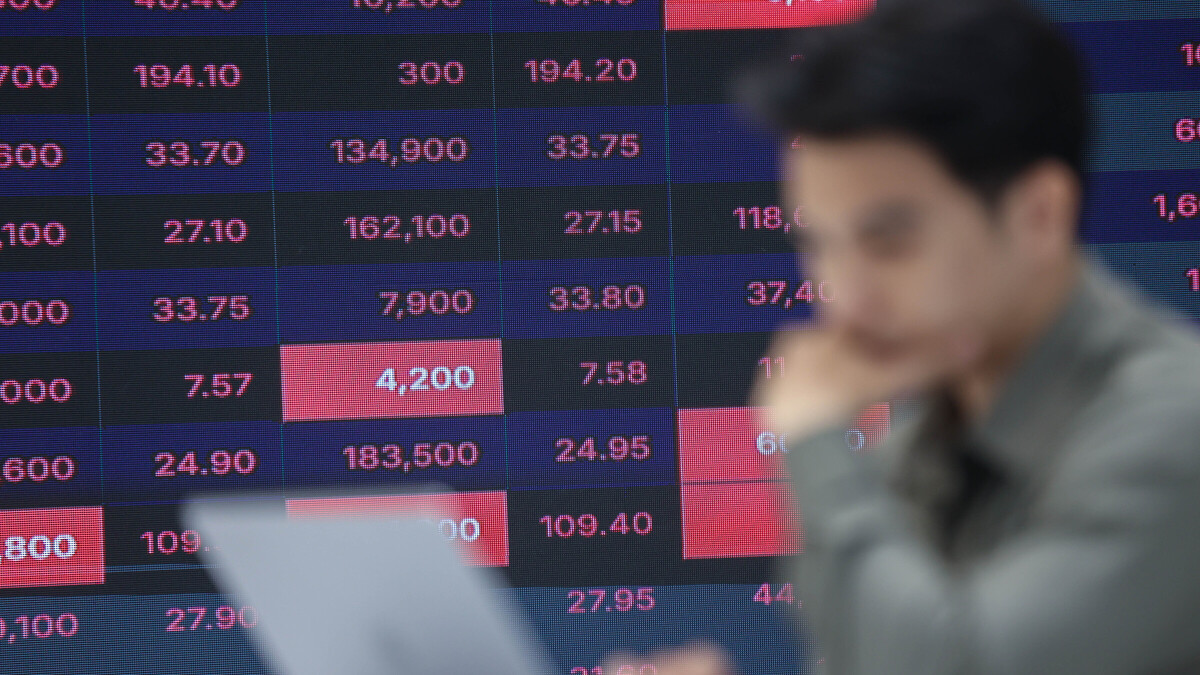
Vietnam's stock market experienced a significant decline on September 21, the first trading day following its reclassification from a frontier market to a secondary emerging market by FTSE Russell. The VN-Index, the benchmark for the Ho Chi Minh Stock Exchange, dropped nearly 16 points, falling below the 1,800 mark. This upgrade was expected to attract billions of dollars in foreign capital through a four-stage transition process extending to September next year. However, the market saw strong selling pressure from both domestic and foreign investors, concentrated on the real estate and securities sectors. According to several securities firms, the positive impact of this upgrade was largely priced in when FTSE Russell confirmed the reclassification in April. Therefore, the change in market classification was not expected to have a strong impact on the index, although it was anticipated to bring positive changes. The short-term performance, however, has somewhat defied these predictions. The index, which represents the Ho Chi Minh Stock Exchange, opened with gains but quickly reversed course and continued to widen its losses due to widespread selling pressure. The VN-Index at one point lost over 32 points, nearing the 1,780 level. Buying interest in leading banking stocks in the final minutes of trading helped the index inch back above 1,799 points, closing with a decrease of 16 points. The Ho Chi Minh Stock Exchange was dominated by red, with 200 stocks declining compared to half that number advancing. The large-cap stock basket also favored sellers, with 15 stocks closing below their reference prices, one of which hit the floor. By sector, real estate (including Vingroup) had the most negative impact on the general index. VIC and VHM fell by 2.6% and 4.1%, respectively, causing the index to drop by more than 15 points. This implies that the market was nearly flat if the fluctuations of these two stocks were excluded. Shares of other real estate developers such as Novaland, Quoc Cuong Gia Lai, DIC Corp, Ha Do, and Hoang Quan also closed below their reference prices, though with declines not exceeding 1.5%. Securities stocks, which were projected to benefit positively from the market upgrade, all reversed from gains to losses. Major stocks like VND, VCK, VIX, VCI, and SSI all lost more than 2% compared to their reference prices. According to analysts at Rong Viet Securities Corporation (VDSC), the impact of the market upgrade event will become clearer on individual stocks as they absorb large supply or demand relative to their liquidity. This was most evident in SSB, a stock of SeABank. Last week, SSB repeatedly hit the ceiling and reached a three-year high after FTSE Russell included its shares in the FTSE Global All Cap Index and VanEck Vietnam ETF added it to the MarketVector Vietnam Local Index. However, after the rebalancing, SSB lost all its gains, closing at VND 22,450 with no buyers. The sell-off volume at the floor price today reached nearly 2 million units. Conversely, Vietjet Air (VJC) closed at its ceiling price of VND 138,000 with no sellers. This stock ranked second among the most contributing stocks to the VN-Index on the first day of the week. VDSC experts noted that the VN-Index has increased by 10.3% over the past 11 months, while liquidity in August was only about 0.59 times the 12-month average. Therefore, there is more room for growth in trading volume than in index points, similar to the trend observed in markets previously upgraded by FTSE Russell. Market liquidity today reached over VND 17.3 trillion, a sharp decrease from the portfolio rebalancing session of foreign funds at the end of last week. VHM led in trading value with nearly VND 1.2 trillion, followed by VPB and VIC. After a net buying spree worth trillions of dong, foreign investors returned to net selling on the first day of Vietnam's stock market upgrade. Foreign investors disbursed over VND 2.4 trillion while selling nearly VND 3.1 trillion. Forecasting the market in the coming period, Beta Securities Corporation (BSI) believes the VN-Index is in a sideways state and lacks sufficient basis to confirm a new trend. The flow of money, liquidity, and the net buying trend of foreign investors this week will play a crucial role in confirming the market trend. Meanwhile, analysts at Saigon-Hanoi Securities Corporation (SHS) stated that the upgrade is a necessary condition, but the quality of businesses, growth potential of companies, and the economy are the decisive factors in the long term. SHS recommends that investors do not chase purchases as the VN-Index continues to head towards the strong resistance zone around 1,850 points. Source: VnExpress
Original source
VnExpress