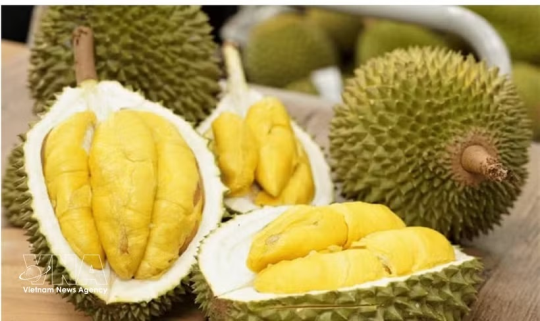
Thailand Steps Up Southern Durian Sales to Stabilize Prices
Thailand is bolstering sales of southern durian, which has seen a 30% production increase, amid price drops due to China's import suspension and domestic oversupply. The government is implementing measures to boost domestic consumption and support exports to stabilize the market.
This article requires PRO
This article is outside the free access window or is a special report. PRO unlocks it and the full archive.
Related articles
- Arsenic Levels in Mekong River Remain Below Standard in Northern Laos
Laos' Ministry of Environment has released the latest arsenic level monitoring results for the Mekong River in Bokeo and Luang Prabang provinces, confirming all sites remain below the standard safety limit. The ministry plans to continue ongoing surveillance.
- Laos and Vietnam Boost Coordination Against Digital Misinformation
Laos and Vietnam agreed to strengthen coordination between their ruling parties to combat misinformation and manipulation in the digital space, driven by advancements in AI and digital platforms. Focus will be on youth engagement and finalizing a cooperation agreement.
- Laos Seeks Economic Growth Through Strengthened Ties with China and Vietnam
Laos is seeking economic growth by strengthening its ties with China and Vietnam. Under its one-party system, Laos views investment and support from both countries as key to economic development, though external debt and infrastructure development sustainability remain challenges.
- Vietnam and Laos to Strengthen Cooperation in Information and Propaganda
Vietnam's Commission for Publicity and Laos' Commission for Propaganda and Training met to agree on a draft cooperation agreement for 2027-2031. Both nations will enhance collaboration on ideological foundations, digital transformation, and combating misinformation.