General articles are free for 24 hours after publish.
Vietnam's Fruit and Vegetable Exports to China Surge, Narrowing Gap with Chile
Vietnam has become China's third-largest supplier of vegetables and fruits in the first half of the year, with export value reaching $2.16 billion, a 19.3% increase year-on-year. Its market share has expanded, closing the gap with second-place Chile, driven significantly by durian exports.
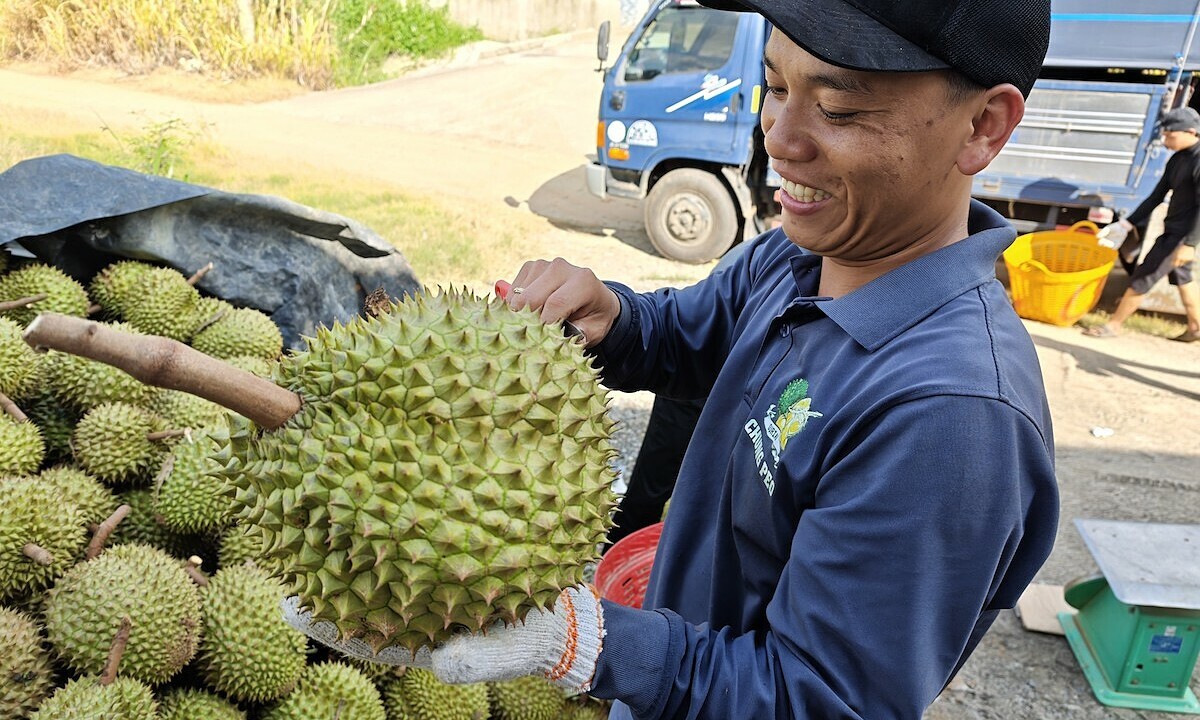
Vietnam has become China's third-largest supplier of vegetables and fruits in the first half of the year, with its market share rising and narrowing the gap with the second largest, Chile. Vietnam was China’s third largest supplier of fruits and vegetables in the first half of the year, with its market share rising and narrowing the gap with the second largest, Chile. China spent approximately US$2.16 billion importing vegetables, flowers, roots, and fruits from Vietnam, up 19.3% from the same period in 2025, according to data from China Customs. Vietnam’s share rose from 13.8% of China’s imports in the first half of 2025 to almost 16% to rank behind Thailand (37%) and Chile (17%). Vietnam’s rise has been driven by both scale and changes in its product mix, with durian emerging as the biggest growth driver. This year, China has paid nearly $988 million for imports of fresh and frozen durian from Vietnam, up 43% from the same period a year earlier.thos Shipments of coconut also rose sharply but of mango, dragon fruit, and banana declined. Dang Phuc Nguyen, secretary-general of the Vietnam Fruit and Vegetable Association, said the proximity allows fresh products from Vietnam to reach China quickly, maintain better quality, and incur lower logistics costs than exports from Southeast Asia and South America. This advantage is particularly important for fresh fruits, which are highly dependent on transportation time. As demand for tropical fruits in China expands from major cities to second- and third-tier cities and provinces in the country’s northern and western regions, suppliers located closer to China have greater room for growth. A farmer holds a durian in Lam Dong Province, August 2026. Photo by VnExpress/Viet Quoc China’s approval for a growing number of Vietnamese fruits has enabled businesses to expand their growing areas and output. But China is also imposing increasingly stringent requirements on imports. Nguyen said China is tightening oversight across areas ranging from business registration and growing-area codes to packing facilities. Origin fraud, the misuse of growing-area codes, and pest contamination can result in codes being temporarily suspended or revoked, directly affecting the exports of an entire growing region, he said.
Original source
VnExpress International