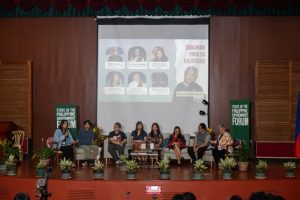
Environmental Groups Demand Stronger Climate, Conservation Action Ahead of President's Address
Philippine environmental groups, scientists, and community advocates have called for stronger government action on climate change, biodiversity protection, and environmental governance ahead of President Ferdinand R. Marcos Jr.'s State of the Nation Address. They expressed concerns over environmental degradation, extractive projects, and the protection of environmental defenders, emphasizing citizen participation for sustainable development.
Environmental groups, scientists, and community advocates called for stronger government action on climate change, biodiversity protection, and environmental governance ahead of President Ferdinand R. Marcos Jr.’s fourth State of the Nation Address (SONA), while expressing hope that greater public participation can help address the country’s ecological challenges. At the “Plundered, Not Poor: State of the Philippine Environment 2026” forum held on Friday at the University of the Philippines Diliman, the speakers highlighted concerns over environmental degradation, extractive projects, and the protection of environmental defenders, while emphasizing the role of citizens and communities in advancing sustainable development. Center for Environmental Concerns (CEC) executive director Mattie Balagat said environmental groups remain critical of the administration’s performance on environmental issues. “Four years into the Marcos Jr. administration, the verdict of the environmental movement is definitive: it is a failure. We see no genuine climate action—only the worsening commercialization of our patrimony, the masking of corporate destruction as ‘green solutions,’ and the violent silencing of our defenders,” Ms. Balagat said. Living Laudato Si’ Philippines executive director and national convener of Aksyon Klima Pilipinas Rodne R. Galicha said stronger implementation of environmental policies and science-based decision-making are needed to improve climate resilience. “Corruption in environmental governance has many faces. It is not only bribery or stolen public funds. It also happens when political influence overrides science, when environmental laws are selectively enforced, when public resources finance projects that weaken climate resilience, and when communities bear the environmental costs while a few enjoy the benefits,” Mr. Galicha said. Speakers also raised concerns about the effects of large-scale projects on biodiversity and local communities. Representatives from mining-affected and Indigenous communities called for greater protection of natural resources and ancestral lands. “I do hope and pray that if you believe that our forest is worth protecting, if you believe our rivers deserve to remain clean, that farmers and fisherfolk deserve a future, and that our children deserve to inherit a country rich in life, not only on a matter of resources, stand with us in this fight,” said Zesirie G. Enggo of the Kasibu Inter-Tribal Response towards Ecological Development (KIRED). KATRIBU secretary general Funa-ay Claver said the shift to renewable energy should also uphold Indigenous Peoples’ rights. “The transition to renewable energy is not ‘just’ if it follows the same model of land grabbing, rights violations, and corporate plunder as seen in extractive projects. A truly just transition is rooted in justice and respect for Indigenous Peoples’ rights to ancestral land and self-determination,” Ms. Claver said. The proposed Waste-to-Energy project in Smokey Mountain also drew criticism from environmental advocates, who called for greater investment in zero-waste initiatives. “The government must strictly enforce RA 9003 and RA 8749 rather than funding toxic and destructive incinerating false solutions. We demand immediate investment in community-based and humane Zero Waste systems that uplift our marginalized families instead of displacing them. True environmental justice empowers communities to manage resources safely, rather than burning our future to ashes,” said Shey Levita of Plastic Free Pilipinas under the EcoWaste Coalition. The forum likewise highlighted the situation of land and environmental defenders. Emmanuel Acosta, convenor of the Defend Negros Network, called for accountability in cases involving human rights violations. “The government’s attempts to cover up the killings and other human rights violations against land and environmental defenders expose its deep complicity in silencing dissent. As Marcos Jr. prepares to tout gains in agriculture and counterinsurgency efforts in his upcoming SONA, the public must remember that the food on our tables has too often been produced at the cost of farmers’ blood, spilled in the pursuit of justice,” Mr. Acosta said. Closing the event, IBON Foundation executive director Jose Enrique “Sonny” A. Africa stressed that development should benefit both people and the environment. “Upper middle-income status from growth that plunders our land, waters, and mountains to enrich a few while making communities poorer isn’t progress. Our hope for more democratic politics, sustainability, and real development lies in the people, not with the trapos and capitalists who cause the problem to begin with,” Mr. Africa said. Despite the concerns raised, participants expressed optimism that stronger public engagement, accountability, and cooperation among communities, scientists, and advocates can help advance environmental protection and sustainable development in the country. — Kaizzer Angela Marie V. Manuba
多角的分析
環境団体は、抽出型プロジェクトや「グリーンソリューション」と称されるものの実態、そして環境ガバナンスにおける腐敗が、持続可能な開発を阻害していると指摘している。特に、再生可能エネルギーへの移行においても、先住民の権利侵害や土地収奪といった過去の抽出型プロジェクトと同様のモデルが繰り返されることへの懸念が示されている。これは、フィリピン経済が資源依存型から脱却し、真に持続可能な成長を目指す上での構造的な課題を示唆している。また、ゼロウェイストへの投資不足と、廃棄物焼却といった「偽の解決策」への資金投入は、長期的な環境コストと経済的非効率性を生む可能性がある。
投資家にとっては、環境規制の強化や、先住民の権利、環境擁護者への配慮といった社会的な要因が、プロジェクトの実行可能性やリスクに影響を与える可能性がある。特に、大規模な抽出型プロジェクトやインフラ開発においては、環境影響評価や地域社会との合意形成がより重視されるようになるだろう。また、環境規制の不確実性や、一部のプロジェクトに対する社会的な反対は、投資判断におけるリスク要因となりうる。一方で、再生可能エネルギーやゼロウェイストといった環境配慮型のビジネスモデルへの投資機会も増加すると考えられる。
環境問題は、フィリピン社会において、特に先住民コミュニティや地方の農民・漁民といった脆弱な立場にある人々に直接的な影響を与えている。彼らは、土地収奪、環境汚染、そして自らの生活基盤の喪失といったリスクに直面している。環境擁護者への暴力や沈黙の強要は、民主的な意思決定プロセスへの参加を阻害し、人権侵害の問題としても深刻化している。スモーキーマウンテンの廃棄物発電プロジェクトに対する反対は、公衆衛生と地域住民の生活環境への懸念を反映しており、より包括的で地域社会に根差した解決策が求められていることを示している。
市民にとって、環境問題は日々の生活の質、健康、そして将来世代への遺産に直結する。彼らは、政府の環境政策が効果的であるか、そして自分たちの声が政策決定に反映されているかに疑問を抱いている。特に、環境破壊が地域経済や生計に悪影響を与える場合、市民は自らの権利を守るために声を上げざるを得ない。環境擁護者への弾圧は、市民の権利と自由に対する脅威であり、民主的な社会における説明責任の欠如を示唆している。市民は、より透明で、科学に基づいた、そして公正な環境政策を求めている。
背景・歴史的文脈
フィリピンは、豊かな生物多様性を持つ一方で、森林破壊、海洋汚染、過剰な開発による環境負荷といった長年の課題を抱えている。特に、抽出型産業(鉱業、伐採)は経済成長の源泉となってきたが、しばしば環境破壊や地域社会との紛争を引き起こしてきた。過去の政権下でも、環境保護と経済開発のバランスは常に議論の的であり、環境保護団体は政府の対応の遅れや実効性のなさを批判してきた。マルコス・ジュニア政権は、気候変動への適応や再生可能エネルギーへの移行を掲げているものの、具体的な行動や、抽出型産業に対する姿勢については、環境団体からの厳しい目が注がれている。環境擁護者への暴力や脅迫は、フィリピンにおける人権問題としても国際的に懸念されている。
原文ソース
BusinessWorld Nation