General articles are free for 24 hours after publish.
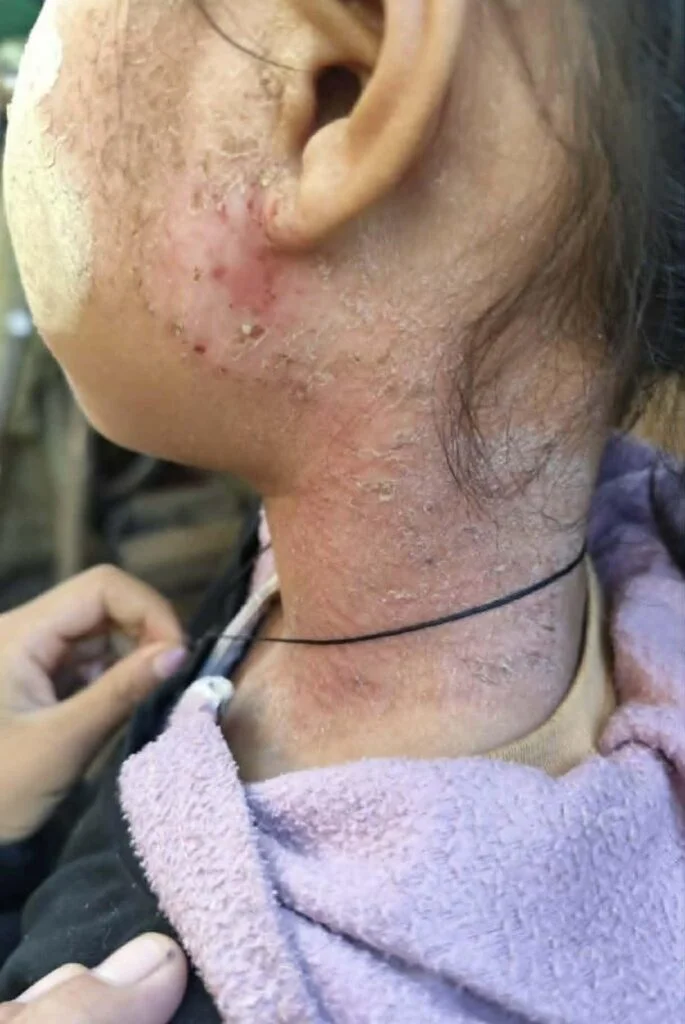
Worsening Skin Diseases Among Displaced People During the Rainy Season
For people who have been displaced by conflict in Karenni State for years, the rainy season has become a period when transportation becomes more difficult, living areas become damp day and night, and ultimately, they fac
For people who have been displaced by conflict in Karenni State for years, the rainy season has become a period when transportation becomes more difficult, living areas become damp day and night, and ultimately, they face even more health challenges. Many people, including children and adults, in some displacement camps are suffering from itchy skin, rashes, blisters, and sores. According to information collected in 2026, many people, including children, students, and elderly residents, at the Shwe Nyaung Kone displacement camp in Hpruso Township have experienced itchy skin and rashes. There were difficulties in treatment due to insufficient medical supplies. In some areas, these skin problems do not simply occur once and disappear but recur repeatedly. Health workers say that skin problems in displacement camps cannot be attributed solely to the rainy season. A lack of adequate access to clean water, overcrowded living conditions, difficulties in maintaining personal hygiene, and limited access to medicines can also contribute to long-term skin problems. Health workers also note that, for people already experiencing skin problems, the arrival of the rainy season can cause symptoms to last longer because of the damp weather. People in some displacement camps also face difficulties accessing healthcare. For example, residents of the Mae Sone (South) displacement camp in Pekhon Township who suffer from skin problems have to travel to nearby villages for treatment because there is no clinic inside the camp. Travel is also very difficult during the rainy season. Because there is no clinic in the camp, healthcare teams provide healthcare services through monthly field visits, according to residents. At present, people suffering from fever or skin irritation have to travel to nearby villages to receive treatment. In some camps, there are not enough medicines to treat skin diseases. As a result, residents have to share the medicines available, purchase medicines from outside, or rely on traditional local remedies. In addition to skin problems, during the rainy season, displaced communities also need to be cautious about diseases such as dengue fever and malaria, which can be transmitted by mosquitoes, as well as diarrhea caused by unclean water and respiratory illnesses. “People can get the flu or mosquito-related illnesses such as malaria. They can also suffer from diarrhea. Once the rain starts, there are more insects, such as flies and mosquitoes,” said a female health worker. During the rainy season, the damp conditions make it difficult to keep clothes dry. In some displacement camps, people also have to manage using water carefully, making it difficult to maintain regular personal hygiene. These conditions can increase the risk of scabies, ringworm, fungal infections, and other skin infections. A report released by the Myanmar Health Cluster in April 2026 also stated that cases of skin infections had increased across Myanmar, including in Karenni State, and the number of areas reporting such infections was also rising. Skin infections were reported in Ayeyarwady, Bago, Karen, Karenni, Magway, Rakhine, Sagaing, and Tanintharyi. The report also stated that medicines needed to treat skin diseases were available and could be requested through the Health Cluster. For people who have been displaced by conflict in Karenni State for years, skin disease is not a problem that suddenly appears only when the rainy season arrives. Rather, it is a problem resulting from a combination of many other factors, including water shortages, difficulties maintaining personal hygiene, overcrowding, inadequate medicines, and limited access to healthcare services. Health workers also say that there are basic health practices that people can follow, despite the difficulties, to help prevent skin irritation and other diseases. “Keep your clothes and body dry, and change clothes immediately if they become wet from the rain. Clothes should be thoroughly dried, as much as possible, in a well-ventilated or sunny place. Clothes should not be shared. To prevent the spread of scabies and fungal infections, towels, clothing, and bedding should not be shared with others. Drinking water should be boiled, or water-purification tablets should be used. When your skin is itchy, scratching it hard with your fingernails can allow bacteria to enter and cause the wound to become infected,” explained a health worker. When people are suffering from skin problems and have difficulty obtaining medicines, they can also use thanaka or a type of lotion that provides a cooling effect, according to health workers. For displaced people in Karenni State who continue to suffer from skin problems during the rainy season, access to clean water, the ability to maintain personal hygiene, and access to necessary medicines have become essential needs in their daily lives. For those who continue to experience skin problems due to damp conditions, water shortages, and overcrowding, treatment alone is not enough. They continue to need reliable access to clean water and basic healthcare services.
Original source
Kantarawaddy Times