General articles are free for 24 hours after publish.
Cambodia Questions Thai Military's 'Managed Reality' During O'Smach Border Visit
Cambodia has strongly questioned the 'managed reality' presented during a visit by ASEAN observers and media to the O'Smach area, allegedly occupied by Thai troops. The Cambodian government points to discrepancies between Thai explanations and on-site observations, emphasizing the need for independent verification.
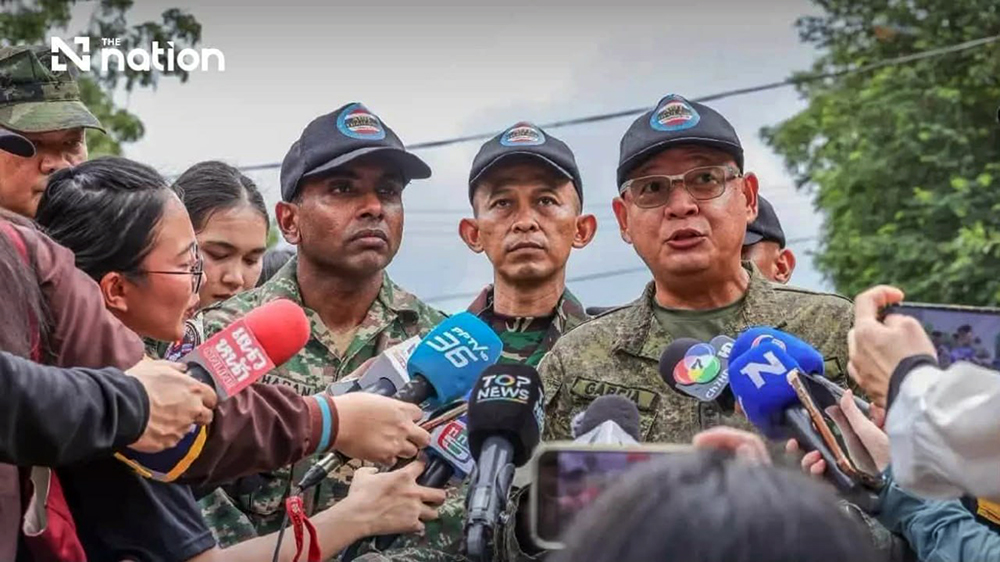
The Cambodian government has strongly questioned the legitimacy of a visit by ASEAN observers and media to the O'Smach area, which it claims is under illegal occupation by Thai troops, suggesting that the reality presented was "managed" by the Thai side. Following the visit on September 7, 2026, the Cambodian government lodged a strong protest with Thailand on September 8, denouncing it as a violation of Cambodia's sovereignty and territorial integrity. After the visit, Lieutenant Colonel Roderick T. Garcia of the ASEAN observers based in Thailand stated that what he saw "significantly differed" from the information he had received prior to the visit. He noted that it was not yet possible to draw conclusions from either party's evidence or accounts and that further assessment and verification were needed. Citing Lt. Col. Garcia's remarks, the Cambodian side asserts that what Thailand presented cannot be recognized as factual. The core issue, according to Cambodia, is the fact that the area is illegally controlled by the Thai military. Cambodia poses critical questions: "Who controlled the location before AOT [presumably referring to the occupied area] and the media arrived?" "Who selected what would be shown?" "Who managed access?" "And who can guarantee that what was presented on that day was the original situation, not a pre-arranged scenario?" The Cambodian government emphasizes that a presentation under circumstances where one party controls the site, access, what is shown, and the interpretation of what has been displayed, cannot be considered an independent verification. They argue that attempts to create narratives and slander Cambodia using images of fabricated buildings, police stations, or hospitals must first undergo independent verification, stating that organizing a visit does not equate to confirming facts. Cambodia asserts that before asking "What is inside that building?" one should first ask "Whose territory is that building on?" They contend that border issues must be resolved through law, border documents, and agreed-upon mechanisms between parties, and that accusations of scams cannot serve as a pretext for territorial occupation by force. Furthermore, Cambodia highlights Lt. Col. Garcia's mention of the Thai explanation that they had "no intention of occupying" and were "ready to withdraw once border issues were resolved." Cambodia questions this, asking why there would be a need to mention "readiness to withdraw" if it were not an occupation. They also question why withdrawal would depend on JBC (presumably the Joint Border Committee) negotiations, which the Thai side repeatedly postpones using various pretexts. In conclusion, Cambodia urges that the events at O'Smach should not be judged solely by the images the organizers wished the world to see. It is necessary to verify who controls the site, who prepared what was to be shown, and what was present before the area fell under Thai military control. While controlling a location, arranging a visit, selecting what to show, and creating a scenario are possible, reality cannot be made to follow a scenario, Cambodia argues. Forcible occupation does not create sovereignty, and a visit arranged by an illegal occupier cannot transform claims into facts; it is merely a staged deception of observers and journalists, the Cambodian government sternly criticizes.
Original source
AKP Khmer