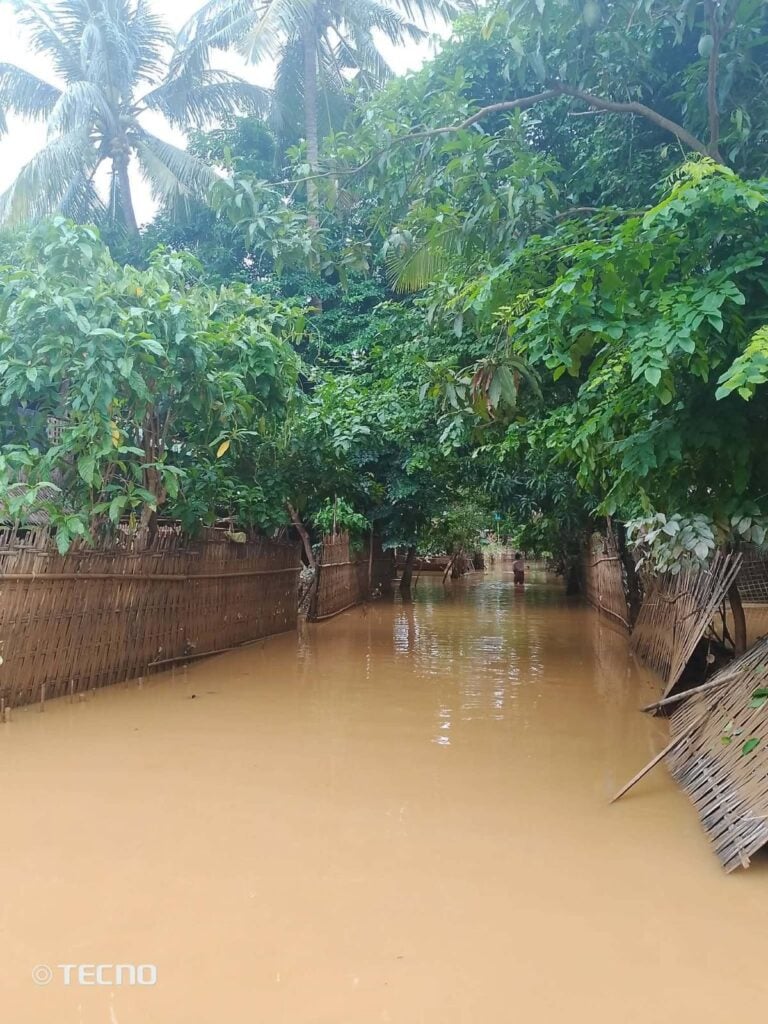
Receding floodwaters in Myanmar’s Rakhine leave urgent need for drinking water and food
Mizzima Floodwaters began receding on 13 July) across five northern Rakhine State townships after five days of flooding that reached over six feet deep, leaving residents in urgent need of drinking water and food as they
This article requires PRO
This article is outside the free access window or is a special report. PRO unlocks it and the full archive.
Related articles
- Gold items found at landslide site returned to owner
Approximately 15 ticals of gold found in a house buried by a landslide on October 4 in Tao Chee Village, Launglon Township, Tanintharyi Region, where landslides occurred, have been returned to their owner, according to t
- Machinery, workers sent to Dawei for recovery
NINETEEN machinery vehicles and skilled workers departed Myeik for Dawei, Taninthayi Region, on the evening of 3 October to assist with rescue and rehabilita- tion work in disaster-hit areas of Dawei District af- fected
- Magnitude 4.5 earthquake occurred near Monywa
A magnitude 4.5 earthquake occurred with its epicenter near Monywa in Chin State, according to the Department of Meteorology and Hydrology. This earthquake, with a magnitude of 4.5, occurred at approximately 12:25 PM on
- Relief Measures : Tanintharyi Region Gov't provides aid to flood victims
Tanintharyi Region Chief Minister U Zaw Naing Oo attended a ceremony in Dawei to provide cash and relief supplies to people affected by recent floods and landslides. Heavy rains from September 26 caused flooding and land