General articles are free for 24 hours after publish.
Thailand's Complex Reservoir and Dam Management Balancing Flood and Drought Preparedness
Thailand's complex reservoir and dam management involves multiple agencies coordinating seasonal storage targets, rainfall forecasts, and river flows to balance flood control with water supply during dry spells. This intricate system is crucial for ensuring stable water resources for the public and agriculture.
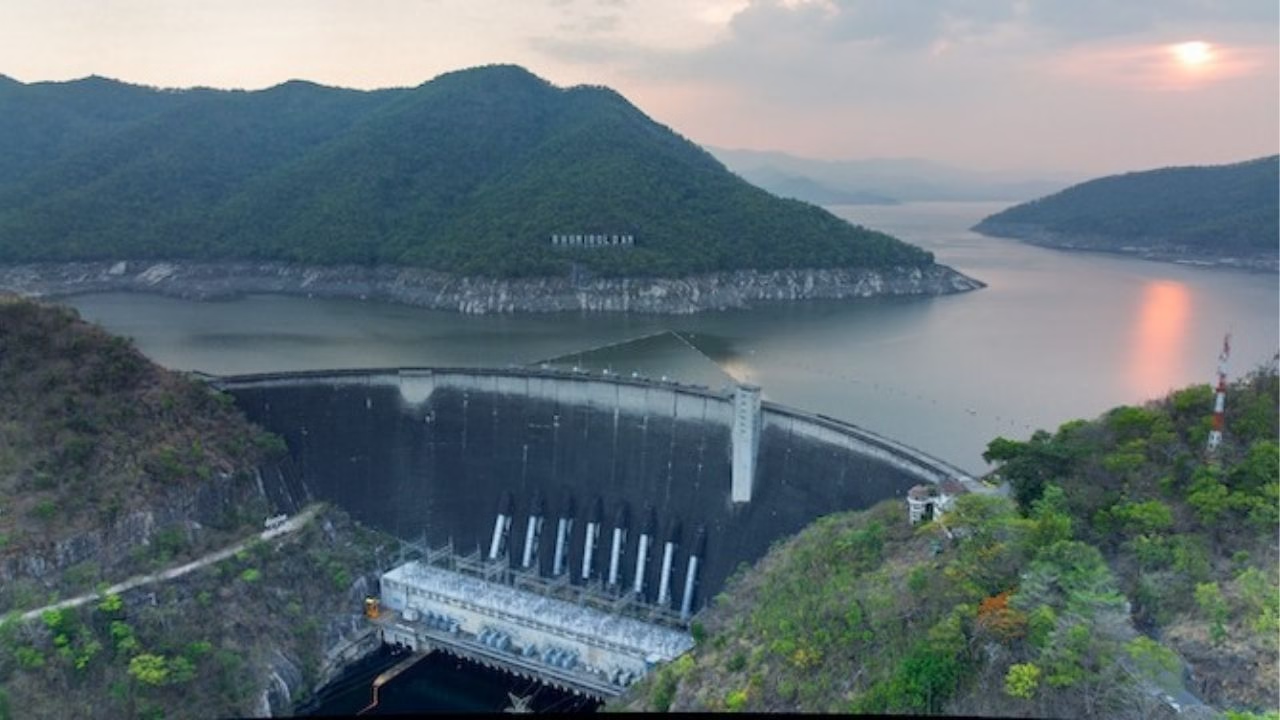
Last Updated on September 25, 2026 by Jeff Tomas A dam can protect a town from a flood in September and supply its farms during a dry spell months later. Understanding how Thailand manages its reservoirs and dams means looking at both jobs together. Water kept for households, irrigation, and hydropower takes up space that might be needed when heavy rain arrives. Operators can’t make that tradeoff by checking a reservoir level alone. They use seasonal storage targets, rainfall forecasts, river readings, and plans shared across agencies. Those decisions begin well before a flood or drought makes the news. Thailand’s reservoirs do several jobs at once. Stored water supplies towns and farmland, while releases can generate electricity or maintain flows downstream. During heavy rain, available storage can also hold back some runoff. Operators must weigh those uses against the amount of water a dam can safely retain. No single agency controls every part of that work. Ownership, operation, irrigation delivery, and national planning involve different organizations, so a release decision must account for conditions beyond one reservoir. RID manages irrigation systems and much of the water allocation that connects reservoirs to farms and communities. It also handles important river-control structures, including the Chao Phraya Dam. EGAT operates major hydropower reservoirs, including Bhumibol and Sirikit, and coordinates releases with other water managers. ONWR brings information and plans together at the national level. That matters when rainfall crosses basin boundaries or competing users need the same limited supply. Hydropower may benefit from a release, but electricity production doesn’t erase downstream flood risk or a future irrigation shortage. Bhumibol, Sirikit, Khwae Noi Bamrung Daen, and Pa Sak Jolasid are central to planning water in the Chao Phraya basin. They sit on different parts of the wider river system, so officials consider their combined storage and releases rather than treating each reservoir as an isolated tank. Water released upstream takes time to move through rivers and irrigation networks. As a result, decisions at one dam affect how much water can be handled elsewhere. A study of Chao Phraya flood operations describes the use of an automated reservoir-management system to assess basin conditions. That broader view helps officials plan for incoming runoff without losing sight of later water needs. A reservoir’s rule curve is a set of storage benchmarks that changes by month. The upper rule curve indicates a level above which flood-storage space becomes a concern. The lower rule curve helps protect water for future use. These aren’t identical targets for every dam, nor are they commands to release water immediately whenever a line is crossed. Operators compare actual storage with the curves, then consider forecasts, inflows, and river conditions. The challenge shifts through the year: leave enough room for rain, then retain enough water to get through drier months. If forecasts point to heavy inflows, operators may release water in advance so a reservoir can absorb some arriving runoff. An early, controlled release can be easier for downstream waterways to handle than a larger release after storage rises sharply. Timing still matters. Rain may already be falling below the dam, leaving little room in the river for additional water. Forecasts can change, too, so officials may revise a release plan as new readings arrive. A study of Bhumibol Dam during Thailand’s 2011 flood examines how reservoir operations can reduce flood peaks while facing limits set by incoming water. As the rainy season draws to a close, storing more water becomes increasingly important. That reserve supports household supply, irrigation, and other downstream needs when natural river flows decline. Releases must also account for environmental needs rather than sending all available water to one user. Holding water has a cost if another major storm arrives. Releasing too much has a cost when rainfall falls short later. Seasonal targets give operators a starting point for managing both risks, while updated forecasts determine how closely a reservoir can follow the planned storage path. Unusual conditions put routine plans under pressure. With high inflows, RID, EGAT, and ONWR share information about storage, expected rain, and the ability of rivers and irrigation channels to carry water. During drought, they compare what remains in storage with demand through the coming dry season. In either case, dam safety matters alongside supply and flood control. A release that helps one location may raise water levels elsewhere, so agencies must consider where the water will go. The Chao Phraya Dam shows why release plans can change quickly. It controls river flow rather than storing water on the scale of the basin’s large upstream reservoirs. RID therefore watches incoming flow, rainfall, and downstream levels when setting its discharge. On September 21, 2026, RID said it planned to raise discharge to roughly 1,000 to 1,300 cubic meters per second as more floodwater approached. It also described using eastern and western irrigation systems to reduce downstream impacts. Those figures describe a plan on that date, not a standing release rate. How to interpret Chao Phraya Dam releases depends on both the discharge number and conditions along the river. When levels may rise, warnings give downstream communities time to prepare. When rain is scarce, officials have to budget stored water against expected needs. They may reduce or delay discretionary releases, adjust irrigation plans, and protect supplies needed for households later in the season. Hydropower operations also have to fit within that water budget. The choices can be difficult for farmers planning crops. A reservoir that looks adequately filled early in a dry spell may have to supply many months of demand. Research on dry-season allocation in the Chao Phraya basin documents the longstanding pressure of sharing stored water among users. Thailand’s drought preparations offer another view of why release schedules may tighten when supplies are at risk. Storage readings are useful, but they don’t tell the whole story. Agencies also watch rainfall forecasts, upstream flows, river levels, and conditions downstream of a dam. Public reports and alerts turn those observations into information people can use. A high reading calls for closer attention to inflows and safe operating levels. It doesn’t, by itself, show that a dam is unsafe or that flooding is unavoidable. Likewise, a reservoir below its usual seasonal level can threaten future supply without creating an immediate emergency. Officials compare storage with each reservoir’s monthly upper and lower rule curves. A reservoir approaching or exceeding its upper curve may need closer monitoring, especially if more rain is forecast. National updates can report storage across
Original source
Chiang Rai Times