Asian Markets Mixed as Tech Stocks Fall; Vietnam's Outlook Uncertain
Asian markets traded mixed as selling in AI-related shares pulled down benchmarks in Japan and South Korea, though gains in other markets like Hong Kong and Shanghai offered some support. Vietnam's market appears less directly impacted, but global economic uncertainties persist.
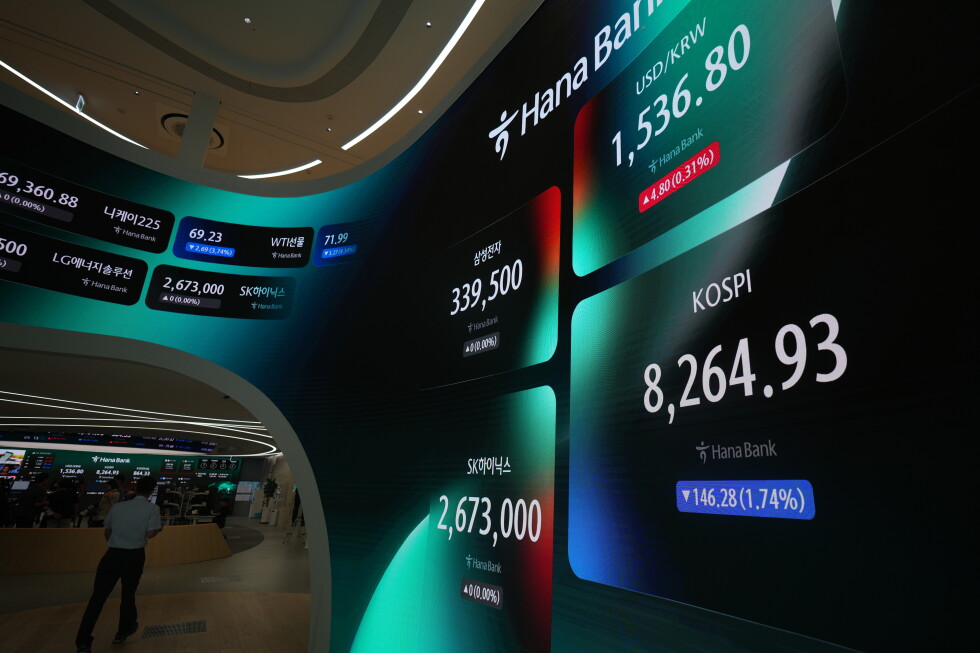
Asian markets traded mixed on Monday as selling of artificial intelligence-related shares pulled benchmarks in Japan and South Korea lower, though gains for other stocks helped offset those losses. U.S. futures advanced and oil prices gained, though they remained close to the levels they were at before the Iran war began in late February. Tensions between the U.S. and Iran escalated over the weekend as Iran launched fresh drone and missile attacks on Bahrain and Kuwait in response to new U.S. airstrikes, adding to uncertainties clouding the global economic outlook. Tokyo’s Nikkei 225 shed 1% to 68,704.70, after falling 4.2% on Friday. SoftBank Group, the multinational investment holding company which invests in OpenAI, sank 5.9% following a 12.5% drop on Friday. South Korea’s Kospi lost 2% to 8,246.50. It was down 5.8% on Friday. Samsung Electronics sank 6%, while memory chipmaker SK Hynix fell 4.5%. Taiwan’s Taiex, also a beneficiary of the global AI boom thanks to its many tech companies including chipmaker TSMC, gained 1.1% as it recovered some losses from its 3.6% decline on Friday. Japan’s and South Korea’s markets have soared as many of their Big Tech firms were lifted by demand for computer chips and other high-valued components used in artificial intelligence. Recent worries over AI valuations have trimmed some of those gains. Hong Kong’s Hang Seng gained 2.1% to 23,153.89, while the Shanghai Composite index edged 0.2% higher to 4,034.08. Australia’s S&P/ASX 200 rose 0.4% to 8,798.00. India’s Sensex was nearly unchanged. On Friday, the worries over AI rolled through Wall Street, though shares ended mixed. The S&P500 lost less than 0.1% to 7,354.02 and the technology-heavy Nasdaq composite dropped 0.2% to 25.297.62. The Dow Jones Industrial Average fell 0.1% to 51,876.11. Micron Technology’s shares dropped 6.7%, Intel was down 3.4%, Nvidia fell 1.6% and AMD, or Advanced Micro Devices, fell 2.1%. In other dealings early Monday, Brent crude, the international standard, was up 0.7% to $73.27 a barrel. It sold for about $72 a barrel before the war began. Benchmark U.S. crude gained 0.8% to $70.02 a barrel. There’s still plenty of risk facing the oil market over on U.S.-Iran re-escalation, ING commodities strategists Warren Patterson and Ewa Manthey said in a commentary Monday, as more questions were raised about the safety of ships in the Strait of Hormuz following attacks on vessels. Oil traders have been “too optimistic” about the timeline for a recovery in Persian Gulf supplies, they said. “This complacency is odd and clearly leaves significant upside risk if the supply recovery proves slow — or if we see significant re-escalation,” the commentary said. In currency trading, the U.S. dollar rose to 161.81 Japanese yen from 161.71 yen. The euro was unchanged at $1.1386.
多角的分析
AI関連株の調整は、グローバルなテクノロジーセクターにおける過熱感と、それに伴うバリュエーションへの懸念を浮き彫りにしている。特に、AI開発に不可欠な半導体メーカーの株価下落は、関連サプライチェーン全体への影響を示唆している。ベトナム経済は、製造業、特にエレクトロニクス分野でグローバルサプライチェーンに組み込まれているため、これらの国際的な動向から完全に無縁ではいられない。ただし、国内消費の堅調さや、政府によるインフラ投資、そして多様化する輸出先は、外部ショックに対するある程度の耐性をもたらす可能性がある。
AIバブルの崩壊懸念は、テクノロジーセクターへの投資リスクを高めている。投資家は、AI関連企業への集中投資から、より広範なセクターや地域への分散投資へとポートフォリオを見直す可能性がある。ベトナム市場は、現時点ではAI関連株の直接的な影響は限定的だが、グローバルなリスクオフムードが強まれば、新興国市場全体への資金流入が鈍化するリスクがある。しかし、長期的な成長ポテンシャルを持つベトナムの製造業やインフラ関連への投資は、引き続き注目されるだろう。
AI技術の進化と、それに伴う経済構造の変化は、雇用市場や社会全体のスキルセットに影響を与える可能性がある。特に、AI関連産業で働く労働者のスキルアップや再教育の必要性が高まる。ベトナムでは、AI技術の導入が急速に進む中で、労働者が新しい技術に対応できるような教育・研修制度の整備が、社会的な安定と経済成長の持続に不可欠となる。また、AIによる自動化が進むことで、一部の職種では雇用機会の減少も懸念されるため、社会的なセーフティネットの拡充も課題となる。
AI関連株の変動は、直接的にベトナム市民の日常生活に大きな影響を与えるものではない。しかし、世界経済の不確実性は、インフレ圧力や為替レートの変動を通じて、間接的に物価や雇用に影響を及ぼす可能性がある。特に、輸出入に依存する製品の価格変動は、消費者の購買力に影響を与える。また、AI技術の進展は、将来的な雇用機会の変化や、教育・スキル習得の重要性を市民に意識させるきっかけとなるだろう。
背景・歴史的文脈
ベトナムは、ドイモイ政策以降、市場経済化を進め、急速な経済成長を遂げてきた。特に、近年は製造業、とりわけエレクトロニクス分野での外資導入に成功し、グローバルサプライチェーンの重要な一翼を担うようになった。しかし、経済成長の裏側で、一党体制下における政治的安定性と経済的自由化のバランス、そして中国への経済的依存度の上昇といった課題も抱えている。AI技術の進化は、ベトナムの産業構造に変化をもたらす可能性があり、その対応が今後の経済発展の鍵となる。
原文ソース
AP News Vietnam