General articles are free for 24 hours after publish.
China's Economy Drives Diplomatic Pragmatism, Impact on Thailand Noted
China's economic slowdown is shifting its aggressive foreign policy towards pragmatism. Addressing domestic industrial overcapacity and structural issues has become a top priority, leading to increased efforts to ease international tensions. Economic impacts on neighboring countries, including Thailand, are being closely watched.
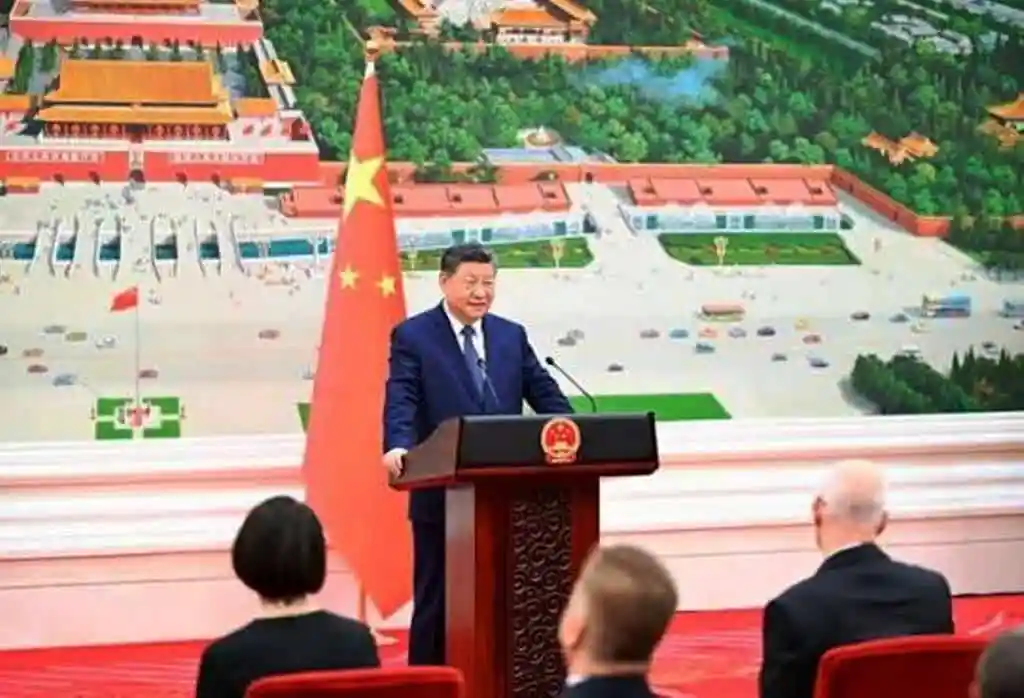
Home - China - China’s Economy Drives a New Era of Diplomatic Pragmatism BEIJING – China is changing its global approach because its economy is under intense pressure. After years of rapid expansion, the country faces a difficult reality at home. Domestic growth is slowing down, and major industries are fighting a brutal battle for survival. This severe economic squeeze is forcing Beijing to completely rethink its aggressive foreign policy. Instead of picking fights, Chinese leaders are desperately looking for ways to smooth over international tensions. They need stability abroad to fix massive structural problems within their own borders. A perfect example of this shift is President Xi Jinping’s recent diplomatic outreach to India. By calming regional waters, China buys the precious time it needs to rebuild its fractured domestic economy. Inside China, the everyday business environment has become increasingly hostile. Companies are trapped in a cycle of destructive competition that locals commonly call “involution.” This means businesses are fighting tooth and nail over a rapidly shrinking economic pie. Instead of innovating, they are slashing prices well below the cost of production just to stay alive. This relentless price war is effectively cannibalizing entire manufacturing industries. It is completely destroying profit margins across the board for both big and small players. The government realizes that this chaotic race to the bottom is entirely unsustainable. If left unchecked, it could easily lead to mass bankruptcies and widespread social unrest from unemployment. To stop the bleeding, regulators are stepping in with a remarkably heavy hand. They are aggressively targeting sectors that have grown far too fast in recent years. The primary goal is to force companies to focus on quality rather than pure manufacturing volume. This top-down intervention is a desperate attempt to restore basic order to a highly chaotic marketplace. Policymakers are now demanding strict pricing discipline from all major manufacturers. They want to prevent an industrial collapse that could send shockwaves through the entire global economy. By taming these cutthroat business practices, Beijing hopes to stabilize its most critical and strategic industries. Nowhere is this economic crisis more obvious than in the electric vehicle and battery sectors. For years, generous government subsidies fueled a massive, unchecked expansion in green technology manufacturing. Today, the domestic market is flooded with far more supply than local consumers can actually buy. This vast overcapacity has triggered a truly ruthless battle among the nation’s top battery makers. To survive the downturn, large enterprises began squeezing their smaller supply chain partners relentlessly. They started delaying essential payments to cash-strapped suppliers for many months on end. This created a severe and dangerous liquidity crunch for small and medium-sized businesses upstream. The financial situation became so dire that the national government had no choice but to act. Regulators recently extended a strict 60-day payment cap specifically to the electric vehicle and energy storage battery sectors. Large corporate buyers must now inspect received goods within seven days and settle invoices within two months. This legal framework is uniquely designed to rescue smaller, vulnerable suppliers from the brink of absolute financial ruin. Eleven major industry players have already publicly endorsed these strict new government guidelines. They wisely recognize that a collapsing supply chain will ultimately destroy the massive corporate giants as well. By forcing large companies to finally pay their bills, regulators are trying to build long-term resilience. They want to ensure the healthy survival of the entire industrial manufacturing ecosystem. The aggressive crackdown on delayed payments reveals a much deeper anxiety within the Chinese government. The state previously cheered on its corporate champions as they quickly conquered lucrative global markets. Now, leaders clearly see that this unrestrained, hyper-aggressive growth came with a heavy hidden cost. Massive research and development costs were quietly pushing upstream suppliers to the absolute breaking point. China’s leadership knows that a weak domestic supply chain is a massive national security risk. If smaller parts manufacturers go bankrupt, the massive final assembly lines will eventually grind to a halt. Therefore, the powerful state is acting as a strict referee to ensure fair commercial play. It is a dramatic and notable shift from the free-for-all corporate expansion of the past decade. The government is also strictly warning companies against exporting these destructive price wars abroad. Beijing genuinely fears that dumping cheap products overseas will trigger massive global tariffs and trade wars. We are already seeing intense pushback from the United States and Europe regarding Chinese electric vehicles. China desperately needs to keep these vital international markets open to successfully revive its struggling economy. This underlying domestic fragility directly influences exactly how Beijing interacts with its global neighbors today. A country busy fighting massive economic fires at home simply cannot afford to start new fires abroad. This is the exact reason why we are seeing a noticeably softer tone in Chinese diplomacy recently. The clearest and most surprising sign of this diplomatic flexibility is China’s changing relationship with India. For several years, the two nuclear-armed neighbors have been locked in a highly tense military standoff. The deadly and tragic border clashes in 2020 effectively froze almost all meaningful economic and political ties. However, recent geopolitical developments show a sudden, pragmatic willingness to cool the regional temperature. President Xi Jinping and Prime Minister Narendra Modi have officially renewed their high-level diplomatic engagements. Following the historic 2024 troop disengagement agreement, the two powerful leaders met at the recent BRICS Summit in New Delhi. They publicly agreed that their ongoing border differences should not become full-blown international disputes. Both sides are currently taking incremental steps to restore direct flights, ease strict visas, and revive business investments. This sudden diplomatic outreach is not a sign of weakness, but rather highly calculated economic pragmatism. Beijing urgently wants to defuse regional friction because it desperately needs access to the massive Indian consumer market. China actually remains India’s largest trading partner, and Beijing wants to keep that profitable pipeline flowing. Restoring normal economic ties provides a vital and necessary relief valve for struggling Chinese exporters. However, this welcome diplomatic thaw does not mean the underlying geopolitical conflict is permanently resolved. China is certainly
Original source
Chiang Rai Times