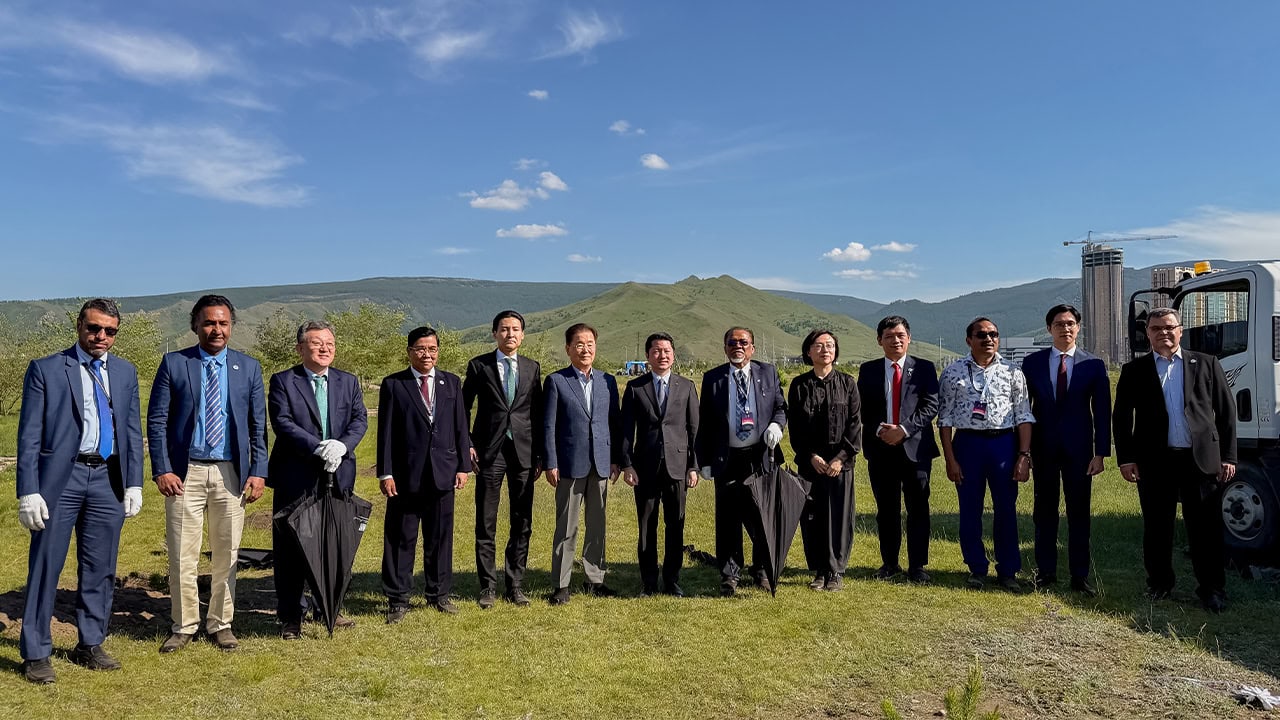
Cambodia Advocates for Ethical AI Governance at Asian Political Parties Forum
Cambodia's ruling party, through Minister Sok Soken at an Asian political parties forum in Mongolia, called for ethical AI governance and increased investment in human capital to address the risks of rapid AI development. The importance of regional cooperation was also stressed.
Cambodia’s ruling party has called for stronger ethical governance of artificial intelligence (AI), greater investment in human capital and closer regional cooperation, as Asian political parties grapple with the opportunities and risks posed by rapidly advancing AI technologies. The appeal was made by Minister of Inspection Sok Soken during a special discussion on “Asia’s Transformation in the Digital Era: The Challenges of Artificial Intelligence”, held as part of the 45th Standing Committee Meeting of the International Conference of Asian Political Parties (ICAPP) in Ulaanbaatar, Mongolia, from June 25 to 28. Leading a Cambodian People’s Party (CPP) delegation, Soken noted that AI has become a strategic force reshaping economies, governance systems and societies worldwide, but warned that its rapid development also presents challenges ranging from widening economic inequality and labour market disruption to ethical, privacy and security concerns that require clear governance frameworks. He said Cambodia’s response is being guided by the Royal Government’s digital transformation agenda under Prime Minister Hun Manet, which places digital technology at the centre of national development. According to a press release, Soken highlighted the government’s commitment to promoting innovation, improving productivity, strengthening national competitiveness and enhancing public services through digital transformation, while ensuring AI development is governed by clear ethical principles and accountability. He proposed five priorities to help Asia maximise AI’s benefits while mitigating its risks: investing in human capital and digital skills, promoting research and innovation, establishing responsible and ethical AI governance, strengthening regional cooperation and creating an enabling environment for AI development. The special forum brought together 16 speakers from Cambodia, Pakistan, Sri Lanka, Uzbekistan, Malaysia, Bangladesh, Nepal, China, Azerbaijan, Laos, Myanmar, Thailand, Vietnam and Indonesia to discuss how AI is reshaping Asia. The participants agreed that AI will play a defining role in the region’s future, but stressed that digital transformation must remain centred on protecting the interests of people rather than technology alone. The meeting also underscored the importance of establishing effective AI governance frameworks. Delegates from China, Mongolia, South Korea, Cambodia, Vietnam and Myanmar shared recommendations on how governments should regulate AI responsibly while encouraging innovation, according to the Cambodian delegation’s statement. Beyond the AI discussion, the ICAPP Standing Committee reviewed organisational reforms aimed at strengthening the regional forum and expanding cooperation among political parties across Asia. The committee agreed to convene the first Intercontinental Political Parties Dialogue, the 46th Standing Committee Meeting, the eighth ICAPP Media Forum and the 13th ICAPP General Assembly in the Republic of Korea before the end of 2026. It also confirmed that Mongolia will host the eighth ICAPP Youth Forum in early 2027. Soken will continue serving as vice-chairman of the ICAPP Youth Forum under the chairmanship of Mongolian Prime Minister Uchral Nyam-Osor, reflecting Cambodia’s continuing role within the organisation’s youth leadership structure. On the sidelines of the meeting, the ICAPP delegation paid a courtesy call on the Mongolian prime minister, who also chairs the Mongolian People’s Party and the ICAPP Youth Forum. The Mongolian leader described ICAPP as an important platform that promotes dialogue and friendship among political parties with diverse political orientations, contributing to peace, prosperity and shared development across Asia. He also reaffirmed Mongolia’s commitment to integrating AI into party governance and national administration as part of its broader vision for building a digital society. Soken congratulated the Mongolian government on its digital transformation ambitions and reaffirmed Cambodia’s support for Mongolia’s leadership of the ICAPP Youth Forum. He also expressed the CPP’s commitment to strengthening friendship and cooperation between the two countries, including closer collaboration between their political parties, governments and peoples, while supporting one another in regional and international multilateral cooperation. During their visit, the ICAPP delegates also participated in a tree-planting ceremony in a national park in Ulaanbaatar in support of Mongolia’s “One Billion Trees by 2030” campaign, an initiative aimed at helping combat climate change.
多角的分析
カンボジアはAIの経済的影響を認識し、その恩恵を最大化しつつリスクを軽減するための戦略を模索している。特に、人的資本への投資とデジタルスキルの育成は、AI時代における競争力維持と経済格差の是正に不可欠となる。AIによる労働市場の変革は、国内の雇用構造に影響を与える可能性があり、政府はこれに対応するための職業訓練や社会保障制度の強化が求められる。
AIの倫理的ガバナンスへの言及は、投資家にとって重要なシグナルとなる。透明性があり、責任あるAI開発・利用が進む環境は、長期的な投資リスクを低減させる。カンボジア政府がデジタル変革を推進し、AI開発を明確な倫理原則の下で管理しようとする姿勢は、国内のテクノロジー分野への投資を促進する可能性がある。しかし、具体的な規制やインフラ整備の進捗が、今後の投資判断の鍵となる。
AIの急速な発展は、カンボジア社会において経済格差の拡大や労働市場の混乱といった懸念を引き起こす可能性がある。特に、デジタルスキルの有無による所得格差の広がりや、AIによる自動化で職を失う可能性のある労働者への影響が懸念される。政府が掲げる「人々の利益を守る」という原則が、具体的な政策として、教育機会の均等化やセーフティネットの強化に結びつくかが問われる。
AIの進化は、カンボジア市民の日常生活や雇用機会に直接的な影響を与える可能性がある。特に、デジタルスキルの習得が遅れている層や、AIによる自動化の影響を受けやすい産業に従事する人々は、将来への不安を感じるかもしれない。政府のデジタル変革アジェンダが、国民全体のスキルアップや、AI時代に対応できる社会保障制度の構築に繋がるかどうかが、市民の受容度を左右するだろう。
背景・歴史的文脈
カンボジア人民党(CPP)は、長期にわたり政権を維持しており、国内のデジタル変革を国家開発の最重要課題の一つとして位置づけている。特にフン・マネット首相の指導の下、AIを含む先端技術の導入と、それに伴う社会経済的影響への対応が急務となっている。アジア政党国際会議(ICAPP)は、アジア各国の政党間の対話と協力を促進するプラットフォームであり、カンボジアはここでAIに関する国際的な規範形成に積極的に関与することで、自国の立場を強化し、地域における影響力を高めようとしている。
原文ソース
Phnom Penh Post