Vietnam Focuses on National Security and Economic Growth
Vietnam's top leadership emphasized a dual approach to strengthen national security while simultaneously boosting regional economic development and high-value industries. Key focus areas include semiconductor investment, maritime security, and tourism promotion through cultural heritage preservation.
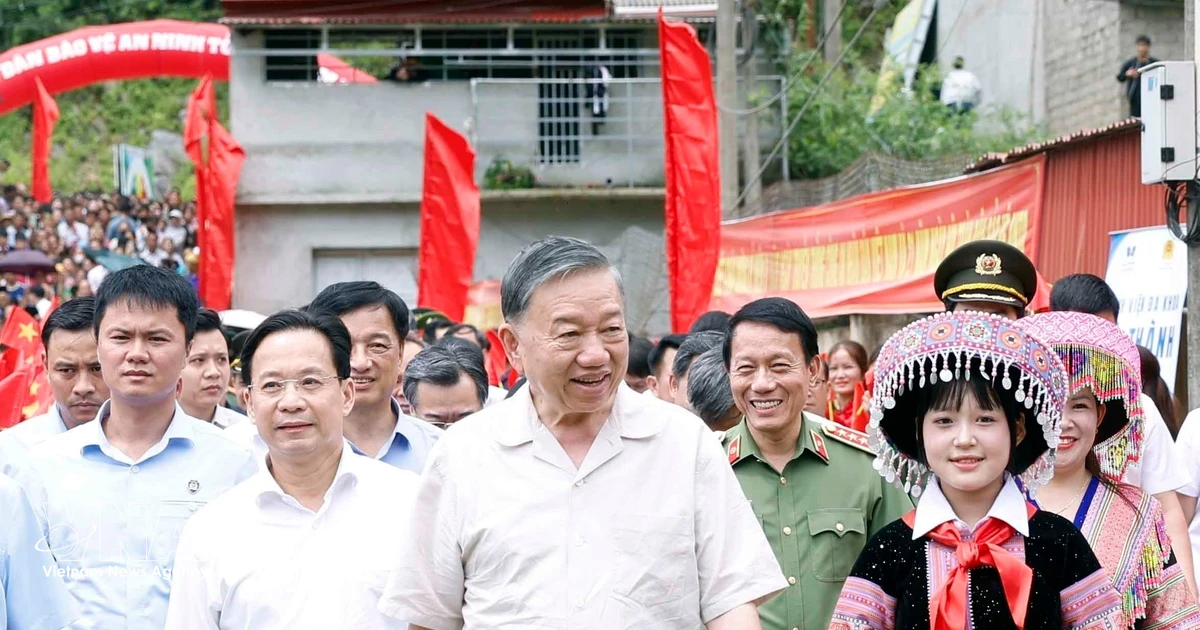
Party General Secretary and State President To Lam on July 15 lauded the achievements of the "All People Protect National Security" movement in Son La province, calling it a model for other localities nationwide. This initiative is a key component of Vietnam's one-party system, aimed at strengthening national security through public participation. On the same day, Lam emphasized that caring for revolutionary contributors is both a political and moral obligation, stressing the need for comprehensive and timely policies to ensure they receive due care and respect. This reflects the socialist state's commitment to social integration and honoring those who contributed to nation-building after the Vietnam War. Meanwhile, Prime Minister Le Minh Hung paid tribute to fallen soldiers at the Vi Xuyen National Martyrs' Cemetery in Tuyen Quang province on July 15, ahead of the upcoming War Invalids and Martyrs' Day on July 27. This public event underscores the nation's respect for its history and sacrifices. Prime Minister Hung also urged Lang Son province on July 15 to transform its border-gate economy into a new growth engine by accelerating institutional reforms, infrastructure development, and digital transformation to achieve double-digit growth. This strategy aims to leverage Vietnam's strategic border location with China for economic benefit. Furthermore, on July 14, PM Hung instructed Phu Tho province to shift its development mindset by prioritizing high value-added and high-tech investments while rejecting labor-intensive, outdated, and environmentally harmful projects, with the goal of turning the northern region into an industrial powerhouse. This signals Vietnam's transition towards a more sustainable and technology-intensive economic model, moving beyond export-led growth. In the semiconductor sector, Vietnam recognizes the necessity of cultivating a highly skilled workforce and a robust innovation ecosystem. The establishment of the national semiconductor chip prototyping support center is expected to accelerate the country's drive towards technological self-reliance, a strategy to mitigate geopolitical risks in global supply chains and respond to international competition in technology. On the diplomatic front, Foreign Minister Le Hoai Trung visited Indonesia on July 14, co-chairing the sixth meeting of the Vietnam-Indonesia Joint Commission on Bilateral Cooperation and signing the 2026-2030 Action Plan to realize their Comprehensive Strategic Partnership. This move signifies Vietnam's efforts to expand its influence and deepen regional cooperation in Southeast Asia. Prime Minister Le Minh Hung received US Ambassador to Vietnam Jennifer Wicks in Hanoi on July 13 as she began her diplomatic tenure. The last seriously injured victim of the deadly canoe capsize off Phu Quoc Island was transferred to Cho Ray Hospital in Ho Chi Minh City on July 13 for further treatment. Members of Team K51 under the Dak Lak Provincial Military Command are continuing their search for the remains of fallen Vietnamese soldiers across the Central Highlands, overcoming difficult terrain to help reunite missing war heroes with their families decades after the war ended. Over the past few years, many mountainous communes in the central province of Thanh Hoa province have promoted community-based tourism alongside the preservation of ethnic cultural heritage. The approach has helped make tourism a key economic sector, boosting local incomes and contributing to poverty reduction. Police in An Giang province have launched a criminal investigation and detained Nguyen Hong Hai, captain of the speedboat that capsized off Phu Quoc, for alleged violations of regulations linked to the accident that killed 15 Indian tourists. After more than a month of spectacular fireworks over the Han River, Portugal's Macedos Pirotecnia was crowned champion of the 2026 Da Nang International Fireworks Festival (DIFF). Drawing tens of thousands of spectators each night, the festival once again cemented Da Nang's reputation as a leading destination for international events and festivals. As travellers increasingly seek authentic local experiences, Hanoi is encouraging hotels and accommodation providers to become cultural destinations in their own right. By integrating traditional crafts and local design into hospitality spaces, the city aims to enrich tourism while preserving its heritage. Following the canoe capsize off Phu Quoc, authorities in An Giang province and the Phu Quoc Special Zone are mobilizing all available resources to provide medical care for the victims. In Kim Lien commune, Nghe An province - the hometown of President Ho Chi Minh, the lotus is more than a cherished cultural symbol. By combining high-value lotus products with immersive tourism experiences, the locality is creating new economic opportunities for residents while enriching the visitor experience and showcasing the unique heritage of the Land of Lotus. France’s online magazine Journal des Français à l'étranger has described the central coastal city of Da Nang as the "Miami of Vietnam", praising its affordable living costs, improving infrastructure and high quality of life, making it an increasingly popular destination for digital nomads. The Coast Guard Region 4 Command deployed personnel and vessels for search and rescue operations on the afternoon of July 11, immediately after receiving reports of the capsizing of the Osean Pearl passenger canoe near May Rut Ngoai Island in the Phu Quoc Special Zone of An Giang province. Search and rescue operations following a canoe capsize off Phu Quoc Island were completed by 3:30 pm on July 11, with all 36 people on board brought ashore. They included 32 Indian tourists, one tour guide and three crew members. Twenty-one people were rescued, while 15 were confirmed dead. Copyright, VietnamPlus, Vietnam News Agency (VNA) Editor-in-chief, Mr. Tran Tien Duan.
多角的分析
ベトナム経済は、輸出依存型から高付加価値・技術集約型への転換を目指している。半導体分野への投資や、省エネ・環境配慮型産業の奨励は、グローバルサプライチェーンにおけるリスク分散と、国際競争力の強化を狙ったものだ。しかし、こうした産業構造の転換には、高度人材の育成と、それを支えるイノベーションエコシステムの構築が不可欠であり、そのための投資と制度改革が今後の鍵となる。地方経済の活性化策は、国内格差の是正と、地域ごとの特色を活かした持続可能な成長を目指すものだが、インフラ整備や人材育成の遅れが課題となる可能性がある。
ベトナムは、地政学的なリスク分散の観点から、サプライチェーンの多様化を目指す企業にとって魅力的な投資先であり続けている。特に、ハイテク産業や製造業への投資は、政府の強力な支援を受けている。しかし、投資家は、法制度の透明性、知的財産権の保護、そしてインフラの未整備といったリスクも考慮する必要がある。また、急速な経済成長に伴うインフレ圧力や、労働市場の需給バランスの変化も注視すべき点である。地方経済の活性化策は、新たな投資機会を生み出す可能性があるが、地域ごとのインフラや人材の状況を慎重に見極める必要がある。
国家安全保障の強化は、国民の日常生活における自由やプライバシーへの影響を考慮する必要がある。一方で、革命功労者への配慮や、地方の文化遺産保護を通じた観光振興は、社会的な結束を高め、地域住民の所得向上に貢献する可能性がある。フーコック島沖の遊覧船転覆事故は、急速な観光開発の陰で、安全管理体制の不備が露呈した事例であり、観光客と地域住民双方の安全確保が喫緊の課題となっている。また、地方のコミュニティベース観光は、伝統文化の維持と経済発展の両立を目指す試みであり、その成功は、地方の持続可能な発展モデルとなりうる。
国民への真の影響としては、国家安全保障強化策が、日常生活における自由やプライバシーにどのような影響を与えるか、という点が挙げられます。一方、革命功労者への配慮や、地方での文化遺産保護を通じた観光振興は、地域住民の生活向上や、地域への誇りにつながる可能性があります。フーコック島沖の事故は、観光客だけでなく、地域住民の安全にも関わる問題であり、観光インフラの安全管理体制の強化が求められています。地方のコミュニティベース観光は、地域住民が主体的に関わることで、収入向上や伝統文化の継承に貢献する可能性があります。
背景・歴史的文脈
ベトナムの国家安全保障と経済成長の両立への注力は、冷戦終結後の「ドイモイ(刷新)」政策以来、一貫して追求されてきたテーマである。特に、中国との複雑な関係性の中で、経済的自立と安全保障の確保は、ベトナム外交の根幹をなす。近年、米中対立の激化やグローバルサプライチェーンの再編を背景に、ベトナムは「両方に良い関係」を保ちつつ、経済成長の持続と、技術的自立の強化を目指している。半導体分野への投資は、こうした戦略の一環であり、将来的な経済的・戦略的優位性を確保するための長期的な取り組みと言える。
原文ソース
VietnamPlus English