General articles are free for 24 hours after publish.
Vietnam and India Elevate Ties to Enhanced Comprehensive Strategic Partnership, Focusing on Economic and Tech Cooperation
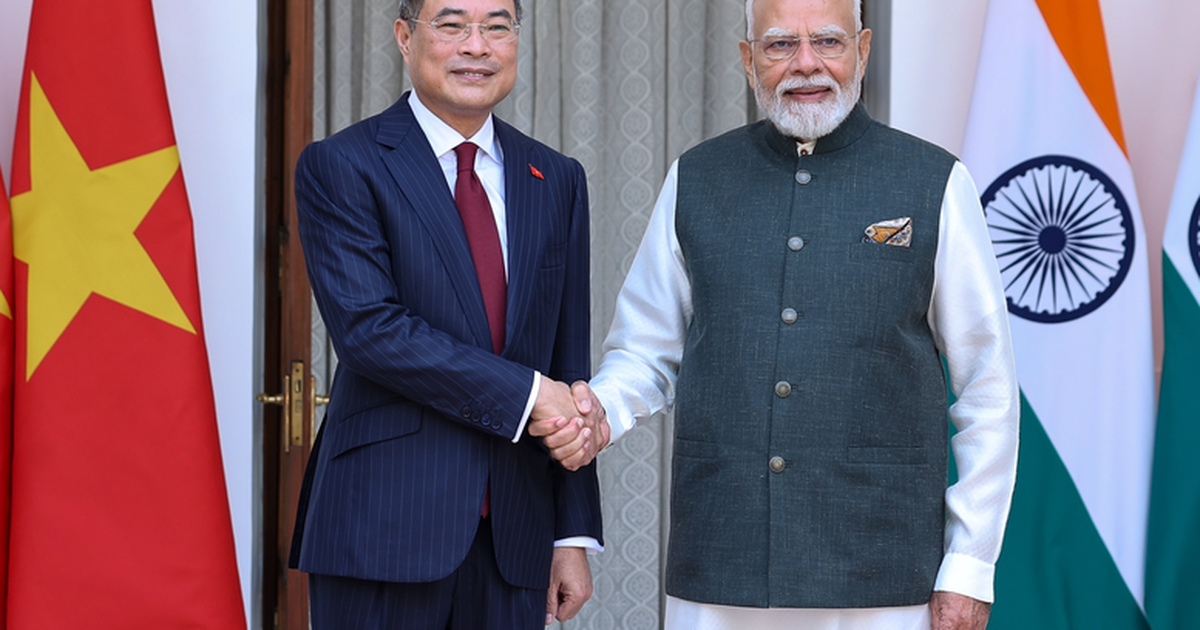
Vietnamese Prime Minister Le Minh Hung and Indian Prime Minister Narendra Modi agreed to elevate bilateral ties to an Enhanced Comprehensive Strategic Partnership. They aim to achieve a trade target of $25 billion, discussing economic corridors, free trade agreements, and technological cooperation.
Prime Minister Le Minh Hung of Vietnam held talks with Prime Minister Narendra Modi of India, where both leaders agreed to elevate bilateral ties to an Enhanced Comprehensive Strategic Partnership. This significant elevation underscores the profound depth of bilateral relations and is seen as opening up broad opportunities for future cooperation, particularly in the context of evolving regional and global dynamics. During the meeting, Prime Minister Le Minh Hung proposed the establishment of economic corridors and supply chains to bolster connectivity between the two economies. He also called for the initiation of negotiations on a bilateral Free Trade Agreement (FTA) and urged active collaboration with ASEAN countries to expedite the completion of the upgraded ASEAN-India Trade in Goods Agreement (AITIGA). Prime Minister Le Minh Hung extended a warm welcome to major Indian corporations for investment in Vietnam, specifically targeting sectors such as technology, infrastructure, energy, and pharmaceuticals. Furthering the technological cooperation agenda, both sides committed to accelerating the development of a Vietnam-India technology connectivity strategy. This strategy will concentrate on key areas including artificial intelligence (AI) and advanced mobile network technologies like 5G/6G. The leaders also highlighted the need to enhance cooperation programs aimed at training AI and semiconductor engineers, providing digital technology training for the younger generation, and fostering stronger linkages between startups and innovation enterprises of both nations. In line with cultural diplomacy, the Vietnamese Prime Minister suggested stepping up cultural and sports exchanges, yoga activities, and Buddhist exchanges in 2027, to commemorate the 55th founding anniversary of the establishment of diplomatic relations between Vietnam and India. Vietnam conveyed its support for India to assume a greater role in multilateral institutions and affirmed its readiness to back stronger ties between India and ASEAN. Additionally, Prime Minister Le Minh Hung expressed his hope that India would continue to strongly support ASEAN's principled stance on the East Sea issue. Both Prime Ministers reaffirmed their shared resolve to expeditiously achieve the bilateral trade target of US$25 billion. This objective will be supported by facilitating market access for products from both countries, with a particular focus on pharmaceuticals, agricultural products, fisheries, and livestock products. The importance of enhancing connectivity through various modes, including road, rail, air, and sea, was also emphasized. Discussions included exploring ways to promote railway connectivity projects, establishing a connectivity corridor linking South Asia and Southeast Asia, and strengthening connections between the two countries' seaports in conjunction with the broader Asia-Europe maritime route. Drawing upon their long-standing strengths rooted in millennia of cultural, civilizational, historical, and religious ties, both leaders expressed a strong desire to harness these advantages. The aim is to further expand collaboration in tourism and culture, preserve and promote shared cultural values, and strengthen people-to-people exchanges, thereby consolidating the friendship between Vietnam and India. The two Prime Ministers pledged to reinforce coordination and mutual support at regional and international forums.
Original source
Bao Chinh Phu