General articles are free for 24 hours after publish.
South Asia's Smaller States Push to Revive SAARC — Again
Maldivian President calls for the revitalization of the South Asian Association for Regional Cooperation (SAARC). Bangladesh, Sri Lanka, and Nepal also support the revival, while India remains hesitant. The region's history of cooperation and the India-Pakistan rivalry pose challenges to the organization.
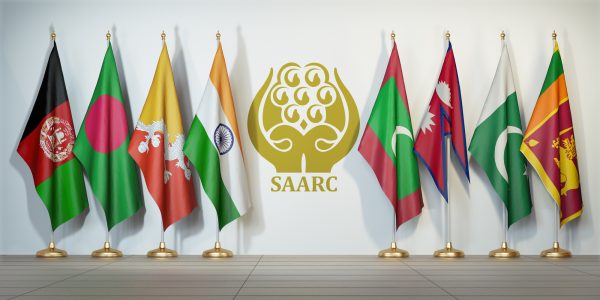
Read The Diplomat, Know The Asia-Pacific Will the region’s perpetually squabbling siblings — India and Pakistan — put aside their insecurities to make regional cooperation happen? History seems to be repeating itself in South Asia as the region’s smaller nations once again demand the revitalization of the South Asian Association for Regional Cooperation (SAARC). Delivering a speech during the Maldives’ Independence Day celebrations on July 26, Maldivian President Mohamed Muizzu urged SAARC members to return to the negotiating table, resume summits and set aside their differences for the sake of regional peace and cooperation. He added the Maldives was ready to help initiate discussions and mediate among member states. This is not the first time Muizzu has called for SAARC’s revival. He made a similar call at the 40th Charter Day in December 2025. Coincidentally, Bangladesh’s Foreign Minister Khalilur Rahman attended the Maldivian Independence Day ceremony as a special guest. In February, Rahman told SAARC Secretary-General Golam Sarwar that Bangladesh is committed to the organization and was ready to support its revitalization. Rahman said trade, connectivity, poverty reduction, energy, climate change, food security, education and health are areas that require regional cooperation. In April, Rahman said SAARC’s revival is an important foreign-policy objective of Prime Minister Tarique Rahman’s government. It was former Bangladeshi President Ziaur Rahman, the current prime minister’s father, who first formally proposed the establishment of SAARC. The demand for SAARC’s revival is not limited to Bangladesh and the Maldives. In recent days, powerful voices in both Sri Lanka and Nepal have urged for the revitalization of the grouping. Unsurprisingly, it is the smaller South Asian nations that are keener on SAARC. Unsurprisingly, India seems reluctant to get the band back together. Its response to the call has been lukewarm, veering towards negative; while Pakistan supports revival, it has not publicly responded to Muizzu’s specific mediation offer. But students of the region’s history know that the initial skepticism of the two main regional powers, in itself, is not a reason to write off the initiative. The idea of a pan-South Asian organization is not new. In 1947, leaders of Asian nations met in New Delhi for the Asian Relations Conference to explore regional cooperation, but prospects for South Asian regional cooperation were slim due to the tensions between India and Pakistan. However, the regional landscape changed in the late 1970s, with leadership changes in India and Pakistan, ASEAN’s formation, and global economic and security trends. These created an environment more conducive to cooperation. In May 1980, Bangladeshi President Ziaur Rahman formally proposed the establishment of an organization that promotes South Asian economic, social, and technical cooperation. Nepal and Sri Lanka were quick to back this call, but India and Pakistan were suspicious. Both worried that this was a ploy by the other to trap them. The historical parallels to developments today do not end there. General Ziaur Rahman came to power in 1977, following a series of events that began in a military coup in 1975 that overthrew the government of Sheikh Mujibur Rahman that India supported. The present Bangladeshi government replaced a pro-Indian regime led by Sheikh Mujibur’s daughter, Sheikh Hasina, which was toppled in 2024. In both periods, a Bangladeshi administration that sought to redefine its relationship with India placed South Asian regional cooperation near the center of its foreign policy. Beyond, President Rahman’s desire to normalize relations with India, several other factors like the need to mobilize regional resources to deal with an acute balance of payment crisis faced by several South Asian countries; the failure of the North-South dialogues and increasing protectionism by developed countries; and the failure of some South Asian nations like Sri Lanka to join ASEAN as members, contributed to the enthusiasm of smaller South Asian nations for regional cooperation. The Soviet military operations in Afghanistan in December 1979 and the consequent deterioration of regional security environment in South Asia made regional cooperation even more urgent. Despite the enthusiasm of smaller nations, both India and Pakistan were initially suspicious of the Bangladeshi proposal. India feared that a regional organization will allow its smaller neighbors to raise contentious bilateral issues, even “gang up” against it, while Pakistan worried closer regional integration would further strengthen the Indian position in South Asia. Nevertheless, both countries worried about the consequences of being left out, and ultimately joined the organization. What followed over the next four decades is well known. SAARC’s scope of action was limited from its inception because of structural and political constraints. The hostility between India and Pakistan, sometimes described as “hostility consensus,” repeatedly undermined the organization’s cohesion and effectiveness. For example, the SAARC Charter, signed in Dhaka in December 1985, was diluted to emphasize functional cooperation (economic, social, cultural, technical, scientific), while excluding contentious bilateral issues. This prevented SAARC from addressing the India-Pakistan disputes that were capable of paralyzing it. All these weakened SAARC, setting the stage for later dysfunction. SAARC’s operational capacity too was affected by tensions between India and Pakistan. Scheduled annual heads-of-state summits have been repeatedly delayed, with no summits convened since 2014. The 2016 summit that was to be held in Islamabad was cancelled when India and its allies withdrew, alleging Pakistani involvement in an attack on an Indian army base in Kashmir. Regional economic integration initiatives such as SAPTA (1993) and SAFTA (2004) failed to achieve stated objectives, hindered by structural economic disparities. The dominance of India’s economy, which accounts for around 80 percent of regional GDP, has provoked concern among smaller economies, which have imposed trade barriers to protect domestic producers. Intra-regional trade stands at around 5 percent, lower than in Sub-Saharan Africa. The recent economic crises in Pakistan, Sri Lanka, Maldives, Bangladesh, and Nepal have further widened these disparities and dampened any impetus for intraregional trade. India has increasingly pursued regional cooperation through Pakistan-free arrangements like BIMSTEC and subregional initiatives. It has also used the Indian Ocean Rim Association (IORA) for wider Indian Ocean diplomacy. Bangladesh says it does not regard SAARC and BIMSTEC as competing choices. South Asia needs both organizations. Despite their troubles with SAARC, no country has formally left the regional grouping. One reason is that SAARC has achieved success in areas where
Original source
The Diplomat Indonesia