General articles are free for 24 hours after publish.
China Arrests 52 Singaporeans Over Alleged Pyramid Scheme
Fifty-two Singaporeans have been arrested and detained in China's Guangxi province on suspicion of involvement in illegal pyramid schemes, believed to be linked to the "1040 Sunshine Project." Singapore's government is monitoring the situation and facilitating contact with families, but will not interfere in judicial proceedings.
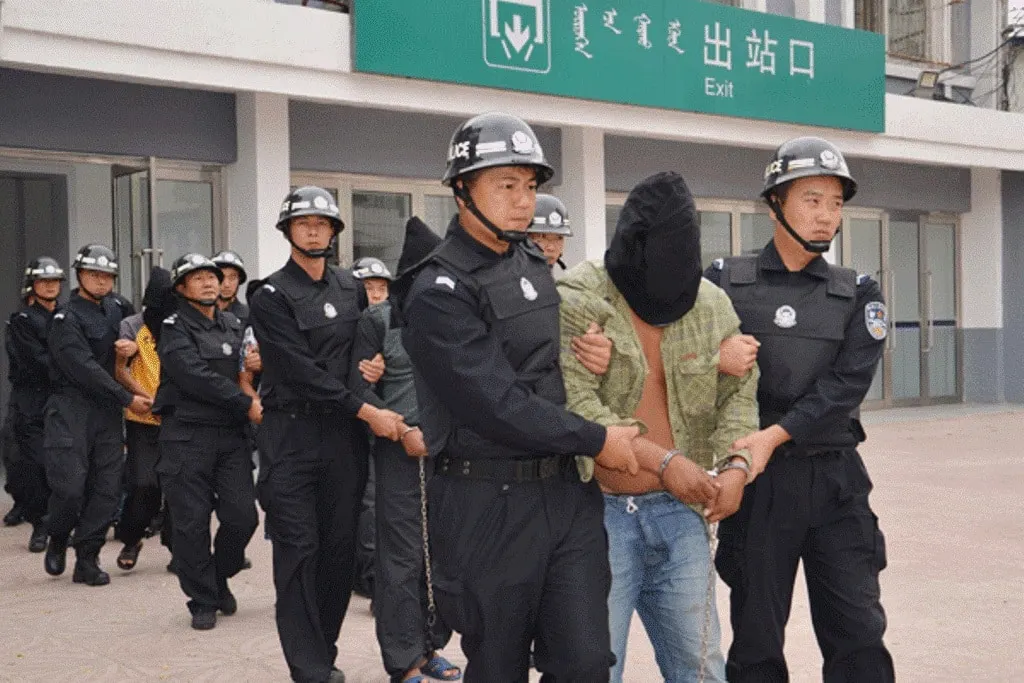
Home - China - China Arrests 52 Singaporeans Over Alleged Pyramid Scheme BEIJING – Authorities in China have arrested and detained 52 Singaporeans in Guangxi province over their suspected involvement in illegal pyramid schemes. This significant crackdown marks what is believed to be the largest detention of Singapore citizens overseas to date. The arrests were confirmed in a joint statement by Singapore’s Ministry of Foreign Affairs (MFA) and the Singapore Police Force (SPF) on Sept. 4, 2026. The Singaporeans were taken into custody as part of a broader law enforcement operation targeting pyramid-selling activities in southern China. While officials have not detailed the exact nature of the allegations, reports indicate the arrests are connected to the long-running “1040 Sunshine Project”. This pyramid scheme has operated under various names and heavily targets people with the promise of extraordinary financial returns. Recruiters allegedly approached Singaporeans with purported business and investment opportunities in the Chinese city of Nanning. These recruiters, often fellow Singaporeans, framed the scheme as a chance to profit from Nanning’s rapid development. Potential investors were lured with promises of low risk and exceptionally high returns. They were invited to travel to China, where they attended presentations and met existing participants, many of whom were also Singaporean. The 1040 scheme is built on recruitment rather than legitimate business investments. Participants are typically required to pay a substantial upfront fee, often around 69,800 yuan (approximately S$13,000). Once invested, their primary way to earn money is by recruiting friends, family, and acquaintances into the program. The false promise is that by building a network of recruits, an individual can eventually earn up to 10.4 million yuan—hence the name “1040”. To build trust, promoters sometimes claim to have secret connections to government officials or assert that the investments are linked to government-backed economic programs. However, these claims are entirely fabricated to lend the scheme an air of legitimacy. The Singapore Government is actively monitoring the situation. Second Minister for Foreign Affairs Sim Ann stated that officials from the Singapore Embassy in Beijing and the Consulate-General in Guangzhou have visited all 52 detainees three times. These visits aim to check on the detainees’ well-being and facilitate communication with their families back home. Sim Ann confirmed she has also met with the families of most of the detained individuals. However, the government emphasized that it will not intervene in the legal proceedings. “I would like to emphasize that the Singapore Government does not interfere in the judicial process and investigations of other countries,” Sim said, noting that due process should be respected. In light of the arrests, the Securities Investors Association (Singapore) (SIAS) has issued a strong warning to the public against participating in pyramid-type investment arrangements, commonly referred to as the “Nanning scheme”. SIAS urged investors to be highly skeptical of opportunities that promise guaranteed or exceptionally high returns, especially when the underlying business cannot be independently verified. The association reminded the public that just because early participants may receive payments, it does not mean the scheme is legitimate. These initial payouts are typically funded by the entry fees of new recruits, a hallmark of unsustainable Ponzi and pyramid structures.
Original source
Chiang Rai Times