General articles are free for 24 hours after publish.
Phu Quoc: A Tourism Boom Spanning Asia to the West
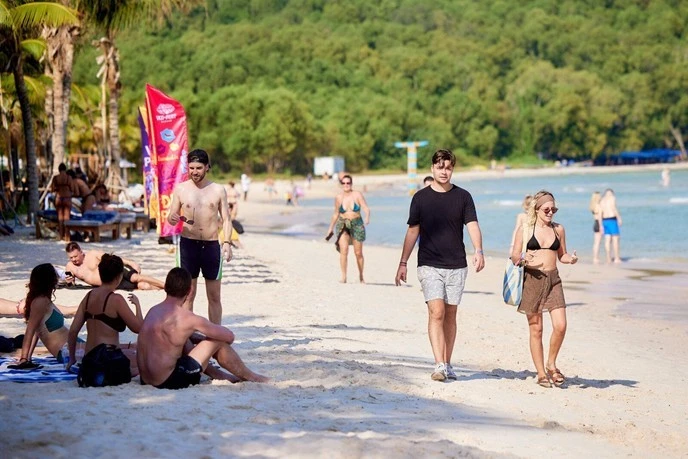
Southern Vietnam's Phu Quoc island is rapidly emerging as a global tourist hotspot, dubbed the "Pearl Island," attracting visitors from Asia to the West through large-scale entertainment and comprehensive tourism strategies. MICE attraction and visa facilitation are further boosting its growth and contributing to the revitalization of Vietnam's overall tourism industry.
After two consecutive seasons of creating spectacular scenes against the sea and sky of southern Phu Quoc, Symphony of the Sea is preparing to launch its biggest edition yet. Fireworks, which have been responsible for some of the show’s most explosive climaxes, will once again be one of the most heavily invested elements. Through a methodical investment strategy in fireworks, multimedia performances, and world-class entertainment, Vietnam is not only revitalizing the concept of the nighttime economy but also emerging as a global tourist hotspot. According to Travel + Leisure, these uninterrupted performances have been instrumental in establishing the "Pearl Island" as one of Southeast Asia’s most notable emerging destinations. Tourism is a practical area of cooperation that helps enhance mutual understanding and friendship between the two peoples while creating development opportunities for localities and businesses. Lang Son and Guangxi both boast rich and diverse tourism resources spanning culture, history, ecology and leisure, an official said, expressing her hope to connect these resources into attractive cross-border tourism routes and destinations while developing caravan tours, cultural and spiritual tourism, and border shopping tourism. For the MICE tourism sector in both Ho Chi Minh City and Vietnam, growth can no longer be driven merely by increasing the number of events; instead, the focus must shift to enhancing the value of each event and the competitiveness of each destination. For Phu Quoc, MICE represents more than simply another high-potential source of visitors. The segment could help the island evolve from a largely seasonal resort destination into a year-round tourism hub, while increasing spending per visitor and strengthening its ability to attract corporate groups, investors and international professionals. A notable feature of Resolution No. 26-NQ/TW is its focus on developing three major tourism growth poles – Hanoi, Ho Chi Minh City and Da Nang – while gradually turning Phu Quoc into a new growth pole. It also calls for the development of 10 key tourism centres and 20 national tourism areas. For a long-haul holiday, the journey itself can be the greatest hurdle, especially for families travelling with young children or older relatives. Vietnam’s 45-day visa exemption for Russian citizens gives Phu Quoc an immediate advantage, accommodating an extended winter escape with ease. In an article titled “The bonkers Asian island that won’t stay off-grid for long”, Adams portrays a Phu Quoc full of contrasts that somehow sit comfortably alongside one another: some of Asia’s finest beaches beside dazzling spectacles; secluded, peaceful resorts just a short distance from an “unhinged” world of fireworks, jet skis and European-inspired architecture. For 2026, Vietnam's tourism sector is targeting 25 million foreign arrivals, 150 million domestic trips and total revenue of 1.125 quadrillion VND (43 billion USD). The central city aims to welcome and support nearly 93,000 MICE visitors in 2026, up about 12% year-on-year. To accelerate the market in the final months of the year, the municipal tourism sector is strengthening links with corporations, businesses and event organisers while diversifying tourism promotion activities. According to The World’s 50 Best Hotels, Capella Hanoi is among the new entries on this year’s list. It features a design inspired by the world of 1920s opera and is located near the Hanoi Opera House. A highlight of this year’s autumn-winter tourism season is the Yen Tu festival 2026, featuring a wide range of events such as Mid-Autumn Festival celebrations, a Chinese chess tournament, the Yen Tu Heritage Marathon and the Yen Tu Ultra Trail race. In an article highlighting islands suited to luxury vacations, Thairath placed particular emphasis on Phu Quoc’s appeal to Thai travellers. The newspaper described Vietnam’s largest island as an ideal choice for those seeking the privacy and comfort of a five-star retreat without spending hours in transit. In her article, “Where Discovery Begins,” published in ANZA’s September/October 2026 issue, Low admits that her short trip was enough only to make her realise just how much she had underestimated the scale of experiences the island has to offer. For Hue, green tourism is not merely a trend. It is a way to preserve the heritage of the former imperial capital while creating new growth, livelihoods and a greener, more liveable and competitive heritage city. An initiative to elevate the national tourism brand through 2035 will position Vietnam as a high-quality, safe and leading Asian destination for heritage, cuisine, beach resorts, culture and Vietnamese lifestyles. A network of digital tourism ambassadors will also be developed in key target markets. According to digital travel platform Agoda, Vietnam remains among the top three destinations in the region with the highest rate. Da Nang also contributed significantly to this result, climbing two places from last year to rank sixth in Asia. According to the magazine, boat trips into Phong Nha Cave and strolls through Paradise Cave (both family-friendly) offer a tantalising glimpse of their astonishing scale, but the real adventure lies deeper within the park, where cavers wade through underground rivers and weave among stalagmites. Tourism effectiveness should be measured not only by visitor numbers and revenue, but also by spending, length of stay, repeat visits, job quality, visitor satisfaction and environmental carrying capacity, said experts. The National Statistics Office under the Ministry of Finance reported that Vietnam welcomed nearly 2 million international visitors in August, up 19.7% from July and 18.4% year-on-year. The figure represented 63.6% of the tourism sector’s full-year target of 25 million arrivals. Russian arrivals to Vietnam surpassed 1 million in the first eight months of 2026, representing a remarkable 165.7% increase year-on-year. This was the highest growth rate among Vietnam’s major international tourist markets. Copyright, VietnamPlus, Vietnam News Agency (VNA) Editor-in-chief, Mr. Tran Tien Duan.
Original source
VietnamPlus English