Defense Challenges NBI Witness Credentials in Duterte Impeachment Trial
During Philippine Vice President Sara Duterte-Carpio's impeachment trial, the defense team questioned the credentials of the prosecution's digital forensics witness. Doubts were raised about the expertise of the institution that trained the witness, shifting the trial's focus to the authenticity of evidence.
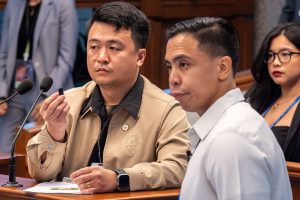
VICE-PRESIDENT Sara Duterte-Carpio’s defense team on Wednesday challenged the qualifications of the prosecution’s digital forensics witness, with several senator-judges joining questions over his training and credentials as the impeachment trial shifted to the authenticity of video evidence supporting the charges against her. During the third day of the trial, defense lawyer Carlo Joaquin T. Narvasa scrutinized the credentials of National Bureau of Investigation (NBI) Senior Agent John Mark Sta. Ana Calilung, questioning the qualifications of Maxcor Inter-Ventures Co., the company that conducted his two-week digital forensics training. Referring to the company’s profile, Mr. Narvasa said its website described Maxcor Inter-Ventures as “a one-stop source of different products and services intended for both government and private institutions,” arguing that it appeared to be an equipment supplier rather than a specialized digital forensics training institution. Mr. Calilung, who authenticated videos and digital records presented by the prosecution, testified during Tuesday’s proceedings that he underwent digital forensics training under Maxcor. Several senator-judges also sought clarification on the witness’s qualifications. “I saw earlier that Maxcor Inter-Ventures seems like an equipment supplier,” Senate President Sherwin T. Gatchalian said. “Is Maxcor recognized when it comes to digital forensic training? Is it well-known or an internationally renowned training organization?” The defense also questioned Mr. Calilung’s certifications and experience in digital forensics as it sought to undermine the credibility of the prosecution’s key witness, whose testimony supports the authentication of videos and other electronic evidence presented in the impeachment trial. Mr. Calilung said Maxcor provided trainers for digital forensics, including photo and video authentication. “The trainer has a lot of certifications in relation to digital forensics,” he said, adding that he also holds certifications in digital forensic authentication. Toward the end of the hearing, Senator Robinhood C. Padilla asked the impeachment court to require Mr. Calilung to submit his digital forensics certifications. Presiding officer Senator Francis Joseph “Chiz” G. Escudero granted the request. Meanwhile, Malacañang defended the legality of the Senate’s impeachment procedures after Ms. Duterte asked the Supreme Court to suspend the trial while it resolves a challenge to the authority of Mr. Escudero as presiding officer. The Vice-President’s camp on Monday asked the high court to keep the status quo, arguing that changes to the impeachment rules allowing an official other than the Senate president to preside over the trial are unconstitutional. “As far as we know, this is also in accordance with the Constitution,” Palace Press Officer Clarissa A. Castro told a news briefing in Filipino. She said legal experts, including former Supreme Court Justice Adolfo S. Azcuna, have maintained that the Constitution does not prohibit someone other than the Senate president from presiding over impeachment proceedings. “What are they afraid of if a lawyer sits as the presiding officer of the impeachment?” Ms. Castro asked. She also noted that although Ms. Duterte appeared at the Senate on Tuesday, she did not directly address the allegations against her. “In her brief statement (on Tuesday), we still did not hear any denial of the accusations being thrown against her,” Ms. Castro said, adding that while relying on lawyers may be part of the Vice-President’s legal strategy, the public would likely prefer to hear her response personally. She also rejected the defense’s argument that impeachment seeks to overturn the mandate of the more than 32 million Filipinos who voted for Ms. Duterte. “That is not the purpose of the Constitution,” Ms. Castro said. “Impeachment exists because it is the constitutional mechanism for removing a public official who commits impeachable offenses.” Meanwhile, Party-list Rep. Antonio L. Tinio said the defense’s repeated procedural objections reflected the weakness of its case. “The defense’s strategy is to avoid or block the presentation of evidence by relying on technicalities,” the congressman said in Filipino. “This shows that they are afraid of Duterte’s violations being exposed to the public.” He also criticized Ms. Duterte for skipping the trial despite appearing at the Senate on Tuesday, saying the videos presented by the prosecution had long been publicly available and that their significance now lies in their formal admission as evidence before the impeachment court. “The public has already seen Duterte’s press conferences where she made those threats,” Mr. Tinio said. “The difference now is that these videos are being treated as evidence in an impeachment trial.” — Kaela Patricia B. Gabriel, Erika Mae P. Sinaking, and Pexcel John Bacon
多角的分析
この弾劾裁判は、副大統領という国の高位公職者の法的・政治的安定性に直接影響を与えるため、フィリピン経済全体に間接的な影響を及ぼす可能性がある。裁判の長期化や不確実性の増大は、国内および海外からの投資家のセンチメントを悪化させ、潜在的な資本流出や投資抑制につながる恐れがある。特に、副大統領が経済政策に深く関与している場合、その動向は経済政策の継続性や予測可能性に影響を与える。
本件は、フィリピンの政治的リスクと法制度の安定性に対する投資家の懸念を浮き彫りにする。証拠の信頼性や手続きの正当性を巡る攻防は、法治国家としてのフィリピンへの信頼を揺るがしかねない。特に、海外からの直接投資(FDI)や証券市場への投資判断において、政治的安定性は重要な要素であり、このような裁判の長期化や不透明感は、投資判断を慎重にさせる要因となる。
弾劾裁判は、国民の政治への関心を高める一方で、分断を深める可能性もはらむ。特に、副大統領が国民から多数の支持を得ている場合、その弾劾手続きは支持者と反対者の間で激しい論争を巻き起こす。証人の資格を巡る争いは、法的手続きの公正さや透明性に対する国民の信頼に影響を与え、社会全体の法治への見方を左右する可能性がある。また、公職者の説明責任を問うプロセスは、市民社会の監視機能の重要性を示唆する。
国民にとって、弾劾裁判の行方は、自分たちが選んだ代表者が正当に職務を遂行しているか、また法が公平に適用されているかという根本的な問いに関わる。証人の資格や証拠の信憑性に関する議論は、一般市民には複雑に映るかもしれないが、最終的には、自分たちの税金がどのように使われ、誰がその責任を負うのかという問題に繋がる。特に、司法や行政の透明性への期待は高く、こうした裁判は市民の政治参加への意識を高める契機となりうる。
背景・歴史的文脈
フィリピンにおける弾劾裁判は、大統領、副大統領、最高裁判事、憲法評議会委員、監察官などの高位公職者に対する罷免手続きであり、憲法によって定められている。過去には、ジョセフ・エストラダ大統領(2001年)やレナ・デ・リマ監察官(2018年)に対する弾劾手続きが行われたことがある。これらの手続きは、しばしば激しい政治的対立を伴い、社会的な論争を巻き起こしてきた。今回、副大統領サラ・ドゥテルテ・カルピオ氏に対する弾劾裁判は、現政権と野党勢力との間の権力闘争の一環と見られており、証拠の信頼性や手続きの正当性を巡る攻防は、裁判の行方だけでなく、フィリピンの政治的安定性にも影響を与えうる。
原文ソース
BusinessWorld Nation