VP Impeachment Trial: Restrained Opening Week, But Senate Politics May Dictate Outcome
The opening week of the Philippine Vice President's impeachment trial saw senator-judges largely demonstrate impartiality. However, analysts suggest the Senate's political makeup makes conviction unlikely, with lawmakers' actions potentially influenced by the 2028 presidential elections.
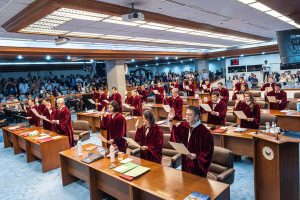
By Kaela Patricia B. Gabriel THE Senate impeachment court’s presiding officer and senator-judges have largely demonstrated impartiality during the opening week of Vice-President (VP) Sara Duterte-Carpio’s impeachment trial, although analysts said the outcome remains unlikely to favor conviction given the Senate’s political makeup. “Some may have explicitly presented their points but overall, the whole impeachment process has not been hijacked by grandstanding,” Amr Solon S. Sison, a political science instructor at Far Eastern University, said via Facebook Messenger, describing presiding officer Senator Francis Joseph “Chiz” G. Escudero’s performance as “satisfactory.” He said the restraint shown by senator-judges does not necessarily improve the prosecution’s chances of securing the 16 votes needed to convict the Vice-President. “If we follow the current composition of the Senate political lines, the conviction of the VP is still unlikely,” he said. “The 16 votes is still unattainable. But this does not mean that getting the minimum threshold is impossible because we are still in the early stages of the impeachment trial.” Eric Daniel C. de Torres, a political science professor at the University of the East, said senators are still likely weighing the political implications of their decisions ahead of the 2028 presidential election. “At the end of the day, all considerations are but in accordance with the 2028 presidential elections,” he said via Messenger. Mr. Sison said both the prosecution and defense have used tactical maneuvers to shape the proceedings but have not significantly disrupted the trial. “It’s clear that some senator-judges have explicitly exposed their intent to guide the narrative towards a certain path, but the impeachment process has maintained its proper course,” he said. While Mr. de Torres praised Mr. Escudero’s handling of the proceedings, he questioned the decision to have him preside instead of Senate President Sherwin T. Gatchalian. “Bad optics on the part of Senator Gatchalian as Senate president,” he said. “As they decided to let Senator Escudero become the presiding officer, Senator Gatchalian should not have sat beside him.” Mr. Escudero was elected presiding officer on July 6 before the prosecution presented its witnesses, following amendments to the Senate’s impeachment rules. Before the election, Senate Minority Leader Alan Peter S. Cayetano questioned the rule changes, arguing that the Senate president should automatically preside over impeachment trials. Mr. de Torres added that if legal expertise was the primary consideration, Senator Francis Pancratius “Kiko” N. Pangilinan could also have been considered, although earlier political analysts noted that his association with the opposition could raise questions about neutrality. The impeachment court has spent its first week hearing the fourth article of impeachment, which centers on Ms. Duterte’s alleged death threats against President Ferdinand R. Marcos, Jr., First Lady Marie Louise Araneta-Marcos and Leyte Rep. Ferdinand Martin G. Romualdez. National Bureau of Investigation (NBI) Senior Agent John Mark Sta. Ana Calilung, who authenticated the videos containing the alleged threats, was the prosecution’s first witness and testified on July 7 and 8. The trial resumes on July 13 with NBI Regional Director Jeremy C. Lotoc scheduled to testify, followed by Zuleika T. Lopez, Ms. Duterte’s chief of staff.
多角的分析
弾劾裁判は、副大統領の政治的立場だけでなく、経済政策の継続性や、投資家心理にも間接的な影響を与える可能性がある。特に、副大統領が担当する経済関連の政策やプロジェクトが停滞したり、見直されたりするリスクは、国内経済の不確実性を高める要因となり得る。しかし、現時点では上院の政治的構成から有罪判決の可能性は低いと見られており、市場への直接的な影響は限定的であると考えられる。ただし、裁判の長期化や予期せぬ展開は、短期的な市場の変動を引き起こす可能性も否定できない。
投資家にとっては、弾劾裁判の行方は政治的リスクの評価項目の一つとなる。副大統領の罷免は、政権の安定性に対する懸念を生じさせ、海外からの直接投資(FDI)やポートフォリオ投資に影響を与える可能性がある。特に、副大統領が関与する可能性のあるインフラ開発や特定産業への投資計画は、不透明感が増すだろう。しかし、上院の政治的多数派が副大統領の罷免に消極的であるという見方が強まれば、投資家は相対的な政治的安定性を評価し、現時点での過度な懸念を回避する可能性が高い。
副大統領の弾劾裁判は、フィリピン社会における政治的分断を浮き彫りにする可能性がある。裁判の進行や結果によっては、支持者間の対立が激化し、SNS上での情報戦や世論操作がさらに活発化することが懸念される。また、裁判官議員らが2028年の大統領選挙を意識した政治的判断を下すという見方は、国民の政治への信頼を揺るがしかねない。地方都市の住民からは、日々の生活への直接的な影響よりも、政治的混乱が経済や治安に悪影響を及ぼすことへの不安の声が聞かれるかもしれない。
国民の視点からは、弾劾裁判は政治的関心の高まりとともに、自らの生活への影響への懸念も伴う。特に、副大統領が関わる政策や公的サービスが、裁判の影響で滞るのではないか、あるいは政治的駆け引きの道具にされるのではないかという不安がある。若年層はSNSを通じて情報を収集・発信するが、その情報が偏っている可能性もあり、正確な情報に基づいて判断することが難しい状況も考えられる。副大統領の罷免が実現した場合、新たな副大統領の選出プロセスや、その後の政治的 stabilitiy(安定性)への懸念も生じるだろう。
背景・歴史的文脈
フィリピンにおける弾劾裁判は、憲法に定められた大統領、副大統領、最高裁判事、オンブズマンなどの高官に対する罷免手続きである。過去には、ジョセフ・エストラーダ元大統領(2001年)や、レナート・コロナ元最高裁判事(2012年)に対する弾劾裁判が行われ、いずれも罷免に至った。これらの裁判は、しばしば激しい政治的対立を伴い、社会的な分断を深める要因ともなってきた。今回の副大統領弾劾裁判は、現政権と副大統領との間の政治的緊張関係が背景にあると見られており、その行方は2028年の次期大統領選挙への影響も考慮され、政治的な駆け引きが複雑に絡み合っている。
原文ソース
BusinessWorld Nation