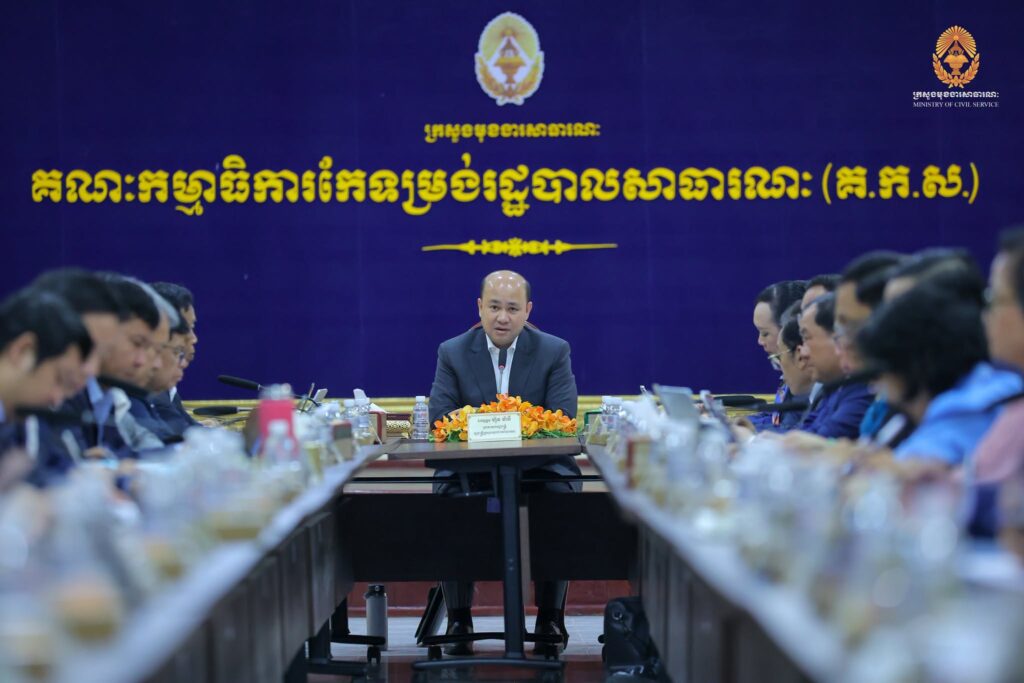
Cambodia Links Public Administration Reform to National Resilience Amid Rising Pressures
Cambodian Deputy Prime Minister Hun Many emphasized that strengthening public administration reform is crucial for enhancing national resilience and protecting state interests. He highlighted the need to bolster domestic systems to address international pressures and geopolitical shifts.
This article requires PRO
This article is outside the free access window or is a special report. PRO unlocks it and the full archive.
Related articles
- Cambodia Secures Four Medals at World Police Games
A delegation from Cambodia's Ministry of Interior participated in the 4th USIP World Police Games 2026 in the Dominican Republic, securing a total of four medals in beach volleyball, swimming, and judo. This achievement highlights the international recognition of the ministry's sports initiatives.
- Deputy Prime Minister Kun Kim Visits Khmer Rouge Survivors, Pledges Continued Support
Deputy Prime Minister Kun Kim visited former soldiers and their families in Phnom Kravanh district, following relief efforts for flood victims. He praised their efforts to improve living standards and increase income, pledging support for their crop sales.
- Cambodia Convenes International Meeting on Mine Action
Cambodia will hold its annual Technical Working Group on Mine Action (TWG-MA) meeting on November 2, 2026, in Phnom Penh, bringing together government officials, development partners, and NGOs to discuss strategies for addressing past legacies and new threats. The meeting will also focus on promoting the implementation of the National Mine Action Policy 2023-2035 and the Mine Action Strategic Plan 2023-2028.
- Cambodia Opens New Academic Year, Prioritizing Human Capital Development
Cambodia's 2026-2027 academic year commenced nationwide on November 1st. Prime Minister Hun Manet emphasized the government's high priority on education, viewing citizens as crucial resources for national development and aiming to strengthen educational institutions as efficient public service providers.