Vietnam Government Establishes New Party Committee Body to Strengthen Political Control and Economic Policy Alignment
Politics
2026年7月8日
3
Nhan Dan

Vietnam Government Establishes New Party Committee Body to Strengthen Political Control and Economic Policy Alignment

AI サマリー

Vietnam has established a new Party Committee body within the government to enhance the Party's leadership over state agencies. This move signifies a further integration of political control and economic policy under the one-party system.

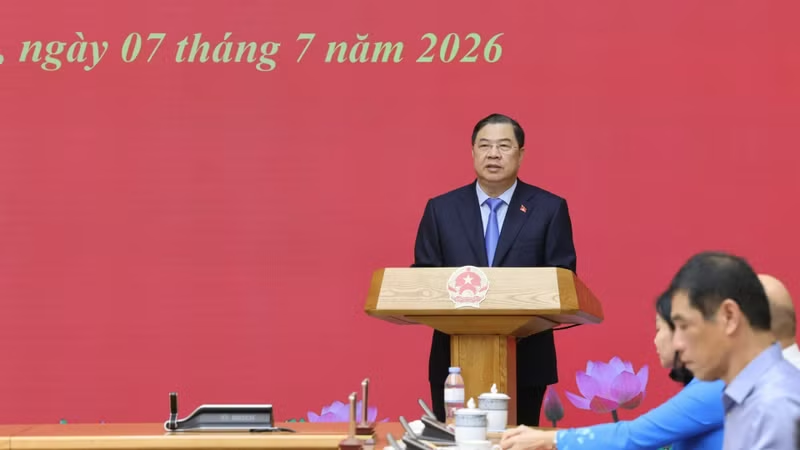
Vietnam has established a new Party Committee body within the government to strengthen the Party's leadership and management over state agencies. On July 7, at the Government Office, Mr. Pham Gia Tuc, a member of the Politburo, Standing Deputy Secretary of the Government Party Committee, and Standing Deputy Prime Minister, attended a conference to announce decisions from the Government Party Committee regarding its organizational structure. This organizational establishment is believed to aim at clarifying the Party's role in the decision-making and execution processes of the government and strengthening its influence, under Vietnam's one-party system. In Vietnam, the Party is the supreme guiding body for national governance, and its leadership permeates all aspects of economic growth and social development. The establishment and strengthening of Party committees within government organizations are considered crucial measures to ensure alignment with the Party's ideology and strategic objectives in the planning and implementation of economic policies. This decision is linked to the current political and social landscape in Vietnam, including the conclusions by General Secretary and President To Lam on "completing the legal system and law enforcement," and Hanoi's move to solicit public opinion on the "Red River Delta regional zoning plan." Specifically, the improvement of the legal system and its enforcement are essential for enhancing the predictability of economic activities and attracting foreign investment. However, it is also important to understand Vietnam's political context where laws are enforced under the Party's guidance. For Vietnam, which continues to experience economic growth, balancing political control by the Party with economic policies that incorporate market economy principles remains a constant challenge. The strengthening of the Government Party Committee body can be interpreted as an intention to guide this balance more strongly under the Party's leadership. This could also be seen as part of efforts to strengthen the domestic foundation for achieving both political stability and economic development, particularly in its foreign relations, especially with China.

多角的分析

経済的影響

政府党委員会組織の強化は、経済政策の立案・実行において党のイデオロギーと戦略目標との整合性を高めることを目的としている。これは、市場経済の原則を取り入れつつも、党の指導下で経済成長を管理しようとするベトナムの姿勢を反映している。特に、外国投資の誘致と国内経済の安定化という二重の目標達成のため、党の統制を強化することで、政策の予見可能性と一貫性を高めようとする狙いがあると考えられる。

投資家心理

この動きは、ベトナムにおける政治的安定を重視する投資家にとって、一定の安心材料となる可能性がある。党の指導が強化されることで、政策の急激な変更リスクが低減され、長期的な経済計画の実行がより確実になると期待される。しかし、同時に、党の意思決定プロセスがより複雑化し、透明性が低下する可能性も否定できず、投資判断においては引き続き慎重な分析が求められる。

社会的影響

政府組織における党委員会の役割強化は、国民生活に直接的な影響を与える政策決定プロセスにおいて、党の意向がより強く反映されることを意味する。例えば、社会福祉、雇用、環境規制などの分野で、党が重視する価値観や目標が優先される可能性がある。ハノイの紅河地域開発計画のような、住民の生活に密接に関わる計画決定においても、党の指導がより顕著になることが予想される。

市民の声

政府組織における党委員会の新設は、国民の日常生活に直接的な影響を与える政策決定プロセスにおける党の役割をより一層強固にする。例えば、雇用創出、社会保障、インフラ開発といった分野で、党が掲げる長期的な発展目標やイデオロギーが、国民のニーズや生活実感よりも優先される可能性が生じる。ハノイにおける紅河地域開発計画のように、住民の生活基盤に直接関わる計画の策定・実行においても、党の意思決定がより前面に出ることが想定される。

背景・歴史的文脈

ベトナムは、1986年の「ドイモイ(刷新)」政策以降、市場経済原理を導入し目覚ましい経済成長を遂げている。しかし、その根幹にはベトナム共産党による一党支配体制が維持されており、党は国家運営のあらゆる側面で指導的役割を果たしている。政府組織内での党委員会の強化は、経済発展の加速と同時に、党のイデオロギー的・政治的原則を維持・強化しようとする、ベトナム共産党の長年にわたる戦略の一環と位置づけられる。特に、近年、党は腐敗撲滅運動を強化し、党組織の規律と指導力を高めることに注力しており、今回の組織強化もその文脈で理解される。

原文ソース

Nhan Dan

原文を読む