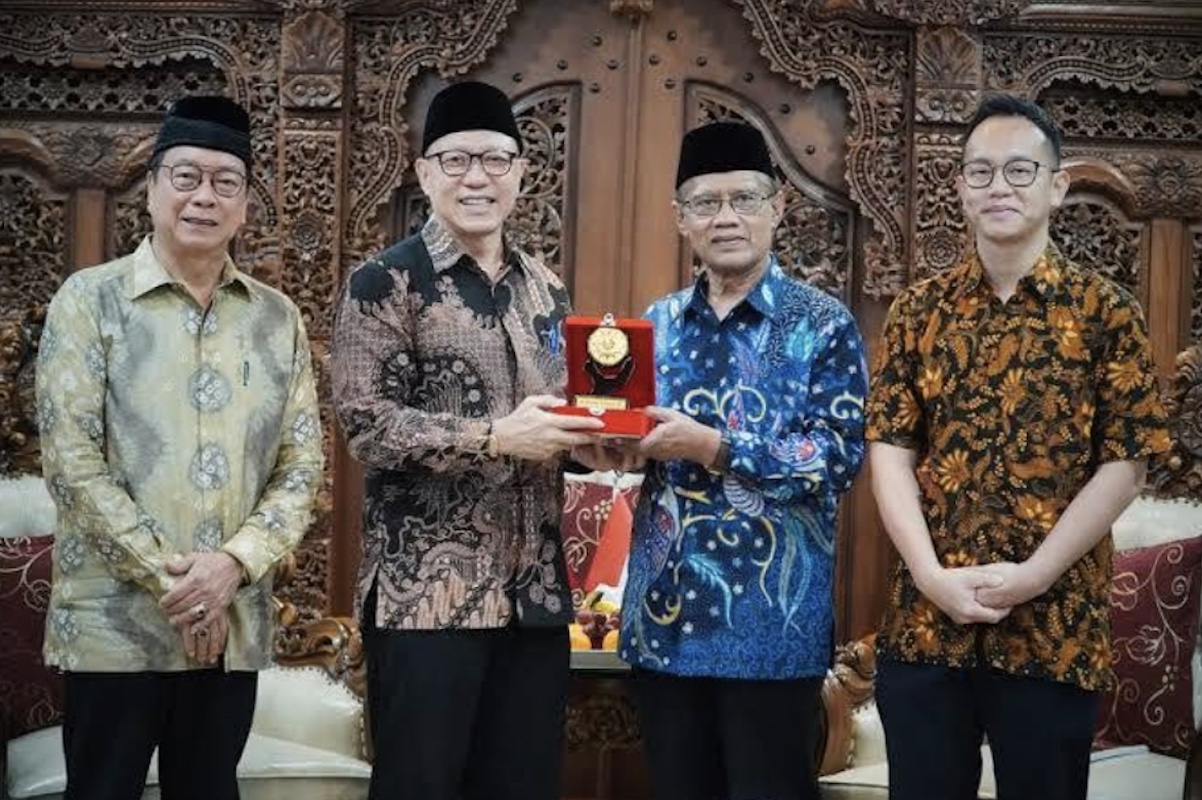
China Deepens Ties With Indonesian Muslim Groups to Expand Soft Power
Indonesia's top Islamic body, MUI, visited China, confirming cooperation in digital technology, halal industries, and education. This is seen as part of China's soft power strategy in Indonesia, home to the world's largest Muslim population.
Beijing’s long courtship of Indonesia’s Muslim communities reached a new milestone this month, when the Majelis Ulama Indonesia (MUI), the nation’s top body of Islamic scholars, traveled to China. The five-day “Digital Silk Road” program brought MUI council members to Guangzhou and Shenzhen, with a focus on technology, halal industries, education and cultural exchange. But the trip’s significance extended further: Indonesia is home to the world’s largest Muslim population, making the MUI a uniquely valuable partner for Beijing’s soft-power ambitions in the region. Over the past decade, China has expanded its outreach to Indonesian Islamic organizations through educational exchanges, scholarships, economic cooperation and religious dialogue, scholars note, alongside a steady stream of visits and social programs aimed at building people-to-people ties. The latest MUI visit should therefore be viewed not as the start of China’s Muslim diplomacy in Indonesia, but as its newest expression. Earlier exchanges often centered on religious understanding and social relations. In contrast, MUI’s visit placed greater emphasis on technology, digital communication and economic cooperation. The MUI delegation, drawn from MUI’s international relations, halal affairs, economics and digital communication divisions, visited Islamic institutions, universities and technology companies in southern China. For Beijing, engagement with Muslim organizations provides another potent channel of diplomacy beyond government relations. Indonesia’s Islamic organizations have considerable social influence, shaping local and national conversations on religion, education and community affairs. Building relationships with these institutions allows China to communicate directly with influential Muslim actors while strengthening its broader ties with Indonesian society. Yet this diplomatic outreach coexists with a harder problem for Beijing: since 2017, its often harsh treatment of ethnic Uighurs and other Muslim minorities in Xinjiang has drawn sustained criticism from governments, rights groups and researchers. Chinese authorities reject these accusations, maintaining that their policies focus on counterterrorism, economic development and the protection of religious practices. China has sought to counter criticism over Xinjiang by inviting foreign delegations, including representatives from Muslim-majority countries and organizations, to visit the region and observe conditions firsthand. These trips are part of Beijing’s broader effort to shape the narrative around Xinjiang and push back at international criticism. MUI took part in one such visit in 2019, when a delegation traveled to China to examine reports concerning Uighur Muslims in Xinjiang, meeting first with the China Islamic Association before continuing on to the region. MUI described the trip as an effort to gather information directly, amid conflicting accounts of the situation. The episode showed that MUI’s engagement with China has not been one-directional. Before the visit, MUI also received representatives from the Uyghur diaspora, who shared their concerns about conditions in Xinjiang. MUI’s approach reflected an effort to hear multiple perspectives while maintaining dialogue with Chinese institutions. The current MUI visit shifted away from Xinjiang and toward areas where both sides see practical opportunities, with digital technology a major theme. MUI officials have argued that religious communication is increasingly shaped by artificial intelligence, search engines and social media platforms. For an organization seeking to maintain influence among younger generations, understanding digital platforms has become an institutional priority. Economic cooperation is another important factor. Indonesia is seeking to strengthen its position in the global halal economy, while China has a large manufacturing base and growing interest in halal markets. Cooperation between Indonesian Muslim institutions and Chinese companies could create opportunities in areas such as halal products, supply chains and technology. These exchanges also carry diplomatic weight. For China, ties with Indonesian Muslim organizations offer a channel to engage Muslim communities directly and provide opportunities to explain Beijing’s positions on issues that have drawn international scrutiny. For MUI, cooperation with China supports its own objectives – expanding international networks, developing halal industry ties and promoting Indonesia’s model of moderate Islam abroad. The significance of MUI’s visit lies less in the delegation itself than in what it reveals about China’s evolving diplomatic playbook. Beijing is increasingly investing in relationships with influential Muslim institutions alongside its traditional state-to-state ties, recognizing that organizations such as MUI shape opinion far beyond government circles. The strategy also serves another purpose: creating trusted interlocutors as China continues to defend its record on Xinjiang and expand its economic footprint across Southeast Asia. Whether that strategy succeeds will depend not only on Beijing’s outreach but also on how Indonesian Muslim organizations respond. MUI has shown that it is willing to engage China, but on its own terms — seeking economic opportunities, technological cooperation and religious dialogue while balancing domestic expectations and international scrutiny. MUI’s China visit, then, is best understood not as an isolated exchange, but as the latest sign that Indonesia’s Muslim organizations have become an increasingly important arena in China’s competition for influence, legitimacy and partnerships across Southeast Asia. Muhammad Zulfikar Rakhmat is the director of the China-Indonesia Desk at the Jakarta-based Center of Economic and Law Studies (CELIOS), an independent research institute. Yeta Purnama is a researcher at CELIOS. Thank you for registering! You must be logged in to post a comment.
多角的分析
中国は、インドネシアの巨大なイスラム市場とハラル経済へのアクセスを強化する狙いがある。MUIとの協力は、中国製品のハラル認証取得を容易にし、インドネシア国内での販売拡大に繋がる可能性がある。また、デジタル技術分野での協力は、中国のテクノロジー企業がインドネシア市場に参入する際の障壁を下げる効果も期待できる。これは、中国が「一帯一路」構想の一環として、経済的影響力を東南アジアでさらに拡大しようとする戦略と一致する。
今回のMUI訪問は、インドネシアのハラル産業やデジタル関連企業への投資機会を示唆している。中国企業は、MUIとの連携を通じて、インドネシア市場における信頼性と浸透度を高めることができる。投資家にとっては、ハラル認証を受けた製品やサービスを提供する企業、あるいは中国のデジタル技術を活用したインドネシアのスタートアップが注目に値するだろう。ただし、新疆ウイグル自治区を巡る国際的な懸念が、中国企業への風評リスクとして影響する可能性も考慮する必要がある。
中国がMUIのようなイスラム指導機関と直接関係を構築しようとする動きは、インドネシア社会におけるイスラム教徒の広範な影響力を反映している。特に若い世代の間でデジタルプラットフォームの重要性が増す中、MUIは中国との技術協力により、その影響力を維持・拡大しようとしている。一方で、新疆ウイグル自治区の人権問題に対する国内外からの批判は依然として存在し、MUIが中国との関係を深める中で、国内のイスラムコミュニティからの多様な意見や懸念にどう対応していくかが問われている。
インドネシア市民、特にイスラム教徒にとって、MUIの中国訪問は、生活に身近なハラル製品の選択肢が増えたり、デジタルサービスがより利用しやすくなる可能性を示唆している。しかし、新疆ウイグル自治区における同胞への扱いに関する報道に接している市民も多く、MUIが中国との関係を深めることに対して、複雑な感情を抱く者もいるだろう。経済的な恩恵と、人権や宗教的価値観との間で、どのようなバランスが取られるかが注視される。
背景・歴史的文脈
中国とインドネシアの関係は、歴史的に複雑な側面を持つ。1965年のインドネシア共産党(PKI)弾圧事件以降、両国は国交を一時断絶したが、1990年に国交を正常化した。その後、経済関係は急速に発展し、中国はインドネシアにとって最大の貿易相手国の一つとなった。近年、中国は「一帯一路」構想を推進し、インドネシアではインフラ開発への投資を拡大している。同時に、中国は新疆ウイグル自治区における人権問題で国際的な批判を浴びており、イスラム教徒が多いインドネシアとの関係構築においては、ソフトパワー戦略を強化する動きを見せている。
原文ソース
Asia Times Indonesia