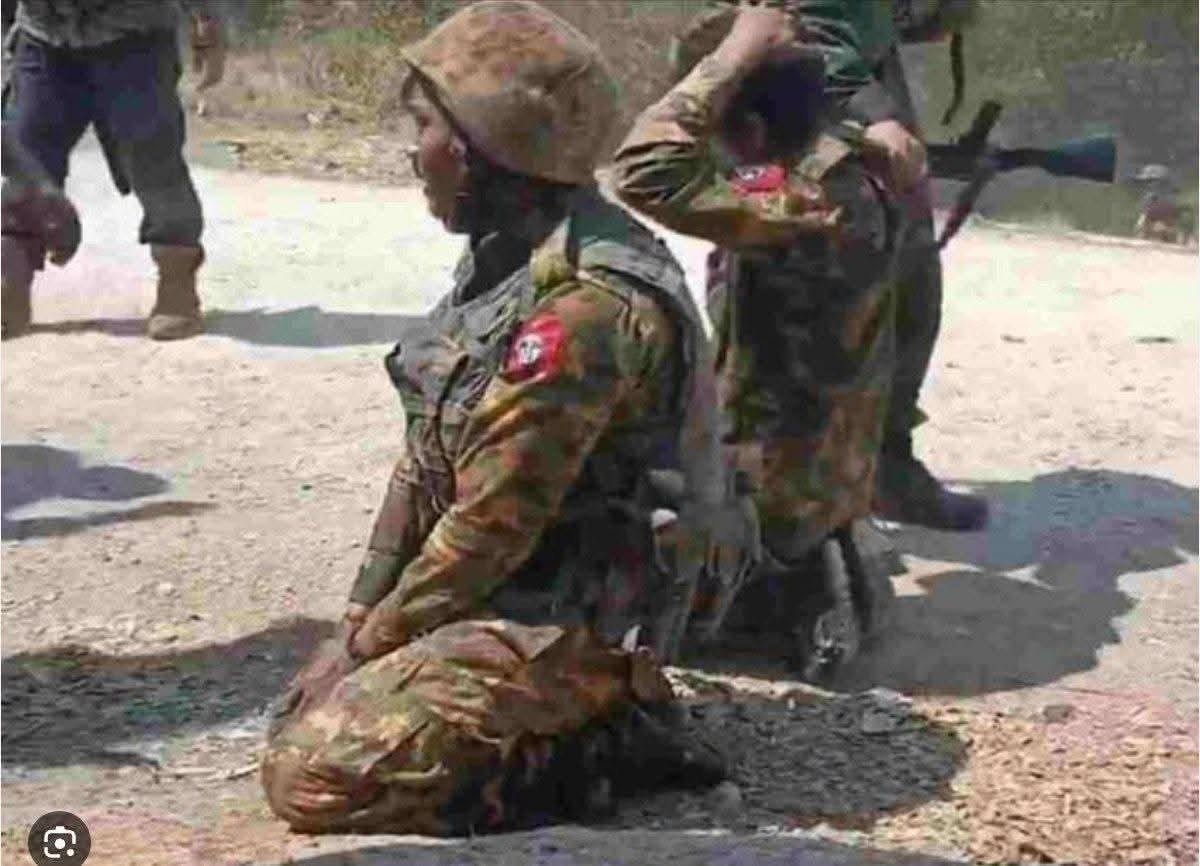
Troops suffer losses and desertions in Ayeyarwaddy Region, preparations underway to move forces to Sittwe and Kyaukphyu
Junta troops deployed to the mountainous border areas of Ye Kyi and Sapaung townships in the Ayeyarwaddy Region have suffered heavy losses and are unable to return to their bases intact, leading to continuous desertions
This article requires PRO
This article is outside the free access window or is a special report. PRO unlocks it and the full archive.
Related articles
- Myanmar military deploys troops to Ywangan village, restricts male residents
The Myanmar military has deployed nearly 100 troops to Nwar Ban Gyi village in southern Shan State's Ywangan Township, restricting male residents from leaving the area and compiling detailed household rosters, according
- 87 individuals involved in online fraud and gambling arrested in Hopone
The Myanmar Police Force announced that 87 individuals involved in online fraud and gambling were arrested along with business equipment near Narlong Village, Hopone Township, Shan State South. On the morning of October
- Over 10 Billion Kyats Worth of Narcotics Seized in Leway
Over 10 billion kyats worth of methamphetamine tablets and heroin powder were seized from a 12-wheel vehicle in Leway Township, Naypyidaw, the Myanmar Police Force announced. A joint team including members of the Anti-Na
- Surrenders and internal friction reported among resistance ranks in Sagaing Region
At least 30 members of the People’s Defence Force (PDF), as well as another 30 members of unnamed resistance forces, surrendered to the military in Sagaing Region’s Shwebo, Monywa and Chaung-U townships over the past two