General articles are free for 24 hours after publish.
Vietnam's Southern Continental Shelf: Nearly 40 Years of Sovereignty Defense
Since 1988, Vietnam has built and maintained 'DK1' offshore platforms on its strategically vital southern continental shelf, asserting sovereignty. The dedication of soldiers in harsh conditions and infrastructure modernization continue.
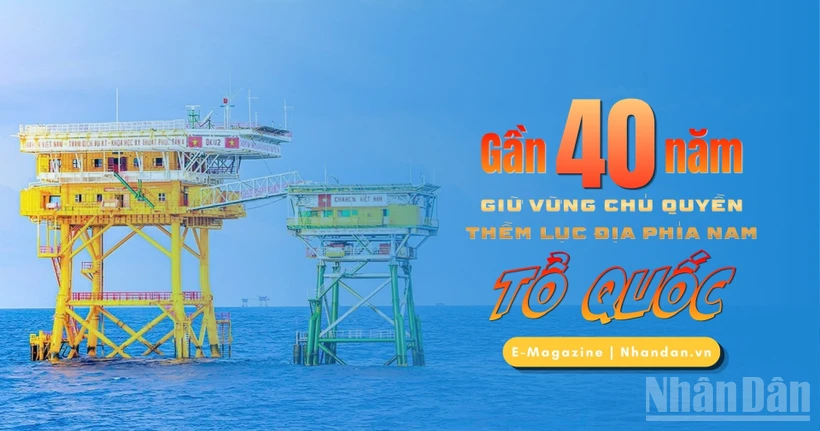
Vietnam has maintained its sovereignty over the strategically vital southern continental shelf in the South China Sea, spanning approximately 80,000 square kilometers, for nearly 40 years. This region is crucial not only for national defense but also for its rich mineral resources and its position on international shipping lanes. A significant step was taken on October 17, 1988, when General Secretary Nguyễn Văn Linh signed Decision No. 19/NQ-TW, establishing a policy to construct structures on all submerged reefs within the southern continental shelf. Following this, on July 5, 1989, the Chairman of the Council of Ministers (now Prime Minister) issued Directive No. 180/CT, mandating the development of economic, scientific, and service complexes, known as DK1, in the reef areas of the Vũng Tàu-Côn Đảo Special Zone (now part of Ho Chi Minh City). To implement this policy, in October 1988, Admiral Giáp Văn Cương, Commander of the Navy, assigned tasks to ships from Brigade 171 and Flotilla 129. They were dispatched to the submerged reefs of the southern continental shelf to maintain a presence, protect sovereignty, and survey locations for the construction of the offshore platforms. Survey results identified six coral reefs with peaks rising 9-50 meters below sea level, where the initial "Nhà giàn" (offshore platforms) were subsequently erected. The first generation of platforms were pontoon-style, installed on the Phúc Tần reef. The decision to establish these platforms was a crucial strategic move by the Communist Party of Vietnam, recognizing the necessity of having "houses, flags, people, and signs" to assert sovereignty. In the early years, soldiers stationed on these platforms faced extreme hardships. Fresh water was a scarce resource, strictly rationed for daily necessities. Showers were infrequent, sometimes only once every two days or even monthly during dry spells. Securing fresh vegetables was also challenging, with dried vegetables often forming the staple diet. However, since 1992, significant improvements have been made. Many platforms have been modernized and new ones constructed, enhancing the living conditions for the personnel. These include more robust and modern structures, improved equipment for training, daily life, and rescue operations, as well as better communication links with the mainland and families. Logistics, healthcare, and the supply of fresh water and food have also seen substantial upgrades. Over the past four decades, numerous generations of soldiers have dedicated their youth to these platforms. Tragically, some have lost their lives in the line of duty. On December 5, 1990, DK1/3 platform was submerged by a storm, resulting in seven fatalities. On December 14, 1998, DK1/6 platform collapsed during a typhoon, claiming the lives of three officers, including Captain Vũ Quang Chương, who was posthumously awarded the title of Hero of the People's Armed Forces in 2013. Today, the DK1 platforms are designed and constructed with greater resilience, standing as a testament to Vietnam's enduring commitment to defending its sovereignty in the South China Sea. Source: Nhan Dan
Original source
Nhan Dan