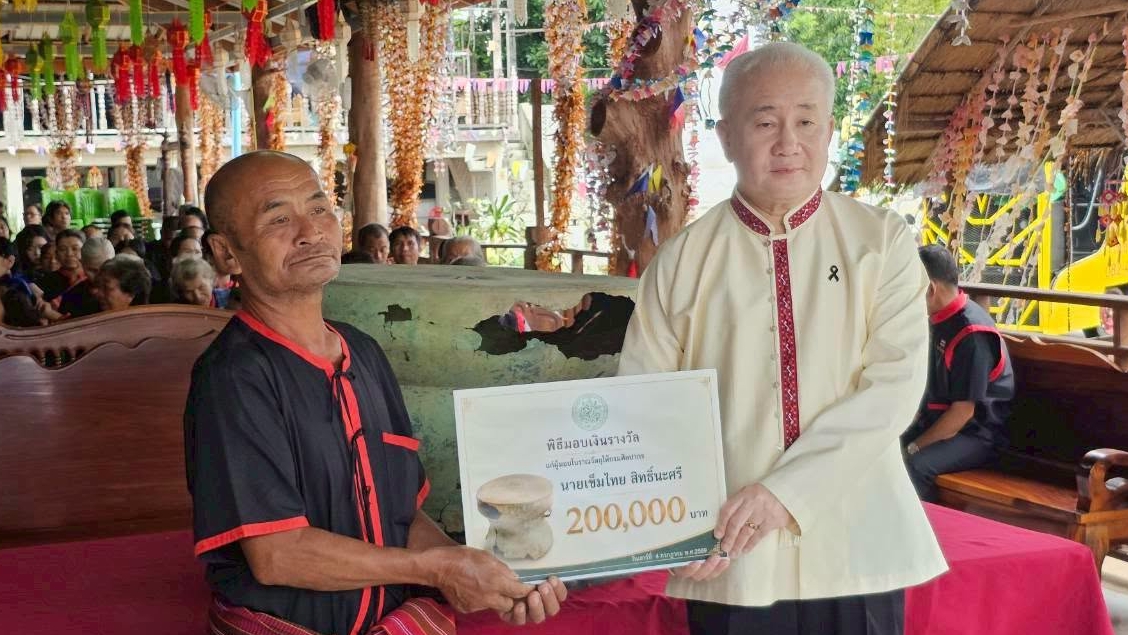
Man Awarded 200,000 Baht for Discovery of Ancient Bronze Drum
A Thai man received a 200,000 baht reward for discovering and handing over an ancient bronze drum, believed to be over 2,000 years old, to the Fine Arts Department, highlighting the value of Thailand's cultural heritage.
This article requires PRO
This article is outside the free access window or is a special report. PRO unlocks it and the full archive.
Related articles
- Eurovision Final Boosts Bangkok Travel Demand, Agoda Reports
Travel booking platform Agoda reported a significant surge in travel demand to Bangkok during the Eurovision final. This highlights the impact of international events on Thailand's tourism sector.
- Pattaya Mayor Welcomes New TAT Pattaya Office Director, Pledging Enhanced Tourism Cooperation
Pattaya Mayor Poramese Ngampichet welcomed the newly appointed director of the Tourism Authority of Thailand (TAT) Pattaya Office, Mr. Saksakun Suppakritanan. The meeting emphasized a commitment to enhanced cooperation for tourism recovery and economic revitalization in the region.
- Pattaya Aims to Boost Tourism by Highlighting Historical Military Routes
Pattaya, Chonburi – Pattaya City is developing initiatives to integrate local history, such as the military routes of King Taksin, into its tourism offerings. A seminar was held at City Hall to discuss strategies for linking historical heritage with tourism development.
- Don Mueang Airport Tourist Police Aid American Traveler in 400-Baht Taxi Fare Dispute
Tourist Police at Bangkok's Don Mueang Airport successfully mediated a 400-baht taxi fare dispute involving an American traveler unable to pay. The issue was resolved when the traveler's friend transferred the funds, with Tourist Police available 24/7 via hotline 1155.