General articles are free for 24 hours after publish.
Cambodia Accuses Thailand of 'Illicit Installation' Amid Ongoing Border Tensions
Cambodian Prime Minister Hun Manet and Senate President Hun Sen accused Thailand of delaying a border ceasefire deal and encroaching on Cambodian territory. Issues include concertina wire and containers installed before border demarcation. Thailand has not immediately responded to requests for comment.
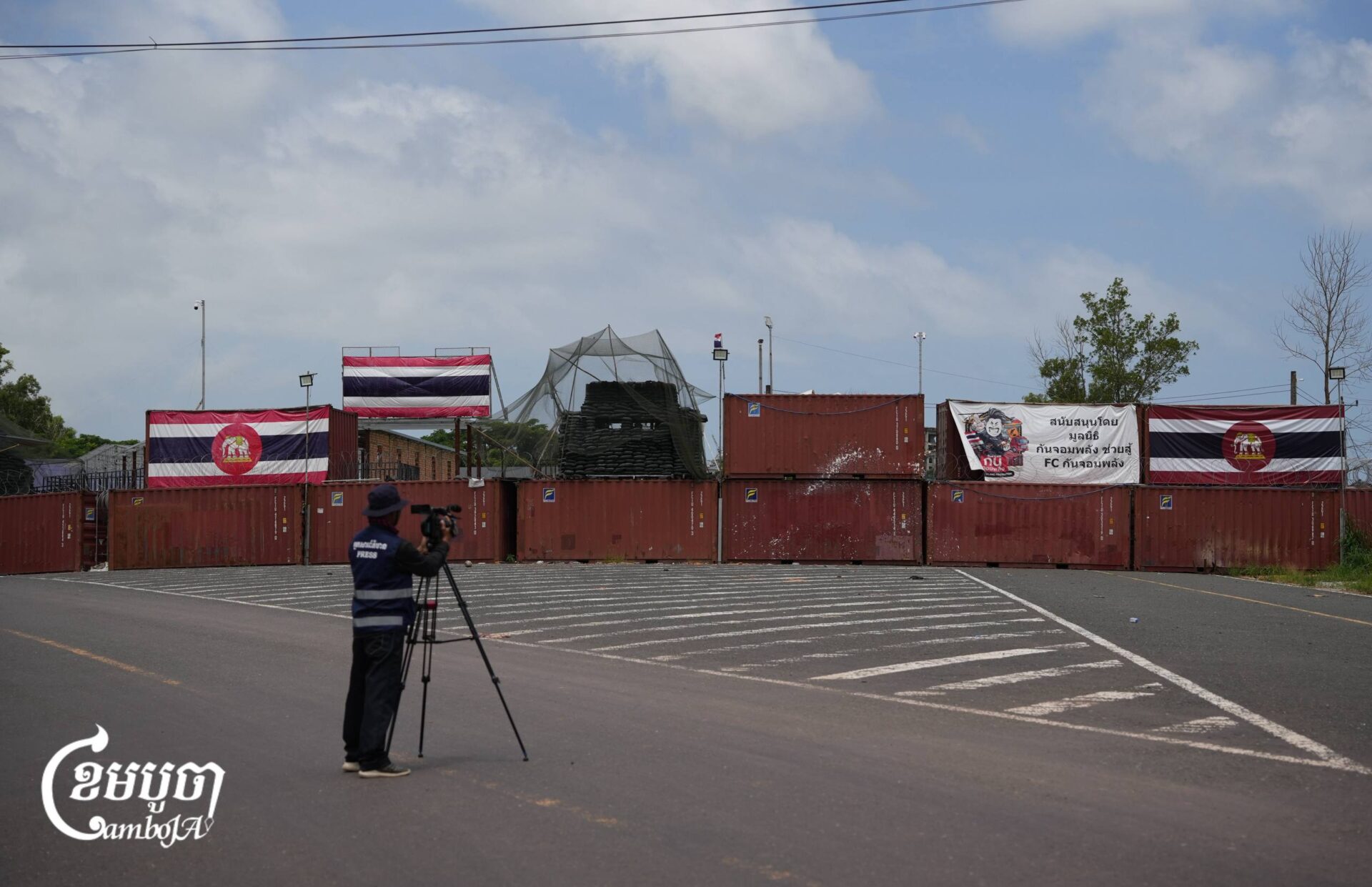
Prime Minister Hun Manet and his father, Senate President Hun Sen, accused Thailand on Wednesday of stalling on a border ceasefire deal and encroaching on Cambodian territory, with Hun Sen branding it a form of modern “discredit warfare.” The father-and-son duo spoke at the 2nd Inter-Parliamentary Speakers’ Conference (ISC-2) in Phnom Penh, where parliamentary leaders and representatives from dozens of countries and international organizations gathered to discuss international law, diplomacy and conflict resolution. Hun Manet said the border situation with Thailand remains “fragile” and that “de-escalation measures have yet to be implemented” after the neighbors clashed along their border last year, before a ceasefire was reached in December. “The installation of barbed wire, placement of containers, construction of infrastructure and allocation of land to [Thai] civilians before the border demarcation has taken place are matters of grave concern,” Hun Manet said. “Despite these challenges, we remain committed to resolving the issue peacefully and based on international law.” Last year’s border fighting killed more than 100 people on both sides and left over 20,000 Cambodians displaced from frontier villages that Phnom Penh says remain occupied by Thai forces. Thai Defense Ministry spokesperson Surasant Kongsiri did not immediately respond to a request for comment. Bangkok has maintained that the border areas it holds are within its own territory or are frozen frontlines under the ceasefire. Hun Sen’s spokesperson, Chea Thyrith, said Thailand was invited to the three-day conference but declined to attend. Hun Manet also called the dispute “not merely a bilateral issue” but a global concern over respect for international law. Hun Sen, who chairs ISC-2 and handed power to his son in 2023, said the world has entered a dangerous new era of geopolitical “disorder.” He said the Cambodia-Thailand conflict falls under what he called “discredit warfare” – the exploitation of a country’s internal vulnerabilities, citing online scam networks and human rights criticism, to pressure a government, undermine its institutions and damage its international standing. “The Cambodia-Thailand border war is part of this situation, in which they are occupying our territory on the grounds that some parts of our territory are associated with online scams,” he said. Hun Sen appeared to be referring to Thai forces’ presence around border zones such as O’Smach in Oddar Meanchey province, a town that has reportedly housed online scam compounds linked to trafficked labor and is linked to U.S.-sanctioned Cambodian Senator Ly Yong Phat. He called on the conference to use the moment to recommit to international law and peaceful coexistence, and to strengthen parliamentary diplomacy as a tool for building dialogue and trust. The international gathering comes as Phnom Penh is often accused by Thailand of “internationalizing” border disputes, which Bangkok historically has refrained from doing. The latest case follows Thailand’s unilateral withdrawal earlier this year from a decades-old agreement that provided a framework for negotiating overlapping claims in the Gulf of Thailand. Cambodia then initiated compulsory conciliation proceedings under the U.N. Convention on the Law of the Sea (UNCLOS), which has since faced delays. Independent Cambodian political analyst Seng Vannly said the ISC-2 conference can be an important forum for Cambodia amid border tensions, but that it has its limits. “Hosting this global event helps strengthen Cambodia’s diplomatic standing and creates an international political environment that supports solutions based on law rather than the use of force,” he said. But he added that ISC-2 is not a judicial institution with the power to compel compliance with the law.
Original source
CamboJA News